From Casper and the Crypt Keeper to Disney characters, M&M’s, and illuminated holiday decorations, Trendmasters helped give Halloween a whole new personality during the 1990s. The St. Louis company wasn’t your traditional blow mold manufacturer, but its unusual creations have earned a place in the history of American holiday decorating.
By Curtiss Wayne Andrews
I remember when Halloween decorations started getting a little out of hand. And I mean that in the best possible way.
Growing up, Halloween was pretty straightforward. You carved a pumpkin, hung a cardboard skeleton on the front door, and maybe stuck one of those plastic witches in the window. If your parents were feeling particularly ambitious, you might get a fog machine or one of those orange light bulbs that made the front porch look vaguely haunted. Most of the decorations came from the drugstore, and you could usually carry everything home in one shopping bag.
By the 1990s, that was changing in a hurry. Halloween had become a much bigger production, and the seasonal aisles at Walmart, Target, and Toys “R” Us were beginning to look like miniature haunted houses. There were talking monsters, animated witches, glowing pumpkins, and decorations based on characters from movies and television shows. Some of them were genuinely impressive. Others made noises that probably drove store employees to the brink of insanity after listening to them eight hours a day.
Christmas was going through its own transformation. The familiar plastic Santas, snowmen, and candles were still around, but now they were sharing shelf space with animated characters, electronic ornaments, and decorations that could sing, dance, or respond to sound. Apparently, simply glowing wasn’t enough anymore. Santa needed to perform.
One company that embraced this new era of holiday decorating was Trendmasters, a St. Louis, Missouri, toy manufacturer that operated from 1989 until 2002.
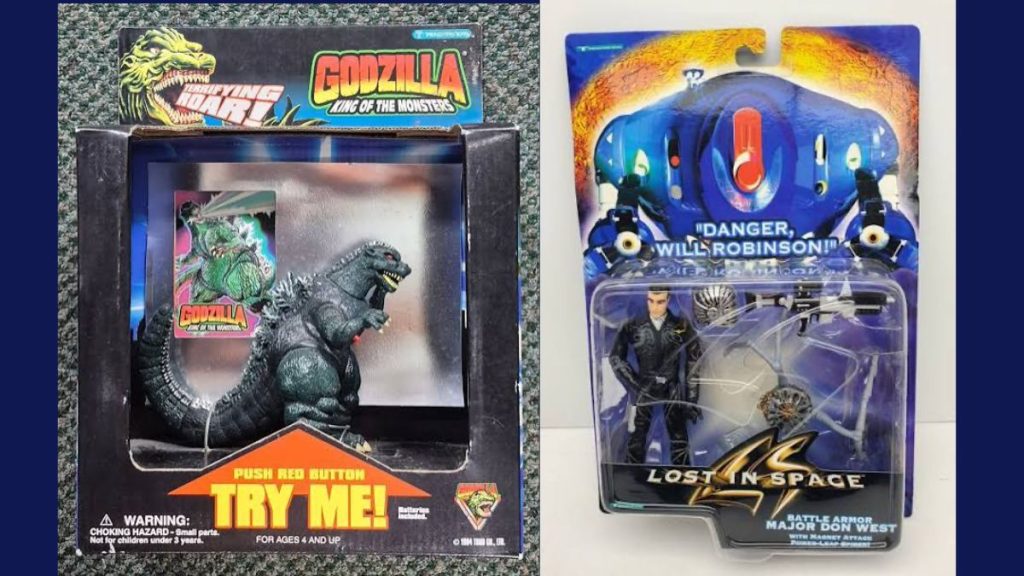
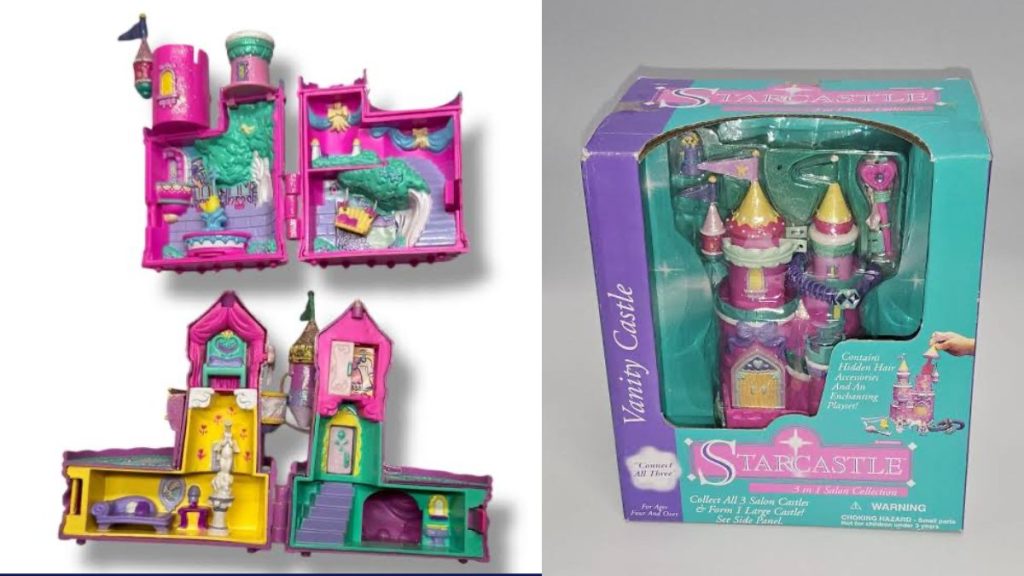
You might remember Trendmasters for its Godzilla action figures, Lost in Space toys, or miniature Starcastles playsets. But the company also produced an extensive assortment of Halloween decorations and other seasonal merchandise, much of which has become collectible in its own right.
Blow mold historian Cole Walker brought Trendmasters to my attention because of an interesting distinction that often gets overlooked. Although collectors frequently refer to the company’s illuminated decorations as blow molds, many were actually made using lighted foam-molding techniques rather than traditional hollow-plastic blow molding.
And Trendmasters made a lot of them.
The company’s seasonal merchandise included familiar Halloween characters, pumpkins, monsters, and licensed properties such as Casper, the Crypt Keeper, Disney, and M&M’s. Christmas was part of the business, too, although the surviving documentation of individual Christmas decorations isn’t nearly as complete as the Halloween material.
The more I looked into Trendmasters, the more I realized it represented an interesting chapter in the history of holiday decorating. This wasn’t a company trying to recreate the old Empire or Poloron Santa. It was a toy manufacturer that understood the appeal of recognizable characters, electronic gimmicks, and decorations that did something unexpected.
And for thirteen years, it produced some pretty memorable stuff.
From a St. Louis Basement to a Multimillion-Dollar Toy Company
Trendmasters was founded in 1989 by Leo Hauser and Russell Hornsby, two men who had previously worked together at a St. Louis gift company.
Hornsby had experience in toy design, including time at Mattel, while Hauser brought a background in sales. Both had been successful in their previous jobs, but they apparently reached the point where they wanted to build something of their own. I admire that.
So they left their comfortable positions and started a company in Hornsby’s basement.
It’s the sort of business origin story we’ve heard plenty of times, although most basement startups don’t eventually become major toy manufacturers. In this case, the gamble paid off.
Trendmasters’ early products included Loony Heads, novelty toys that could burp or scream when activated. That might not sound like the foundation for a serious business, but it gives you a pretty good idea of the company’s personality. These guys weren’t necessarily interested in making another ordinary doll or toy truck. They wanted products that caught your attention, made you laugh, or did something you weren’t expecting.
As the business grew, Trendmasters developed a creative operation in downtown St. Louis, employing designers, sculptors, artists, marketers, and other people responsible for turning ideas into products. Manufacturing was handled elsewhere, but the concepts and product development came from Missouri.
A 1998 newspaper profile described a company that had become a major player in the toy business, with a staff working on everything from action figures to electronic games and television commercials. It was a long way from two guys working in a basement. Boy, did it sound like a fun place to work.
And the company had developed a reputation for taking chances on products and licenses that some of the larger manufacturers had overlooked.
Godzilla, Starcastles, and a Talent for Finding the Next Big Thing
If you were a kid during the 1990s, there’s a decent chance Trendmasters made something you wanted.
The company became particularly well known for its Godzilla toys, securing a license in 1994 and developing an assortment of action figures, electronic monsters, and playsets based on the famous Japanese creature.
I always thought Godzilla was one of those characters who deserved better toy merchandise than he sometimes received. Here’s a giant radioactive monster who spends his time stomping through cities and fighting other giant monsters. If you can’t make a good toy out of that, you probably shouldn’t be in the toy business.
Trendmasters clearly agreed.
The company also developed merchandise based on Independence Day, Lost in Space, Mars Attacks!, Extreme Ghostbusters, and Voltron. These weren’t all guaranteed blockbuster properties, but they had recognizable characters and enthusiastic audiences.
Then there were Starcastles, the miniature fantasy playsets that became another major success. By 1998, contemporary reporting credited the line with sales of more than 16 million toys.
Trendmasters had become quite good at finding products that appealed to children who wanted something a little different.
But buried in that same 1998 company profile was a detail that caught my attention for an entirely different reason.
Trendmasters had reportedly sold approximately four million realistic-looking Halloween pumpkins.
Four million pumpkins is a lot of pumpkins, especially for a company that most people remember as a toy manufacturer. It suggests that seasonal decorations were a serious part of the business rather than some little side project somebody in the office dreamed up between Godzilla meetings.
And when you start looking at surviving Trendmasters Halloween decorations, it’s not difficult to understand why they sold so well.
They Look Like Blow Molds, but There’s a Difference
Before getting into the individual decorations, it’s worth explaining something that can confuse collectors.
When you see an illuminated Trendmasters pumpkin or Halloween character listed online, there’s a good chance the seller will describe it as a vintage blow mold. Sometimes that’s simply the terminology people use for anything made of molded material with a light inside.
But as historian Cole Walker pointed out, many Trendmasters decorations were actually foam molded, not manufactured using the traditional blow-molding process associated with companies like Empire, Union Products, and Poloron.
A traditional blow mold is generally made by inflating heated plastic inside a mold, producing a hollow figure. The familiar vintage Santas, snowmen, candles, and pumpkins were commonly made this way, with a light bulb placed inside to illuminate the decoration.
Trendmasters used molded foam materials for many of its seasonal figures, creating lightweight decorations with painted surfaces and internal lighting. Some also incorporated electronics, motors, or sound effects.
From a distance, the finished products could look quite similar to traditional blow molds. They had the same general appeal: colorful characters that glowed when you plugged them in.
The construction was different, though, and that’s important when you’re researching the history of a particular decoration.
Personally, I don’t think the distinction makes Trendmasters any less interesting. If anything, it helps explain how holiday decorating was evolving during the 1990s. Manufacturers were experimenting with materials and technology, trying to create products that were inexpensive enough for mass-market retail but entertaining enough to stand out.
And let’s face it, most people buying a glowing Casper decoration in 1995 probably weren’t standing in the store wondering whether it had been blow molded or foam molded.
They wanted Casper. He lit up. That was good enough.
Collectors are a different breed, of course. We’ll happily spend an entire evening debating the manufacturing process of a plastic pumpkin that originally cost fifteen dollars.
I suppose everybody needs a hobby.
HallowScream: Trendmasters Turns Halloween Into a Production
One of Trendmasters’ most interesting seasonal product lines was HallowScream, an assortment of Halloween decorations that combined traditional spooky characters with lighting, movement, and electronic effects.
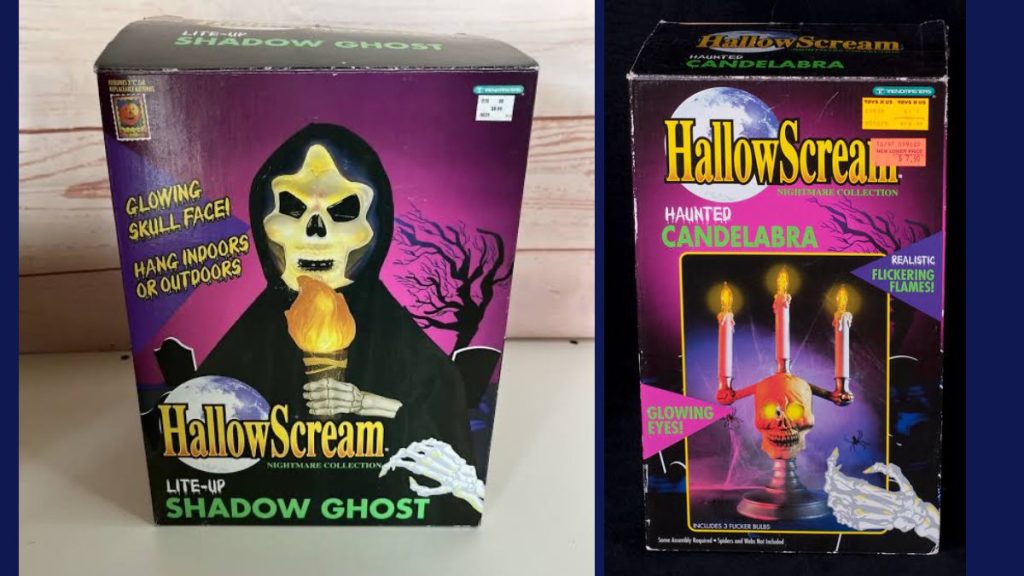
Documented products from the mid-1990s include animated witches, flickering gargoyle lights, dancing Frankenstein figures, animated monsters, and shaking haunted books.
If that sounds like the Halloween aisle at a 1990s discount store, that’s because it pretty much was.
I can still remember walking through stores during that period and hearing one decoration after another going off as customers pressed the demonstration buttons. A witch would cackle from one shelf, a monster would groan from another, and somewhere in the background a motion-activated skeleton would start screaming because somebody walked past it.
After about fifteen minutes, you had to wonder how the employees managed to keep their sanity.
But those displays were effective. They got people to stop, look, and sometimes buy something they hadn’t planned on purchasing.
Trendmasters also offered illuminated foam figures featuring familiar Halloween subjects such as Frankenstein’s monster, witches, skulls, mummies, and black cats. Some were fairly simple light-up decorations, while others moved or made sounds.
What I find interesting is how these products fit into the larger changes happening in Halloween decorating.
During the 1960s and 1970s, a glowing jack-o’-lantern or a friendly plastic witch was often enough to decorate a front porch. By the 1990s, families were beginning to build elaborate displays, and retailers were offering products that made it easier to turn a living room or front yard into a miniature haunted attraction.
Trendmasters was clearly paying attention.
Its HallowScream products were designed for people who wanted a little more excitement than an ordinary pumpkin, and the company had the toy-industry experience to make that happen.
Several of these decorations have been documented in collector sales and auction catalogs, helping establish product names and approximate production periods. That documentation is especially useful because so much of the original Trendmasters seasonal merchandise has disappeared from retail records.
Those Stacked Pumpkins Were Practically a 1990s Institution
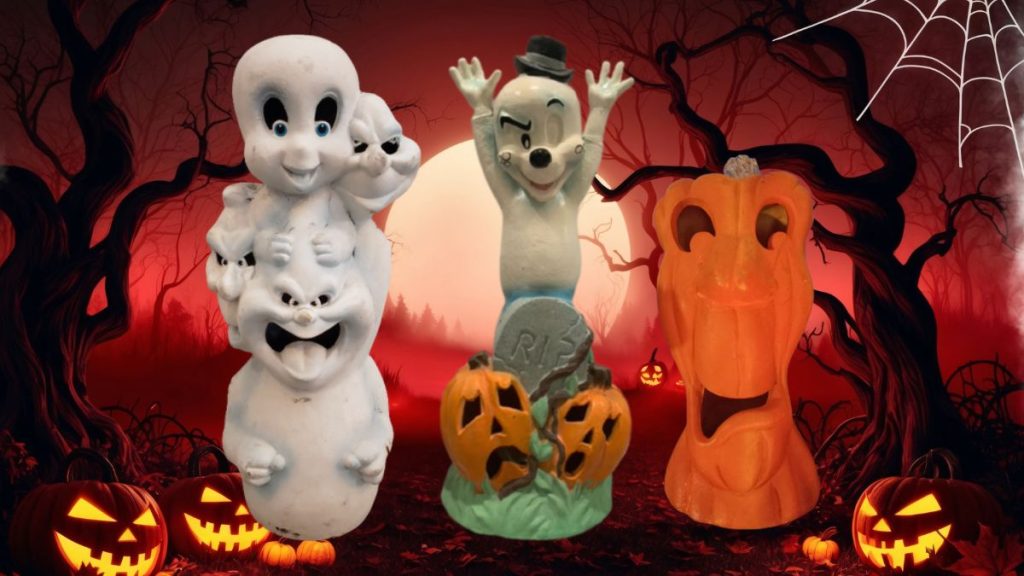
One of the most recognizable styles associated with Trendmasters is the stacked jack-o’-lantern decoration, sometimes called a pumpkin totem.
You probably remember the general idea. Instead of one pumpkin, you’d have several pumpkin faces stacked vertically, creating a decoration that was taller, more colorful, and a little more interesting than the standard jack-o’-lantern.
Some had different expressions on each pumpkin. Others incorporated licensed characters or more elaborate designs.
Surviving Trendmasters examples have been identified from the early 1990s, including a pumpkin totem dated to 1993 and measuring approximately eighteen inches tall.
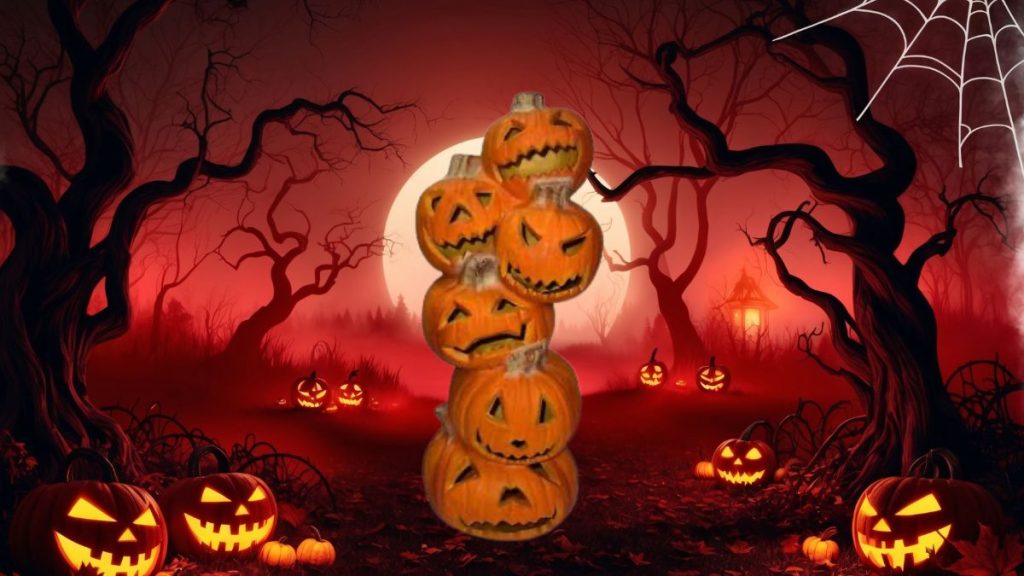
I can see why these were popular. They were large enough to make an impression but small enough to sit on a table, windowsill, or covered porch, assuming the particular model was intended for that location.
They also fit nicely into the decorating habits of the time. Halloween was becoming more of an indoor holiday as well as an outdoor one, with families placing decorations throughout the house rather than limiting everything to the front door.
A glowing stack of pumpkins worked just as well in a child’s bedroom as it did in the family room, and you didn’t have to worry about carving anything or discovering a week later that your pumpkin had turned into a science experiment.
Trendmasters apparently understood that convenience mattered.
The company also understood something else: familiar characters could make an ordinary seasonal decoration considerably more appealing.
And that’s where its licensing business really came into play.
Casper the Friendly Ghost Finds a New Home
Of all the characters Trendmasters worked with, Casper the Friendly Ghost seems almost tailor-made for Halloween decorations.
He’s already a ghost, which takes care of the holiday connection. He’s friendly enough for young children, recognizable to adults who grew up watching the cartoons, and simple enough in appearance that you can identify him immediately.
The release of the 1995 Casper movie gave the character renewed popularity, and Trendmasters developed several licensed decorations featuring Casper and other characters associated with the property.
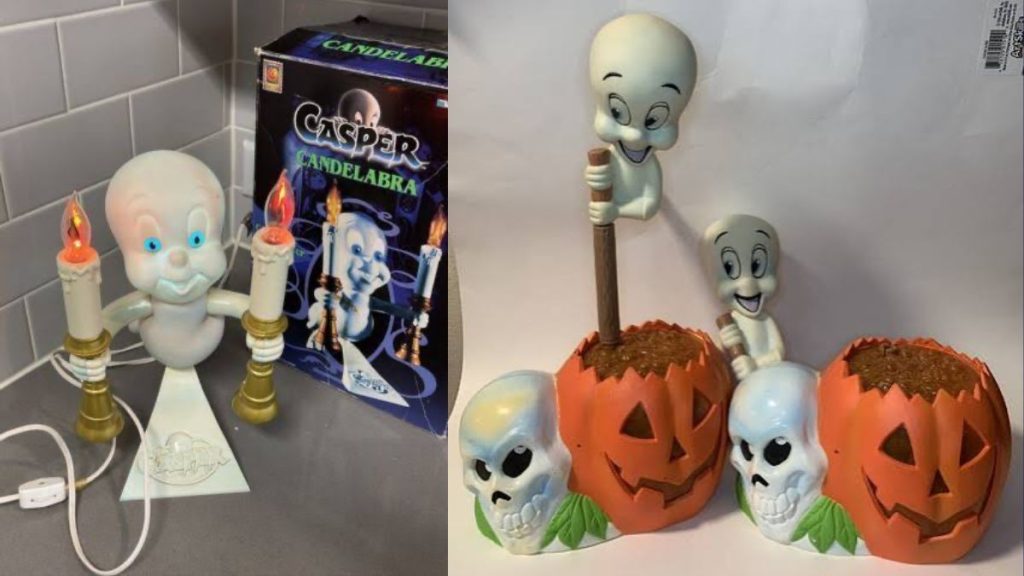
Documented products include illuminated Casper candelabras, clap-activated animated figures, and a Deluxe Kibosh decoration featuring lights and sound.
If you remember the movie, Kibosh was the enormous, intimidating ghost who served as something of an authority figure in the ghostly world. He wasn’t exactly the sort of character you’d want floating around your bedroom at three in the morning, but he made an entertaining Halloween decoration.
The Casper candelabras are particularly interesting because they combine the old haunted-house tradition of flickering candles with the kind of licensed-character merchandise that became so popular during the 1990s.
And the clap-activated figures? Those were pure Trendmasters.
Apparently, somebody decided it wasn’t enough for Casper to sit there and glow. He needed to respond when you clapped your hands.
I can imagine that being a big hit with children, although I suspect some parents eventually regretted buying one after hearing it activate for the fiftieth time.
Trendmasters also produced Casper-related pumpkin decorations, including stacked designs documented in surviving collector listings.
The appeal was obvious. Parents recognized Casper, children knew him from the movie, and Halloween provided a natural reason to bring the character into the house every October.
Unlike a toy tied to a movie that might be forgotten after a few months, a Casper Halloween decoration could become something the family displayed year after year.
And that’s exactly how ordinary seasonal merchandise eventually becomes nostalgic.
The Crypt Keeper: Halloween for People Who Liked Things a Little Creepy
If Casper represented the friendly side of Trendmasters’ Halloween business, the Crypt Keeper represented something considerably less wholesome.
For anyone who remembers HBO’s Tales from the Crypt, the Crypt Keeper was the wisecracking, decomposing host who introduced horror stories with terrible jokes and a face that looked like it had been left in the refrigerator a few decades too long. I recall watching many an episode when I was a child and being freaked out every single time.
He was grotesque, funny, and instantly recognizable.
Naturally, somebody decided he needed to become a holiday decoration.
Trendmasters produced licensed Crypt Keeper merchandise, including illuminated candelabras and an animated figure that incorporated light, sound, and shaking motion.
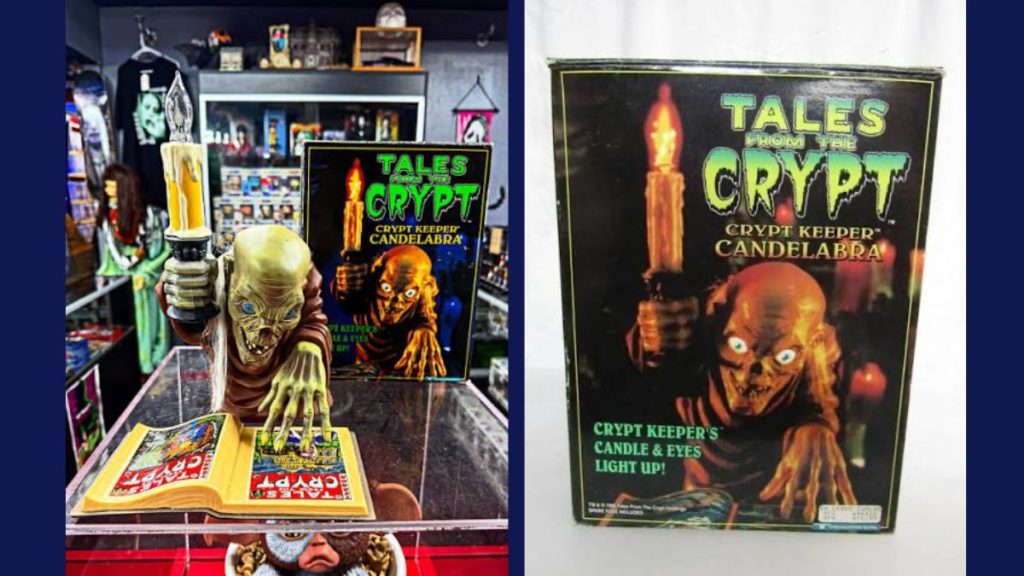
The candelabras featured glowing candle flames and illuminated eyes, while the animated figure could respond to sound. Some surviving examples are described as clap-activated.
It’s exactly the kind of product that could have been designed only during the 1990s.
Imagine inviting somebody over for dinner, clapping your hands, and having a rotting television horror host suddenly come to life on the mantel.
Some guests would think it was hilarious. Others would probably decide they had somewhere else to be.
What I like about the Crypt Keeper decorations is how different they were from the Halloween figures produced by earlier manufacturers.
Star Band‘s owl and pumpkin lamps were charming, cartoonish decorations designed to make Halloween feel fun. The Crypt Keeper was still entertaining, but he was aimed at an audience that wanted something a little more outrageous.
Trendmasters recognized that Halloween wasn’t just for little kids anymore. Teenagers and adults were spending money on decorations, too, and licensed horror characters gave them something that felt a little more grown-up.
Well, as grown-up as a shaking plastic corpse telling bad jokes can feel.
The Crypt Keeper decorations have become interesting collectibles because they combine two different kinds of nostalgia: the Halloween merchandise of the 1990s and the television shows that helped define that decade.
Mickey Mouse, Donald Duck, and Goofy Join the Halloween Party
Disney characters had been appearing on Christmas merchandise for generations, so it was probably inevitable that they’d eventually become part of the growing Halloween-decoration business.
Trendmasters produced licensed Disney Halloween decorations during the mid-1990s, including illuminated figures featuring Mickey Mouse, Minnie Mouse, Donald Duck, and Goofy.
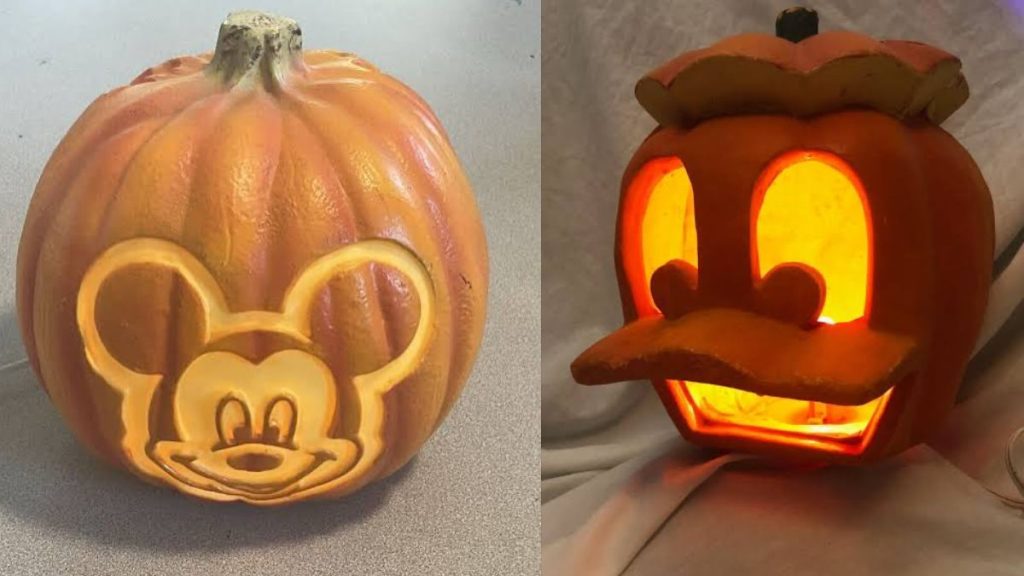
Among the documented examples are Minnie dressed as a witch, Mickey dressed as a vampire, and stacked pumpkin decorations featuring familiar Disney characters.
I particularly like the idea of Mickey Mouse as a vampire. Here’s a character who has spent most of his career being about as cheerful and harmless as a cartoon mouse can possibly be, and somebody decided he needed fangs and a Halloween costume.
It works, though. Disney has always been good at dressing up its characters for the holidays, and these decorations gave families a way to combine familiar cartoon favorites with Halloween.
The pumpkin totems were another clever idea. Instead of ordinary jack-o’-lantern faces, Trendmasters incorporated recognizable characters into the stacked designs.
For parents with young children, that was probably a pretty appealing alternative to some of the scarier decorations appearing in stores at the time.
And for Disney collectors, it created another category of merchandise to hunt down.
Surviving Trendmasters Disney decorations have been documented in auction catalogs and collector collections, with several examples associated with approximately 1995 through 1997.
They’re a good reminder of how quickly holiday merchandise was becoming tied to entertainment licensing.
The old manufacturers had made generic Santas, snowmen, witches, and pumpkins. Trendmasters was offering characters people already knew from television, movies, and theme parks.
That was a pretty significant change in the way seasonal decorations were marketed.
Even the M&M’s Characters Got Involved
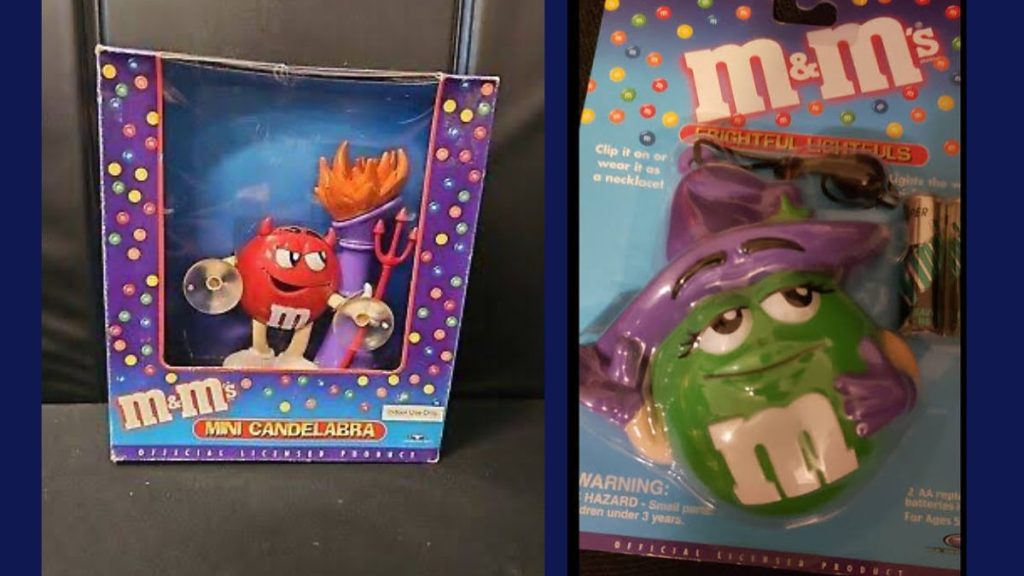
According to blow mold historian Cole Walker, M&M’s characters were another licensed property associated with Trendmasters’ illuminated seasonal decorations.
That doesn’t surprise me at all.
By the 1990s, the Red and Yellow M&M’s characters were practically celebrities. They appeared in television commercials, seasonal promotions, and all sorts of merchandise, often behaving more like a comedy team than candy mascots.
And Christmas was an especially natural fit.
Who doesn’t remember the M&M’s holiday commercial where the characters encounter Santa Claus and both sides are shocked to discover the other actually exists?
That commercial became a Christmas tradition of its own, and it helped make the M&M’s characters feel like part of the holiday season.
From a product-development standpoint, they were ideal candidates for illuminated decorations. They’re colorful, round, recognizable, and already look a little like Christmas ornaments with arms and legs.
I can easily understand why Trendmasters would be interested in them.
The frustrating part is that I haven’t found enough original packaging or catalog documentation to confidently identify the full assortment of Trendmasters M&M’s decorations, particularly which were intended for Halloween and which were sold for Christmas.
Cole Walker’s information provides a valuable starting point, but I’d love to see more evidence from collectors who own these pieces.
An original box with the Trendmasters name, a product photograph, or even a dated retailer advertisement could help establish exactly what was produced.
And given how much M&M’s merchandise was sold during the 1990s, I wouldn’t be surprised if some of these decorations are still sitting in storage boxes across the country.
They may not even be recognized as Trendmasters products by their owners.
So What Did Trendmasters Make for Christmas?
This is where the company’s history becomes a little more difficult to piece together.
Trendmasters definitely participated in the Christmas-decoration business. Contemporary toy-industry reporting from 2002 specifically identified Christmas, Halloween, and Easter merchandise among the company’s seasonal product lines.
Trademark records also describe animated Christmas decorations, motion ornaments, and electronic seasonal plush toys associated with the business.
So Christmas wasn’t an afterthought. It was part of the company’s commercial operation.
What I haven’t been able to find is a complete, reliable catalog of individual Trendmasters Christmas foam-molded decorations comparable to the surviving documentation for its Halloween products.
And that’s unfortunate, because I’d really like to know more about them. What I could find is part of a catalog posted on blow-molded.com.
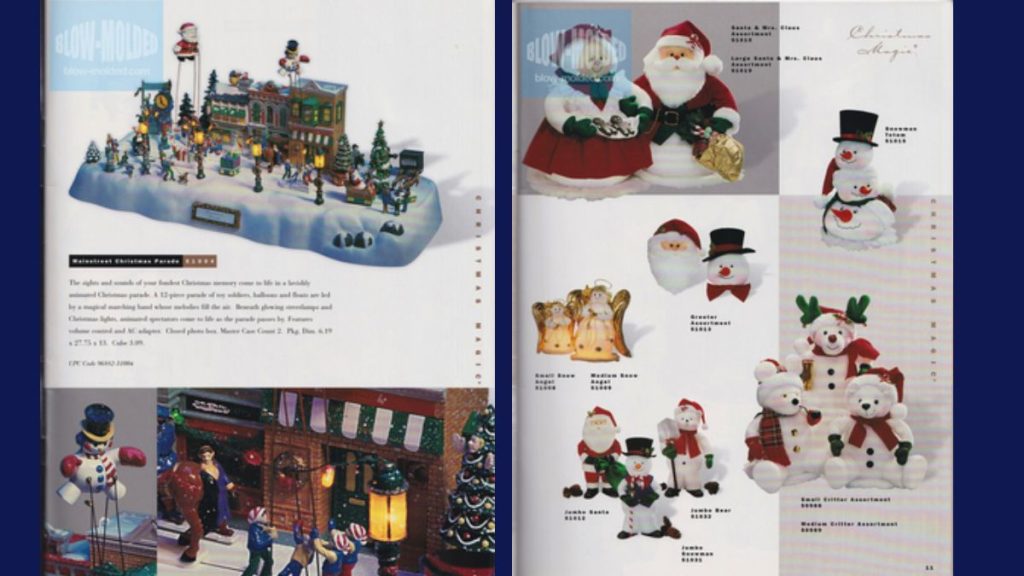
Think about the Christmas-decoration market during the 1990s. Traditional illuminated plastic Santas and snowmen were still being sold, but electronic decorations were becoming increasingly popular.
You could buy animated figures, musical ornaments, talking characters, and all sorts of holiday novelties that would have seemed pretty remarkable twenty years earlier.
Trendmasters had exactly the kind of experience needed to participate in that business. It already knew how to produce electronic toys, develop licensed characters, and create seasonal merchandise for major retailers.
It’s reasonable to see why Christmas would have been an attractive category, particularly with so many recognizable characters available for licensing.
But I don’t want to start assigning unidentified Santas, snowmen, or other decorations to Trendmasters without evidence. It appears they did produce a number of Christmas products, including snowman & Gumby-themed plush dolls, miniatures & more.
What we can say is that Trendmasters was part of the movement toward more elaborate, character-driven Christmas merchandise, even if the full extent of its Christmas foam-molded lineup still needs additional research.
And if you happen to own an original Trendmasters Christmas decoration with its packaging, I’d be very interested in seeing it.
The 1990s Were a Strange Time for Christmas Decorations
One thing I remember about the 1990s is how much Christmas decorating seemed to be changing.
The traditional blow molds were still around, but they weren’t necessarily the most exciting things in the seasonal aisle anymore. Stores were filling up with animated Santas, musical figures, electronic ornaments, and decorations that seemed determined to do everything except sit quietly and look festive.
Some of them were terrific. Others were the sort of thing that seemed funny for about thirty seconds before somebody started looking for the off switch.
But people bought them, and plenty of those decorations became part of family Christmas traditions.
I think that’s something vintage blow mold collectors sometimes overlook.
We tend to focus on the decorations we remember from our own childhoods, which makes perfect sense. If you grew up in the 1960s or 1970s, an Empire Santa or Union Products snowman might be the thing that immediately takes you back to Christmas morning.
But somebody who grew up in the 1990s may have an entirely different set of memories.
Maybe their family had a talking Santa. Maybe they had a musical decoration that drove everybody crazy but still came out of the attic every December. Or maybe there was a lighted character from a favorite movie that became as much a part of Christmas as the tree itself.
Those memories are just as real.
And the decorations that created them are now old enough to be considered nostalgic collectibles.
That still seems a little strange to me, because I remember the 1990s as though they happened about fifteen minutes ago.
Apparently, the calendar disagrees.
Four Million Pumpkins and a Whole Lot of Halloween Memories
I keep coming back to that figure from the 1998 company profile: approximately four million Halloween pumpkins sold.
That’s an impressive number for a manufacturer whose name isn’t particularly well known outside the toy-collecting community.
It also helps explain why Trendmasters decorations still turn up in estate sales, online marketplaces, and collections today.
These weren’t necessarily obscure products sold only through specialty shops. Trendmasters was producing seasonal merchandise for a broad retail audience, and plenty of families brought those decorations home.
Of course, not every product was manufactured in the same quantities. A basic pumpkin might have been produced in much larger numbers than a licensed character decoration, and some designs may have been available for only a season or two.
Without original production records, it’s difficult to know exactly how many examples of each item were made.
But the broader point remains: Trendmasters was a significant participant in the Halloween-decoration business during the 1990s.
And its products captured the personality of that decade remarkably well.
The decorations were colorful, sometimes goofy, often electronic, and frequently tied to whatever movie or television character happened to be popular.
They weren’t necessarily designed to become family heirlooms. They were products meant to sell during a particular holiday season, entertain people for a few weeks, and then go back into storage.
But plenty of them survived.
And now they’re becoming part of the collecting conversation.
When the Godzilla Gamble Didn’t Pay Off
Trendmasters had built much of its success around licensing entertainment properties, but that strategy came with some obvious risks.
When a movie or television show became a hit, the merchandise could sell extremely well. When a project disappointed, manufacturers could find themselves sitting on inventory that retailers suddenly weren’t interested in buying.
The 1998 American Godzilla movie created exactly that kind of challenge.
Trendmasters had already enjoyed success with Godzilla toys, and the heavily promoted Hollywood film seemed like an opportunity to introduce an even larger assortment of merchandise.
Unfortunately, the movie didn’t live up to expectations, and the toy business suffered along with it.
The company had invested heavily in the property, and disappointing sales complicated plans for additional merchandise connected to the animated television series.
I remember how much publicity surrounded that movie. Godzilla was everywhere, and the marketing campaign made it seem as though the creature was about to become the biggest thing in entertainment. I was working at Fox Kids Network at the time and remember a lot of executives very excited about the new Godzilla animated series we debuted.
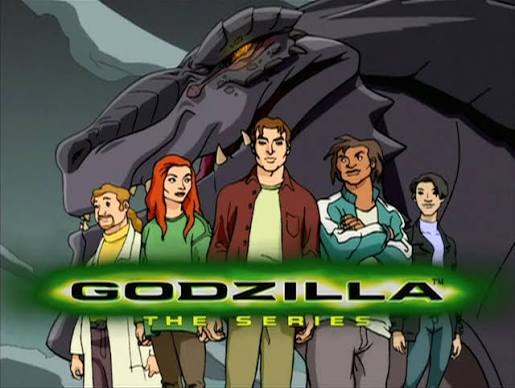
Then the movie came out, and the reaction wasn’t quite what everybody had hoped.
For a toy manufacturer, that’s a dangerous situation. By the time audiences decide they don’t particularly like a movie, the merchandise has already been designed, manufactured, shipped, and placed on store shelves.
You can’t exactly call the factory and ask everybody to pretend the last six months never happened.
Trendmasters wasn’t the only company to experience this problem, and Godzilla wasn’t necessarily the sole reason for its later difficulties. But the episode illustrates how risky the licensing business could be, especially for a company willing to take chances on big entertainment properties.
And by the early 2000s, Trendmasters was facing a much more serious challenge.
The End of Trendmasters in 2002
By the time Trendmasters approached its final years, it had grown from a basement startup into a substantial toy and seasonal-merchandise company.
Contemporary accounts reported annual revenue reaching approximately $230 million during its more successful period, an impressive achievement for a business founded in 1989.
But the toy industry was changing, and Trendmasters was dealing with financial pressures.
Competition was intense, licensing arrangements could be expensive, and retailers had become increasingly demanding about which products they would carry.
The economic uncertainty following September 11, 2001, added another complication, although it would be too simplistic to blame the company’s problems on any single event.
In December 2002, Jakks Pacific acquired Trendmasters’ product lines and related assets, bringing the St. Louis company’s brands and merchandise categories into a larger toy-manufacturing operation.
One detail from the contemporary industry coverage is particularly interesting.
The acquisition specifically included Trendmasters’ Halloween, Christmas, and Easter product lines.
That tells us something important about the company’s seasonal business. Those decorations weren’t just forgotten leftovers from a toy manufacturer. They were valuable enough to be identified as part of what Jakks Pacific was acquiring.
The sale effectively ended Trendmasters’ thirteen-year run as an independent company.
For collectors, it also created another familiar situation: a manufacturer disappears, its assets change hands, and the products it once made gradually become more difficult to identify.
We’ve seen versions of that story throughout the history of blow molds, from Star Band‘s 1976 liquidation to the various acquisitions that eventually helped General Foam Plastics assemble its enormous assortment of holiday decorations.
Trendmasters belonged to a different generation of manufacturers, but the business story was surprisingly similar.
The People Behind Trendmasters Didn’t Disappear
One of the more interesting things about Trendmasters is that the company’s founders didn’t simply vanish from the toy industry after 2002.
Russell Hornsby later became associated with Cepia, the company responsible for ZhuZhu Pets, those little battery-powered toy hamsters that became a massive craze in the late 2000s.
If you were shopping for children’s Christmas presents around 2009, you probably remember them.
The little hamsters raced around plastic tracks, made noises, and somehow convinced an enormous number of parents that their children absolutely had to have one.
They were also a pretty good example of the same creative instincts that had helped make Trendmasters successful.
Take a familiar concept, add some electronics, give it personality, and find a way to make it entertaining enough that people want to bring it home.
That’s essentially what Trendmasters had been doing with its toys and holiday decorations throughout the 1990s.
The company name may have disappeared, but some of the people and ideas behind it continued into another generation of products.
And that’s something you see repeatedly when researching older manufacturers.
Businesses close, ownership changes, and familiar names vanish from packaging. But the designers, inventors, and entrepreneurs often move on to create something else.
Sometimes the next big thing is a giant movie monster.
Sometimes it’s a battery-powered hamster.
The toy business is a strange place.
Are Trendmasters Decorations Collectible?
I’d say absolutely, although they’re a little different from the traditional vintage blow molds that many collectors focus on.
Trendmasters decorations capture a very specific moment in American holiday history. The 1990s were a period when Halloween became a bigger retail event, electronic decorations were increasingly popular, and licensed characters were appearing on just about everything.
The company’s products reflect all of those trends.
The stacked pumpkin totems, Casper decorations, Crypt Keeper candelabras, Disney Halloween figures, and HallowScream animated products are among the more recognizable examples.
For somebody who grew up with these decorations, the appeal is obvious. They’re reminders of childhood Halloweens, family decorating traditions, and the excitement of wandering through seasonal store displays.
For collectors who didn’t grow up with them, they’re interesting examples of how the holiday-decoration business evolved beyond traditional blow molding.
Condition is especially important with Trendmasters pieces.
Molded foam can be vulnerable to dents, surface damage, paint loss, and deterioration. Decorations with electronic components introduce additional concerns, including broken motors, failed speakers, corroded battery compartments, and damaged wiring.
If you’re buying an animated figure, I’d want to know whether the movement, lights, and sound still work. If the seller says it hasn’t been tested, I’d assume there’s a possibility something is wrong.
Original packaging is particularly valuable because it can help establish the product name, manufacturer, license, and production period.
That’s useful with Trendmasters because so many of its decorations are casually described as blow molds, even when their original packaging identifies a different construction.
And I’d be cautious about assuming every discontinued decoration is worth a fortune.
Some licensed pieces attract serious collector interest, but asking prices can be all over the place. A seller describing something as RARE VINTAGE HALLOWEEN HOLY GRAIL doesn’t necessarily mean anybody is willing to pay the amount being requested.
Completed sales are a much better guide.
I also think there’s something to be said for collecting what you genuinely like rather than chasing whatever happens to be expensive.
A glowing Casper or an animated Crypt Keeper might not appeal to everybody, but if it reminds you of Halloween when you were ten years old, that’s a pretty good reason to own one.
Today’s Collectibles Were Yesterday’s Discount-Store Decorations
One of the things I find amusing about vintage collecting is how quickly ordinary merchandise can become something people treat like a museum artifact.
Think about it. Somewhere in 1995, a parent probably walked into Walmart, grabbed a Trendmasters pumpkin off the shelf, and bought it because the kids thought it was cute.
Nobody was thinking about long-term collectibility. Nobody was worrying about preserving the original packaging or keeping the receipt for future reference.
They wanted something to put in the window for Halloween.
The decoration came home, got plugged in, and became part of the family’s October routine. Maybe it sat beside the television. Maybe it greeted trick-or-treaters from the front porch. Maybe somebody knocked it over one year and cracked the base, but the family kept using it anyway.
Then the children grew up, the decoration got packed away, and eventually it ended up in an attic or basement.
Years later, one of those kids starts thinking about the Halloweens they remember. They search online for the pumpkin their family used to have, and suddenly they’re looking at collector listings for something that originally cost about as much as a pizza.
That’s how nostalgia works.
It doesn’t really care whether the decoration came from a famous manufacturer or a discount store. What matters is the memory attached to it.
And I suspect that’s why Trendmasters products are becoming more interesting to collectors.
The children who grew up with them are now adults, and they’re beginning to look for the decorations that made Halloween and Christmas feel special.
It’s the same thing that happened with Empire Santas, Union Products snowmen, and Poloron candles.
Just a different generation.
Why Trendmasters Deserves a Place in Holiday Decoration History
When people discuss the history of illuminated holiday decorations, the conversation usually begins with the classic manufacturers.
Empire Plastics, Poloron, Union Products, Beco, and General Foam helped establish the familiar tradition of glowing plastic Santas, snowmen, candles, pumpkins, and Nativity figures.
Those companies deserve the attention, and their products remain the foundation of the vintage blow mold collecting hobby.
But I don’t think the story should stop there.
Trendmasters represents a later period when manufacturers were experimenting with different materials, electronic effects, and entertainment licenses.
The company wasn’t producing traditional blow molds in the same way as the earlier manufacturers, but it was still creating illuminated seasonal decorations that families brought home, displayed, and remembered.
Its Halloween products were especially distinctive, combining familiar characters with the increasingly elaborate decorating styles of the 1990s.
Casper, the Crypt Keeper, Disney characters, and other licensed properties gave the decorations personalities that older generic figures didn’t necessarily have.
And the company’s Christmas merchandise, while less thoroughly documented today, was significant enough to be included among the seasonal product lines acquired by Jakks Pacific in 2002.
That’s a meaningful part of the industry’s history.
It also helps explain how holiday decorating developed from simple illuminated plastic figures into the enormous assortment of electronic, animated, and licensed decorations available today.
Not every Trendmasters product was destined to become a classic. Some probably disappeared after a single season, while others spent years in family homes before finally being donated or thrown away.
But enough survived to give us a pretty good picture of what the company was trying to accomplish.
And I think that’s worth preserving.
The Glow That Won’t Go Out
When I began researching The Glow That Won’t Go Out, I was mainly interested in the manufacturers that created the Christmas decorations I remembered from childhood.
Empire Plastics, Union Products, Poloron, and General Foam were the names I associated with glowing Santas, snowmen, candles, and Nativity figures.
But the more I researched, the more I realized that the history of illuminated holiday decorations was much broader than those original companies.
There were smaller manufacturers, regional businesses, companies that changed ownership, and later manufacturers that experimented with entirely different materials and technologies.
Trendmasters is a good example of that last group.
Founded in St. Louis in 1989, the company built a successful toy business while producing an extensive assortment of Halloween and other seasonal decorations. Its illuminated foam figures, licensed characters, and animated products helped define the look of Halloween during the 1990s.
Christmas was part of its business as well, even if the surviving documentation of individual Christmas decorations leaves us with some unanswered questions.
By the time Trendmasters disappeared in 2002, it had helped introduce a generation of families to holiday decorations that were more interactive, more character-driven, and sometimes considerably stranger than the traditional blow molds that came before them.
And that’s what makes the company’s history interesting to me.
I still prefer the old blow molds. Give me a slightly faded Empire Santa, a Union Products snowman, or a vintage Poloron candle, and I’m perfectly happy.
But I can appreciate a glowing Casper or a ridiculous animated Crypt Keeper, too. They represent a different period, but the emotional connection is much the same.
Somewhere right now, there’s probably a thirtysomething collector searching for the exact Trendmasters pumpkin that sat in the family window every Halloween.
And when that person finally finds one, brings it home, and plugs it in, I suspect the feeling will be pretty familiar.
It’s the same reason so many of us collect the old Christmas blow molds.
We’re not just looking for plastic decorations.
We’re looking for a little piece of the holidays we remember.
Keep the Glow Alive
The story of Trendmasters is a reminder that America’s fascination with illuminated holiday decorations didn’t end when the original blow mold manufacturers began disappearing.
In The Glow That Won’t Go Out: The Complete Collector’s Guide to Vintage Holiday Blow Molds, I explore the companies, designers, collectors, and unforgettable decorations that helped make glowing plastic Christmas figures such an important part of American holiday traditions.
From Empire Plastics and Union Products to Poloron, General Foam, and the lesser-known manufacturers whose stories are still being uncovered, the book celebrates the decorations many of us grew up with and the people who continue to preserve them.
If you’ve ever wondered who made the glowing Santa in your grandparents’ window, why certain decorations are so difficult to find, or what happened to the companies that produced them, there’s plenty to discover.
Discover The Glow That Won’t Go Out on Amazon
And if you own a Trendmasters Halloween or Christmas decoration, I’d love to hear about it. I’m especially interested in seeing original packaging, catalogs, and manufacturer markings that could help document the company’s lesser-known seasonal products.
There’s a good chance somebody reading this has a Trendmasters decoration sitting in a box somewhere without realizing how much history is attached to it. Maybe it’s a glowing pumpkin, a Casper figure, or an electronic Christmas decoration that hasn’t been plugged in for twenty years.
Whatever it is, I hope it still works.
There’s something pretty wonderful about seeing an old holiday decoration light up again after all those years.
Curtiss Wayne Andrews is the author of The Glow That Won’t Go Out: The Complete Collector’s Guide to Vintage Holiday Blow Molds. He writes about vintage Americana, forgotten manufacturers, collecting culture, and the holiday decorations that bring back memories of Christmas and Halloween past.