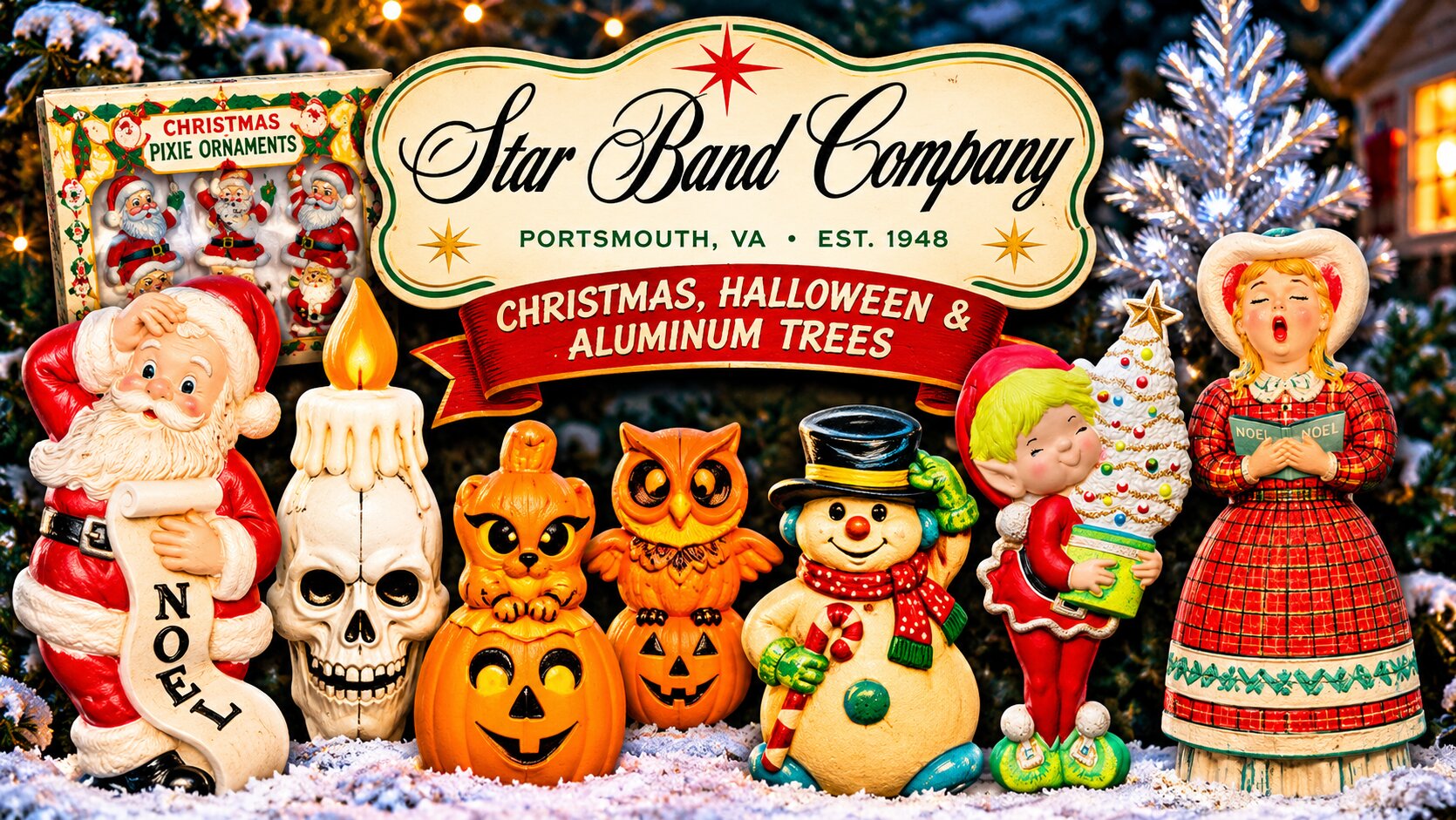
Founded in 1948, Star Band helped bring some of America’s most memorable holiday decorations into homes across the country. From shimmering aluminum Christmas trees to unusual Halloween blow molds, the Portsmouth, Virginia, manufacturer had a knack for creating things people remembered. Unfortunately, the company’s story would end with financial troubles, a liquidation, and a devastating fire.
By Curtiss Wayne Andrews
There’s something about the Christmas decorations of the 1950s and 1960s that makes me wonder what the conversations were like inside the companies producing them. Somewhere along the way, somebody decided Americans needed silver Christmas trees with rotating color wheels. Somebody else figured a hollow plastic Santa with a light bulb inside would look terrific on the front lawn. And apparently, there were enough people willing to buy these things that an entire industry sprang up around them.
I’m certainly glad it did.
The more I research vintage holiday decorations, the more I’m amazed by the number of companies that got involved. Some became household names, at least among collectors. Empire Plastics, Union Products, Poloron, and General Foam are familiar to just about anybody who’s spent time hunting for vintage blow molds.
Others have largely disappeared from the conversation, even though they made some pretty interesting stuff.
Star Band Company is one of those manufacturers.
Founded in 1948 and eventually headquartered in Portsmouth, Virginia, Star Band was involved in several different corners of the holiday-decoration business. It made Christmas ornaments, artificial trees, molded plastic decorations, and a handful of Halloween blow molds that have become favorites among collectors.
The company also has one of the more unusual endings I’ve come across while researching these manufacturers. By 1976, Star Band was struggling financially. Its manufacturing divisions were sold to other companies, including General Foam Plastics, and its former warehouses would later be destroyed in a fire that reportedly covered two square blocks.
It’s quite a story for a company that started out making Christmas ornaments. And if you’ve ever admired an old aluminum tree or come across one of Star Band’s peculiar Halloween lamps, there’s a good chance you’ve encountered a little piece of its history without realizing it.
A Christmas Company Takes Shape in 1948
Star Band was founded in 1948 by Leon Cardon and Carl Marc. Although most collectors associate the company with Portsmouth, Virginia, its beginnings were actually in New York before the business moved south and established its manufacturing operation in Portsmouth.
The company eventually occupied property around Broad and Commerce Streets, where it developed into a sizable seasonal-products business. This wasn’t a little operation turning out a few decorations in somebody’s garage. Star Band had multiple manufacturing divisions, warehouses, and the ability to produce several different kinds of holiday merchandise.
Its early products included satin-wrapped, unbreakable Christmas ornaments, which were particularly appealing during the postwar years. Families were buying more decorations, artificial trees were becoming increasingly popular, and manufacturers were looking for inexpensive products that could survive more than one Christmas.
Anyone who’s ever watched a glass ornament hit a hardwood floor can appreciate the attraction of an unbreakable alternative. Add a couple of children, an enthusiastic dog, and a Christmas tree that isn’t quite as secure as everybody thinks it is, and those satin-wrapped ornaments start sounding like a pretty good investment.
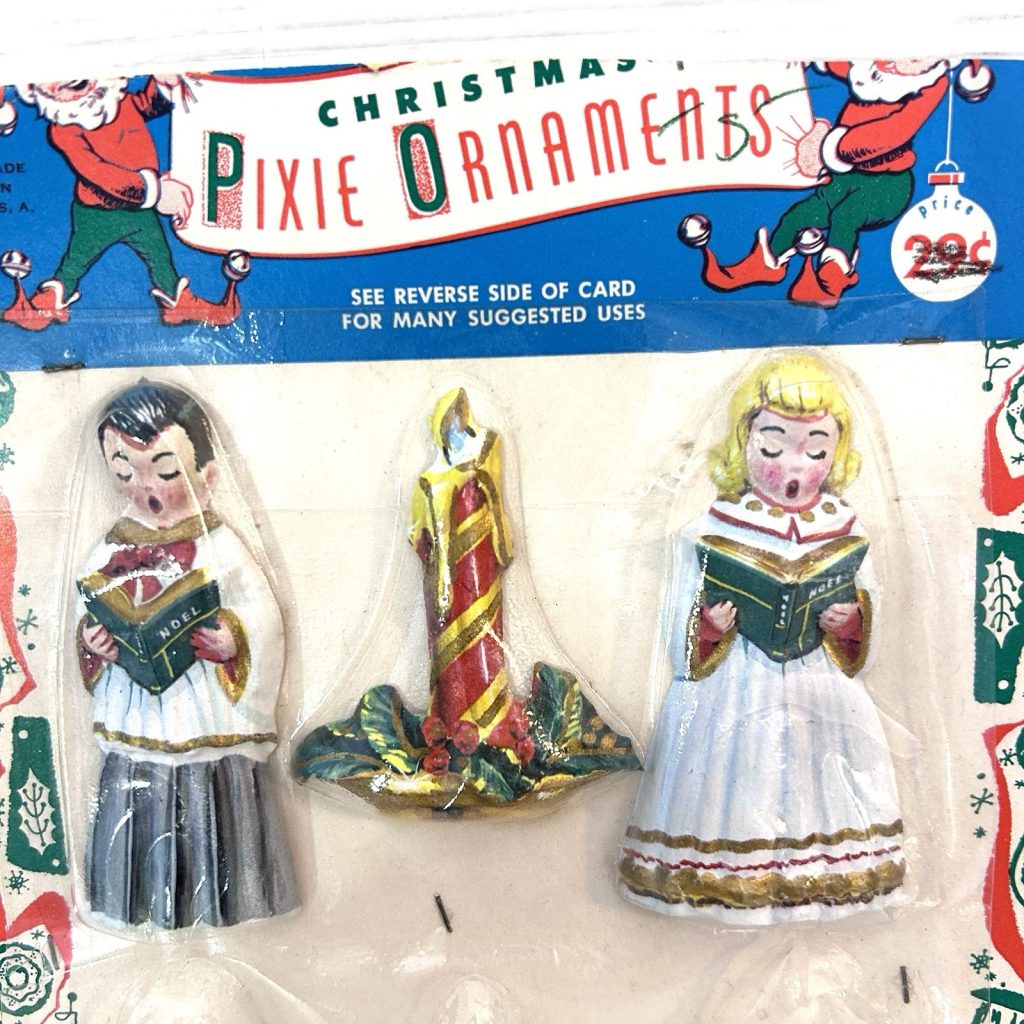
Star Band expanded as the market grew, eventually adding artificial Christmas trees, vacuum-formed plastic decorations, and blow-molded holiday figures to its assortment. The company was willing to experiment with new materials and manufacturing techniques, which turned out to be a pretty useful approach during an era when American consumers seemed eager to try almost anything that promised a brighter, more colorful Christmas.
And in Star Band’s case, some of those experiments would produce decorations that collectors are still searching for decades later.
Leon Cardon: The Man Who Loved Christmas
One of the more interesting pieces of Star Band history comes from Leon Cardon’s son, Richard, who shared memories of his father in a March 2020 interview with The Aluminum Forest, a website devoted to vintage aluminum Christmas trees.
According to Richard, Leon had a genuine affection for Christmas, even though the Cardon family was Jewish and celebrated Hanukkah. Leon reportedly enjoyed wearing Santa Claus pajamas on Christmas morning, which strikes me as a wonderfully fitting detail for somebody who made his living producing holiday decorations.
I can picture him sitting around the house in those pajamas, probably not giving much thought to the fact that people would be discussing his company’s products more than seventy years later.
Richard also remembered his parents, Leon and Selma, as active members of their community. Both were involved in synagogue life and charitable organizations, and Leon held several leadership positions over the years.
These are the kinds of details I enjoy finding when researching old manufacturers. Company histories tend to focus on dates, acquisitions, product lines, and factory locations, but they don’t always tell us much about the people behind the businesses.
Leon Cardon wasn’t just a name on a corporate document. He was a husband, a father, a businessman, and apparently somebody who appreciated a good pair of Santa pajamas.
And one of the products his company helped popularize would become an unmistakable symbol of mid-century Christmas.
When Christmas Trees Went Space Age
If you grew up during the 1960s, there’s a decent chance you remember aluminum Christmas trees. Even if your family didn’t own one, you probably saw them in department stores, neighbors’ windows, or those wonderfully overdecorated living rooms that seemed to exist in every neighborhood.
These trees were something else.
Forget traditional green branches and pine needles scattered across the carpet. Aluminum trees were shiny, metallic, and designed to reflect light in every direction. Many were displayed with rotating color wheels that projected changing colors onto the branches, turning an ordinary living room into something resembling a miniature Las Vegas showroom.
And Americans loved them.
In 1959, Holiday Industries emerged as an extension of Star Band, producing aluminum Christmas trees during the height of the craze. The company’s offerings included several distinctive designs that have since become sought-after collectibles.
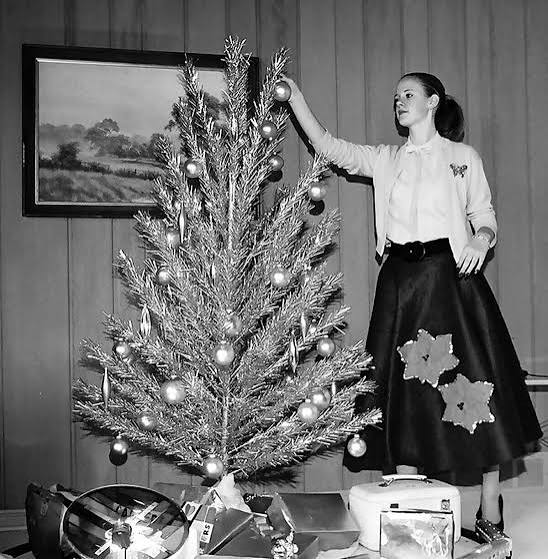
Among the better-known examples were the Medallion/Pom-Pom and Jewel trees. The pom-pom models featured decorative clusters at the ends of their branches, while some Jewel versions incorporated glass ornaments into those clusters. Star Band also offered a Frostie Flock design that used a red Styrofoam jewel, reflecting the company’s ability to work with different decorative materials.
Another recognizable product was the Sparkler aluminum Christmas tree, a name that still turns up among collectors and vintage holiday dealers.
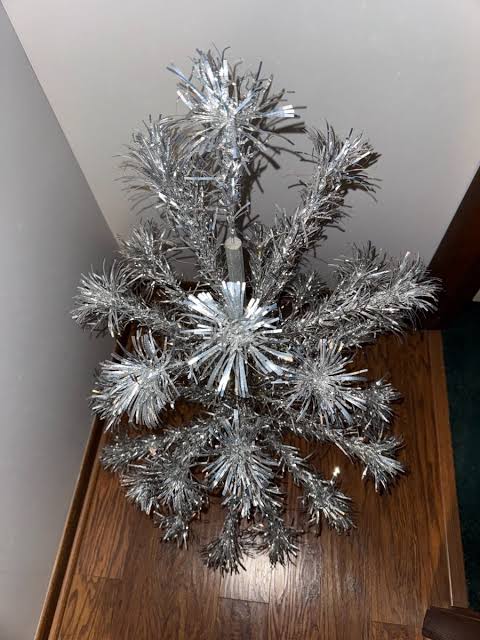
I have a soft spot for these trees because they represent a time when Christmas decorating was becoming increasingly experimental. Traditional trees were still everywhere, of course, but manufacturers were offering families an entirely different way to decorate.
An aluminum tree didn’t pretend to be a real tree. It wasn’t trying to fool anybody into thinking a silver metal structure had somehow grown in the forest. It was proudly artificial, wonderfully flashy, and about as subtle as a chrome bumper on a 1959 Cadillac.
Pair one with a rotating color wheel and a few illuminated plastic decorations, and you’ve got a Christmas display that practically screams 1965.
Star Band was right in the middle of that era, producing trees and other holiday merchandise for a market that seemed to have an endless appetite for something new.
Plastic Masks, Wall Decorations, and a New Manufacturing Opportunity
Star Band’s interests weren’t limited to Christmas ornaments and artificial trees. During the 1950s, the company also moved into vacuum-formed plastic products, opening the door to a variety of seasonal decorations.
Vacuum forming involves heating a sheet of plastic and drawing it over a mold using suction. The process works well for lightweight decorative items, including Halloween masks and molded wall decorations. Remember my article about the Raylite Angel? More about vacuum forming there.
If you grew up wearing those old plastic Halloween masks with the tiny eyeholes and the elastic string that inevitably snapped halfway through trick-or-treating, you already know the general territory.
They weren’t particularly comfortable. You could barely see, breathing was an adventure, and the inside of the mask usually became a miniature sauna after about ten minutes. But when you were eight years old and dressed as Frankenstein, Popeye or Yogi the Bear, none of that mattered. Boy, do I remember those.
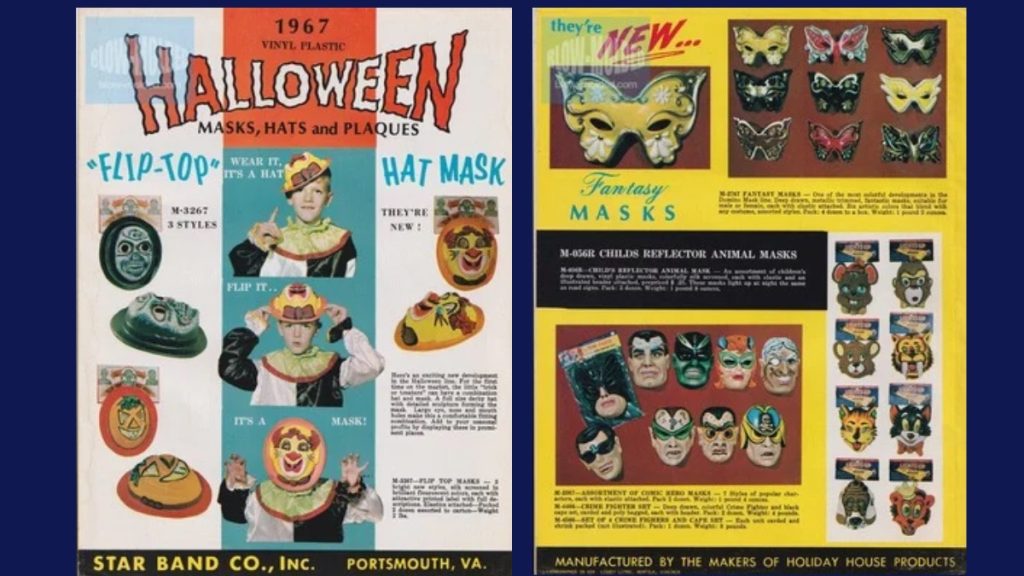
Star Band’s vacuum-forming operation allowed it to produce different kinds of molded decorations without relying entirely on traditional ornament manufacturing.
It also gave the company experience working with plastic at a time when the holiday-decoration industry was beginning to embrace illuminated figures.
There’s an important distinction here for collectors. Vacuum-formed decorations and blow molds can look similar, particularly in photographs, but they aren’t necessarily manufactured the same way.
A vacuum-formed decoration is generally shaped from a sheet of plastic. A traditional blow mold is made by inflating heated plastic inside a mold, creating a hollow, three-dimensional figure.
Both methods played important roles in the history of holiday decorations, and Star Band eventually operated divisions associated with each.
That diversification would become especially significant when the company’s assets were sold in 1976.
Star Band Enters the Blow Mold Business
By the mid-1960s, illuminated plastic decorations were becoming an increasingly familiar sight in American homes and yards.
Companies like Poloron, Beco, and Union Products had demonstrated that people were willing to buy hollow plastic Santas, candles, snowmen, and other holiday figures that could be illuminated from within.
Star Band joined the blow mold business around 1966, according to collector histories, adding another manufacturing category to an already diverse seasonal-products operation.
While the company’s full Christmas blow mold assortment isn’t as well documented as those of some larger manufacturers, several of its Halloween decorations have become particularly recognizable.
And I have to admit, they’re among the more entertaining designs from the era.
Star Band’s Halloween lamps weren’t especially frightening. They leaned toward the playful, cartoonish style that characterized so many decorations from the 1960s and 1970s.
There were smiling pumpkins, friendly animals, and a skull candle that looked like something you might find in a haunted house run by somebody with a pretty good sense of humor.
They were designed to make Halloween fun rather than genuinely terrifying, which is part of what makes them appealing today.
And three particular Star Band designs deserve a closer look.
The Owl and Pumpkin Lamp: A Halloween Classic
Of the Star Band Halloween blow molds I’ve seen, the Owl and Pumpkin Lamp might be my favorite.
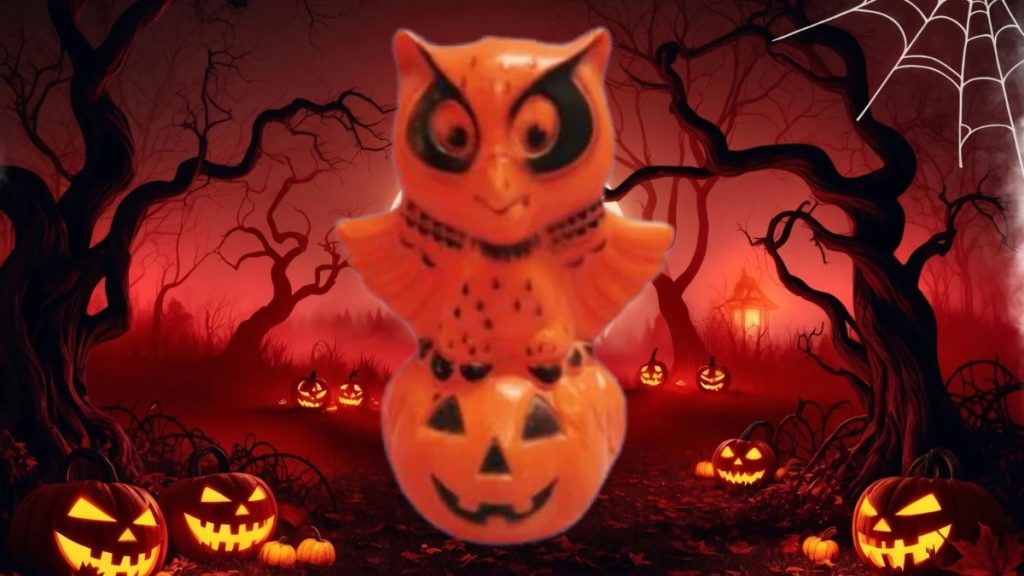
The design features a cartoon-like owl perched above a jack-o’-lantern, creating a decoration that’s more charming than spooky. It’s the kind of thing I can easily imagine sitting in somebody’s living room during the 1970s, surrounded by paper Halloween decorations, a bowl of candy corn, and perhaps a television showing It’s the Great Pumpkin, Charlie Brown.
There’s something about the owl’s expression that makes the whole thing work. It’s not trying to scare anybody, and that’s perfectly fine with me. Sometimes Halloween decorations are more fun when they look like they belong in a Saturday morning cartoon.
Collector research generally dates the Owl and Pumpkin Lamp to approximately 1974 through 1976, placing it near the end of Star Band’s manufacturing history.
That relatively short documented production period has made the lamp particularly interesting to collectors. Surviving examples occasionally appear in online sales and private collections, and vintage newspaper advertisements from 1975 and 1976 have helped establish when the decoration was being marketed.
Those advertisements are especially useful because they provide actual period evidence rather than relying entirely on memories or seller descriptions.
It’s easy to forget how much detective work goes into researching some of these decorations. A faded manufacturer’s mark, an old newspaper advertisement, or a surviving product box can help answer questions that have been floating around collector groups for years.
And when you’re dealing with a company that disappeared nearly fifty years ago, every little piece of evidence helps.
The Cat and Pumpkin Lamp: Another Star Band Favorite
Star Band also produced a Cat and Pumpkin Lamp, another Halloween design associated with the company’s final years.
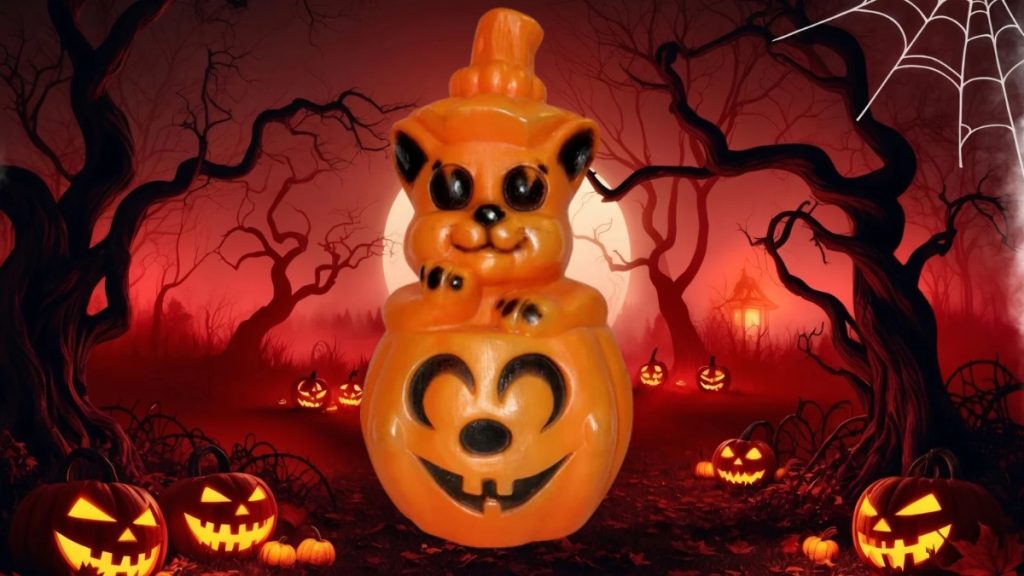
Like the owl version, it combines a friendly animal with a jack-o’-lantern, creating an illuminated decoration that feels right at home among vintage Halloween collectibles.
The cat and owl lamps make a particularly nice pair, although their pumpkin designs differ. They’re similar enough to look like companion pieces without being identical.
I can see why somebody would want both, especially if they’re building a collection around unusual Halloween blow molds rather than the more common jack-o’-lanterns.
Collector records generally place the Cat and Pumpkin Lamp in the same approximate 1974–1976 production period as the owl.
One particularly interesting detail is that the owl and cat designs don’t appear to have been reproduced by General Foam Plastics after the Star Band assets changed hands.
That means surviving examples are associated with a relatively brief manufacturing period rather than decades of continued production under another company.
Of course, that doesn’t tell us exactly how many were manufactured. A short production run doesn’t automatically mean a decoration is extremely rare, and without surviving factory records, it’s difficult to know how many examples originally left the plant.
Still, the distinctive designs and limited documented production period make these lamps appealing to collectors who appreciate the more unusual corners of Halloween history.
And if you happen to find both sitting together at an estate sale, I wouldn’t recommend spending too much time pretending you’re not interested.
Somebody else might be standing behind you.
The Skull Candle Lamp: A Little More Halloween Attitude
The Skull Candle Lamp is another Star Band Halloween blow mold that deserves attention, and it’s quite a departure from the friendly owl and cat.
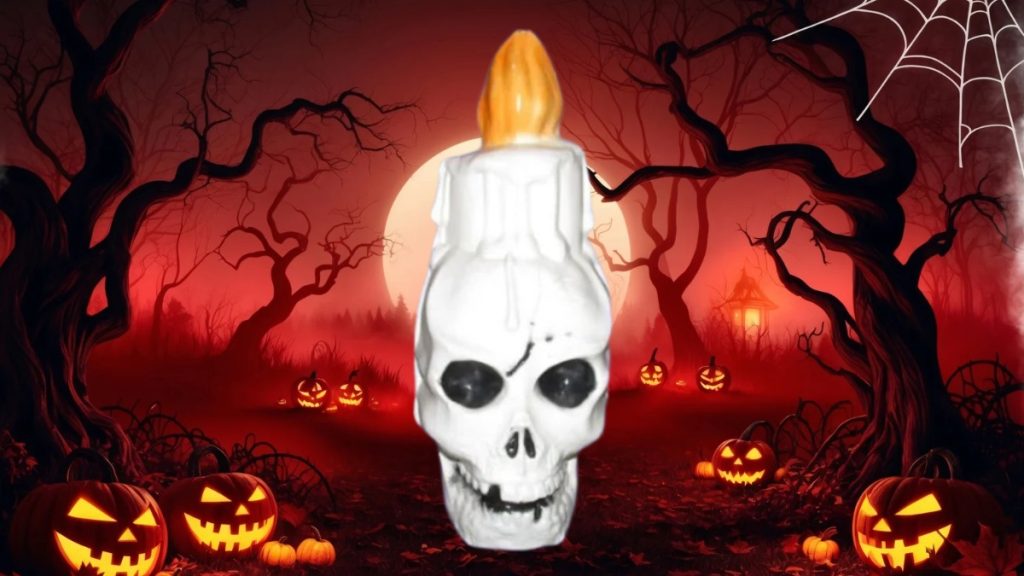
This one features a skull topped with a large candle, complete with molded wax drips. It’s a wonderfully strange design that feels like it belongs in a haunted mansion, an old horror movie, or perhaps the living room of somebody who took Halloween decorating a little more seriously than the neighbors.
I like the fact that it doesn’t try to do too much. There’s no animated jaw, no recorded screaming, and no motion sensor waiting to scare somebody walking past.
It’s a skull with a candle on top. That’s the decoration, and it’s perfectly capable of making an impression without any additional help.
Collector references generally date the Skull Candle Lamp to approximately 1974 through 1976, placing it alongside the owl and cat lamps during Star Band’s final years.
Together, these three designs give us a glimpse of the company’s approach to Halloween decorating. They were colorful, recognizable, and just unusual enough to stand out from the standard pumpkins and witches that dominated the market.
They’re also a reminder that Star Band wasn’t afraid to experiment with different holiday themes, even as its business was approaching a difficult period.
Unfortunately, the company wouldn’t have much longer to enjoy the success of these products.
What About Star Band’s Christmas Blow Molds?
Considering how much Christmas merchandise Star Band produced, you’d expect its illuminated Christmas figures to be just as well documented as its Halloween lamps.
That’s where the research gets a little frustrating.
The company clearly had a blow-molding division, and we know that division was valuable enough to be purchased by General Foam Plastics in 1976. But identifying a complete, verified assortment of original Star Band Christmas blow molds is more difficult than identifying its Halloween products.
That doesn’t mean Star Band never produced Christmas blow molds. It means the surviving documentation isn’t as complete as we’d like.
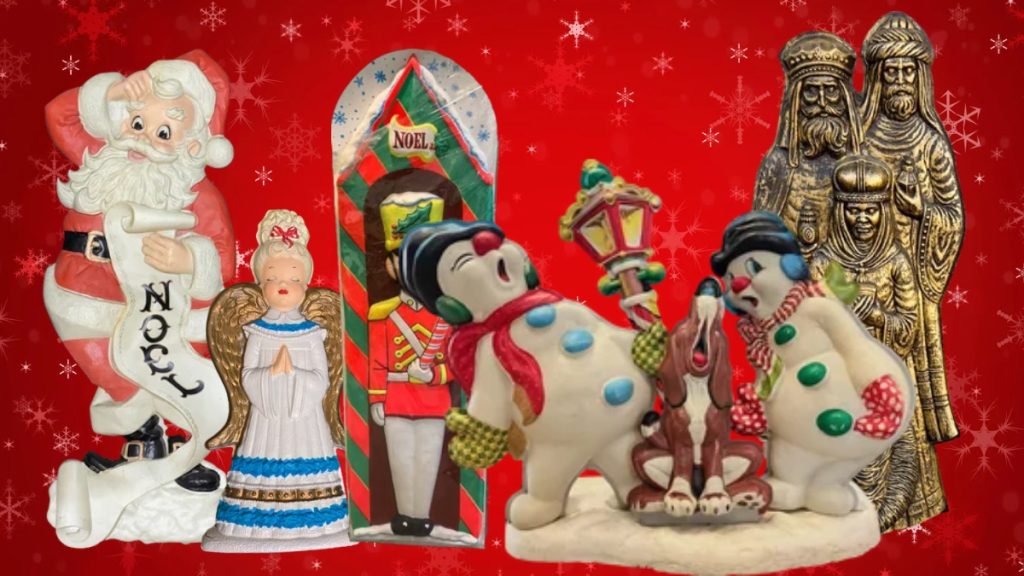
And I think it’s important to make that distinction, especially when dealing with older decorations that may have been manufactured by multiple companies over the years.
I’ve seen plenty of online listings where a seller identifies a decoration based on nothing more than a vague resemblance to another manufacturer’s product. Before long, somebody repeats that identification in a Facebook group, another person adds it to a collection database, and suddenly a questionable attribution starts looking like established history.
I’d rather admit that we don’t know something than give a familiar-looking Santa a manufacturer it may never have had.
What we can say with confidence is that Star Band’s blow-molding operation became part of General Foam Plastics during the company’s 1976 liquidation.
And that acquisition connects Star Band to one of the most important manufacturers in the entire history of illuminated holiday decorations.
September 1976: The Beginning of the End
By the middle of the 1970s, Star Band was facing serious financial difficulties.
Exactly what caused those problems is difficult to establish without access to the company’s financial records. Consumer tastes were changing, manufacturing was becoming increasingly competitive, and operating several different production divisions couldn’t have been inexpensive.
But rather than guessing about what went wrong, it’s better to focus on what the surviving historical record tells us.
In September 1976, a significant portion of Star Band’s assets was liquidated. After nearly three decades in the seasonal-decoration business, the company was forced to sell off major parts of its manufacturing operation.
The liquidation divided Star Band’s business between two buyers, and the details are particularly interesting.
The company’s vacuum-forming division was purchased and relocated to Baltimore, Maryland, where it became Artform Industries. That operation continued the manufacturing tradition associated with shaped plastic decorations, although under a different company name and in a different city.
Meanwhile, General Foam Plastics purchased Star Band’s blow-molding and artificial Christmas tree divisions, acquiring two important parts of the company’s seasonal-products business.
Think about that for a moment. A company that had spent years producing aluminum Christmas trees and illuminated holiday decorations was now being dismantled, with its manufacturing capabilities divided between other businesses.
For the employees who had worked there, it must have been an unsettling period. For collectors looking back today, the liquidation helps explain why Star Band’s name disappeared while some of its manufacturing operations continued elsewhere.
And for General Foam Plastics, the acquisition represented another step toward becoming one of the dominant names in the American blow mold industry.
General Foam Plastics Takes Over
General Foam Plastics was already an established manufacturer of plastic holiday decorations when it acquired Star Band’s blow-molding and artificial Christmas tree divisions in 1976.
The fact that both companies had connections to Portsmouth, Virginia, makes the acquisition particularly interesting. This wasn’t a case of a distant manufacturer discovering an obscure company on the other side of the country. The businesses operated in the same general region and participated in overlapping seasonal-product markets.
General Foam would eventually become one of the most recognizable names in the blow mold business, producing a wide variety of illuminated Christmas and Halloween figures.
Over the years, the company acquired tooling and designs associated with other manufacturers as well, helping consolidate an industry that had once included numerous independent businesses.
That history is one reason identifying vintage blow molds can be so complicated.
A design might begin with one manufacturer, continue under another, and eventually appear with different markings, lighting components, or paint applications. A collector who owns two seemingly identical decorations may discover that they were actually produced years apart by different companies.
Star Band’s connection to General Foam fits into that larger story, although there’s an important detail worth remembering.
The company’s best-documented Halloween lamps don’t appear to have enjoyed the same extended production life as some of the other designs that General Foam acquired over the years.
Collector research indicates that the Owl and Pumpkin Lamp and Cat and Pumpkin Lamp were not reproduced by General Foam, leaving the original Star Band versions as the primary surviving examples.
It’s an interesting outcome. General Foam acquired the blow-molding division, but that didn’t necessarily mean every Star Band design would continue appearing on store shelves.
Some decorations simply belonged to their original era.
And perhaps that’s part of what makes them appealing today.
Artform Industries: The Other Company That Emerged From Star Band
While General Foam is the name most blow mold collectors will recognize, Star Band’s vacuum-forming division had its own future.
Following the September 1976 liquidation, the division was purchased and moved to Baltimore, Maryland, where it became Artform Industries.
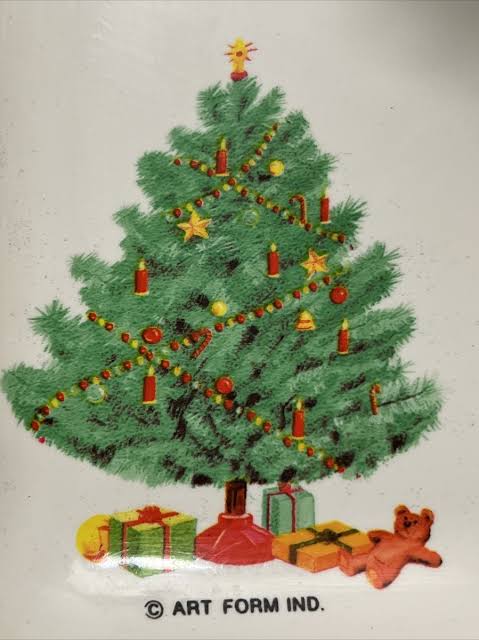
That connection deserves attention because Star Band had been involved in vacuum-formed plastic decorations for years before entering the blow mold business.
The two manufacturing methods produced different kinds of products, but both played important roles in the holiday-decoration industry.
Vacuum forming was especially useful for lightweight plastic masks, wall decorations, and similar molded items. Blow molding, meanwhile, allowed manufacturers to produce hollow figures that could be illuminated from within.
Star Band had developed experience in both, which helps explain why the separate divisions attracted buyers.
For collectors, the Artform connection also provides another avenue for researching decorations that may have originated with Star Band.
Sometimes a manufacturer disappears, but the equipment, molds, or production methods continue under a different name. Following those connections can help explain why certain decorations appear in later catalogs or why a product seems to have more than one manufacturing history.
And occasionally, the research leads to more questions than answers.
That’s pretty much the nature of collecting vintage holiday decorations.
You start out trying to identify a plastic Halloween mask, and three hours later you’re reading about a company liquidation in Portsmouth, Virginia.
I’ve certainly had worse ways to spend an evening.
The Fire That Destroyed Star Band’s Empty Warehouses
Star Band’s troubles didn’t end with the liquidation.
According to the manufacturer history maintained by Blow-Molded.com, the company’s former property later suffered a devastating fire that destroyed its then-empty warehouses.
The blaze reportedly covered two square blocks, an enormous area that gives some indication of the scale of Star Band’s former manufacturing and storage operation.
It’s a sad final chapter for a company that had once been filled with the activity of producing Christmas ornaments, aluminum trees, Halloween decorations, and other seasonal merchandise.
I can’t help picturing those buildings during the company’s busiest years. Workers preparing shipments for retailers, boxes of decorations stacked in warehouses, machinery running, and trucks coming and going as the holiday season approached.
For nearly three decades, that operation had helped supply decorations that would end up in homes across America.
Then the financial problems arrived, the manufacturing divisions were sold, and the warehouses were left empty.
The later fire destroyed what remained of those buildings.
The precise date of the blaze isn’t established in the historical material I’ve reviewed, so I wouldn’t attach a year to it without a contemporary newspaper report or another reliable record.
It’s also important not to assume that the fire destroyed Star Band’s blow mold tooling. The company’s principal blow-molding assets had already been purchased by General Foam during the September 1976 liquidation.
Still, the destruction of the former warehouses makes the company’s ending feel especially final.
Star Band had already disappeared as an independent manufacturer. The fire erased another physical reminder of the business that had once operated there.
Fortunately, many of the decorations it produced survived.
And in some cases, they’ve become considerably more desirable than anybody probably expected when they were new.
Why Collectors Still Look for Star Band Decorations
One of the things I appreciate about Star Band is that its collectibles cover several different areas of holiday nostalgia.
If you’re interested in mid-century Christmas decorating, the company’s aluminum trees are an obvious attraction. They represent a period when manufacturers were experimenting with completely new approaches to traditional holiday displays.
If Halloween is more your thing, the Owl and Pumpkin Lamp, Cat and Pumpkin Lamp, and Skull Candle Lamp offer some wonderfully distinctive designs from the 1970s.
And if you’re interested in manufacturing history, the company’s connection to General Foam Plastics and Artform Industries adds another layer to the story.
Star Band isn’t simply a name molded into the bottom of a decoration. It’s part of a much larger history involving changing consumer tastes, different manufacturing technologies, and the consolidation of the American seasonal-decoration industry.
For collectors looking to purchase original Star Band pieces, I’d pay particular attention to condition and identification.
Original markings, intact lighting components, surviving packaging, and period advertisements can all help establish a decoration’s history.
It’s also worth examining the plastic carefully for cracks, repairs, or repainting. Some older decorations have been restored over the years, and while there’s nothing inherently wrong with a well-done repair, it should be disclosed when a piece is being sold.
And please inspect the electrical components before plugging in a fifty-year-old decoration.
I know the temptation is to bring home a vintage Halloween lamp, stick a bulb in it, and immediately see how it looks glowing in the dark. But an old cord or socket can be a safety hazard, and replacing a questionable electrical component is considerably cheaper than dealing with a house fire.
As for value, I wouldn’t put too much faith in the asking prices you see online.
Some vintage Halloween decorations command impressive prices, but there’s a difference between what somebody wants for an item and what another collector is actually willing to pay.
Completed sales, condition, and documented originality are much more useful than a listing that describes everything as RARE! MUSEUM QUALITY! INVESTMENT GRADE!
We’re talking about plastic Halloween decorations, after all.
Wonderful plastic Halloween decorations, but plastic Halloween decorations nonetheless.
A Company That Tried a Little Bit of Everything
Looking back at Star Band’s history, what impresses me most is how many different products the company managed to produce during its relatively short existence.
It began with Christmas ornaments in 1948, expanded into artificial trees, developed vacuum-formed plastic decorations, and eventually entered the blow mold business.
Along the way, it became associated with some memorable aluminum tree designs and several distinctive Halloween lamps.
That’s a pretty interesting résumé for a company that has largely disappeared from public memory.
And it says something about the creativity of the American holiday-decoration industry during the postwar years.
Manufacturers were constantly experimenting with new materials and ideas, hoping to develop something that would catch the public’s attention.
Sometimes the results became enormous successes. Aluminum Christmas trees were a major decorating trend, and illuminated plastic figures would eventually become fixtures in neighborhoods across the country.
Other experiments were more limited, producing unusual decorations that remained available for only a few years.
Star Band participated in both sides of that business.
Its aluminum trees became part of a national craze, while its Halloween lamps developed a following that would continue long after the company disappeared.
Unfortunately, being creative didn’t guarantee financial success.
By September 1976, Star Band could no longer continue in its original form, and its manufacturing divisions were divided between General Foam Plastics and Artform Industries.
That’s a reminder that behind all those cheerful decorations were real businesses with employees, machinery, operating expenses, and financial pressures.
The products might have been designed to make people happy, but the companies producing them still had to make enough money to keep the lights on.
And sometimes they couldn’t.
What Would Leon Cardon Think Today?
I keep coming back to Leon Cardon and those Santa Claus pajamas.
It’s such a small detail, but it gives the whole Star Band story a little personality.
Here’s a man who helped establish a company that produced Christmas decorations for American families, even though his own family celebrated Hanukkah. He apparently enjoyed the holiday atmosphere enough to dress up in Santa pajamas, and his business went on to produce everything from shiny aluminum trees to glowing Halloween figures.
I wonder what he’d think if he could see collectors today searching for Star Band products.
Would he be surprised that people are still hunting for his company’s aluminum trees? Would he find it amusing that an owl perched on a jack-o’-lantern has become a collectible? And what would he make of the prices some vintage holiday decorations command today?
I suspect he’d be amazed that anybody was still talking about Star Band nearly fifty years after its liquidation.
But that’s one of the things I enjoy most about collecting.
These decorations were never intended to become historical artifacts. They were consumer products, manufactured to be sold in stores, displayed for a few weeks each year, and eventually replaced with something newer.
Yet families held onto them.
Some survived in attics and basements for decades. Others were passed down from parents to children, or rediscovered at estate sales long after their original owners were gone.
And eventually, collectors began asking questions about who made them, when they were produced, and what happened to the companies responsible.
That’s how a plastic Halloween owl becomes a little piece of American manufacturing history.
It’s also how a company that disappeared in 1976 manages to remain part of the conversation fifty years later.
The Glow That Won’t Go Out
When I began researching The Glow That Won’t Go Out, I expected to spend most of my time writing about the familiar manufacturers. Empire Plastics, Poloron, Union Products, and General Foam were the companies I already associated with the decorations I remembered from childhood.
But the more research I did, the more I realized how many smaller manufacturers had helped shape the industry.
Star Band is a perfect example.
Founded in 1948, the company built a diverse seasonal-products business that included Christmas ornaments, aluminum trees, vacuum-formed decorations, and illuminated plastic figures.
Its Halloween blow molds became memorable collectibles, while its artificial Christmas trees captured the flashy spirit of mid-century decorating.
Then came the financial difficulties, the September 1976 liquidation, and the sale of its manufacturing divisions to General Foam Plastics and Artform Industries. The later warehouse fire added one more unfortunate chapter to a company history that had already taken a difficult turn.
Yet the products survived.
Somewhere today, there’s probably a Star Band aluminum tree sitting in its original box, waiting for somebody to assemble it and turn on the color wheel. There are Owl and Pumpkin Lamps glowing in Halloween displays, and Cat and Pumpkin Lamps sitting on shelves beside other vintage decorations.
The company may be gone, but people are still enjoying what it made.
And that’s what I find so appealing about the history of these manufacturers.
Every decoration has a story, even if we don’t know all the details. Sometimes it’s about a famous designer or a manufacturing breakthrough. Other times, it’s about a company that tried a little bit of everything, made some memorable products, and eventually ran out of road.
Star Band belongs in that last category.
Its ending wasn’t particularly happy, but the decorations it left behind continue to make people smile.
And as long as collectors keep finding, displaying, and preserving them, Star Band’s place in holiday history is safe for another generation.
Keep the Glow Alive
The story of Star Band is one of the many forgotten chapters in America’s holiday-decoration history.
In The Glow That Won’t Go Out: The Complete Collector’s Guide to Vintage Holiday Blow Molds, I explore the manufacturers, designers, collectors, and unforgettable decorations that helped make illuminated plastic figures such an important part of Christmas.
From familiar names like Empire Plastics, Poloron, Union Products, and General Foam to smaller manufacturers whose histories have nearly disappeared, the book celebrates the people and products behind the decorations many of us grew up with.
If you’ve ever wondered who made the glowing Santa in your grandparents’ window, why certain blow molds are so difficult to find, or what happened to the companies that produced them, there’s plenty to discover.
Discover The Glow That Won’t Go Out on Amazon
And if you happen to own a Star Band blow mold, aluminum Christmas tree, or other vintage decoration, I’d love to hear about it. Original packaging, old catalogs, and family photographs can be especially helpful when researching manufacturers whose records have largely disappeared.
Because sometimes the smallest piece of evidence can tell us something new about a company that helped make the holidays a little brighter.
Curtiss Wayne Andrews is the author of The Glow That Won’t Go Out: The Complete Collector’s Guide to Vintage Holiday Blow Molds. He writes about vintage Americana, forgotten manufacturers, collecting culture, and the decorations that bring back memories of Christmas and Halloween past.