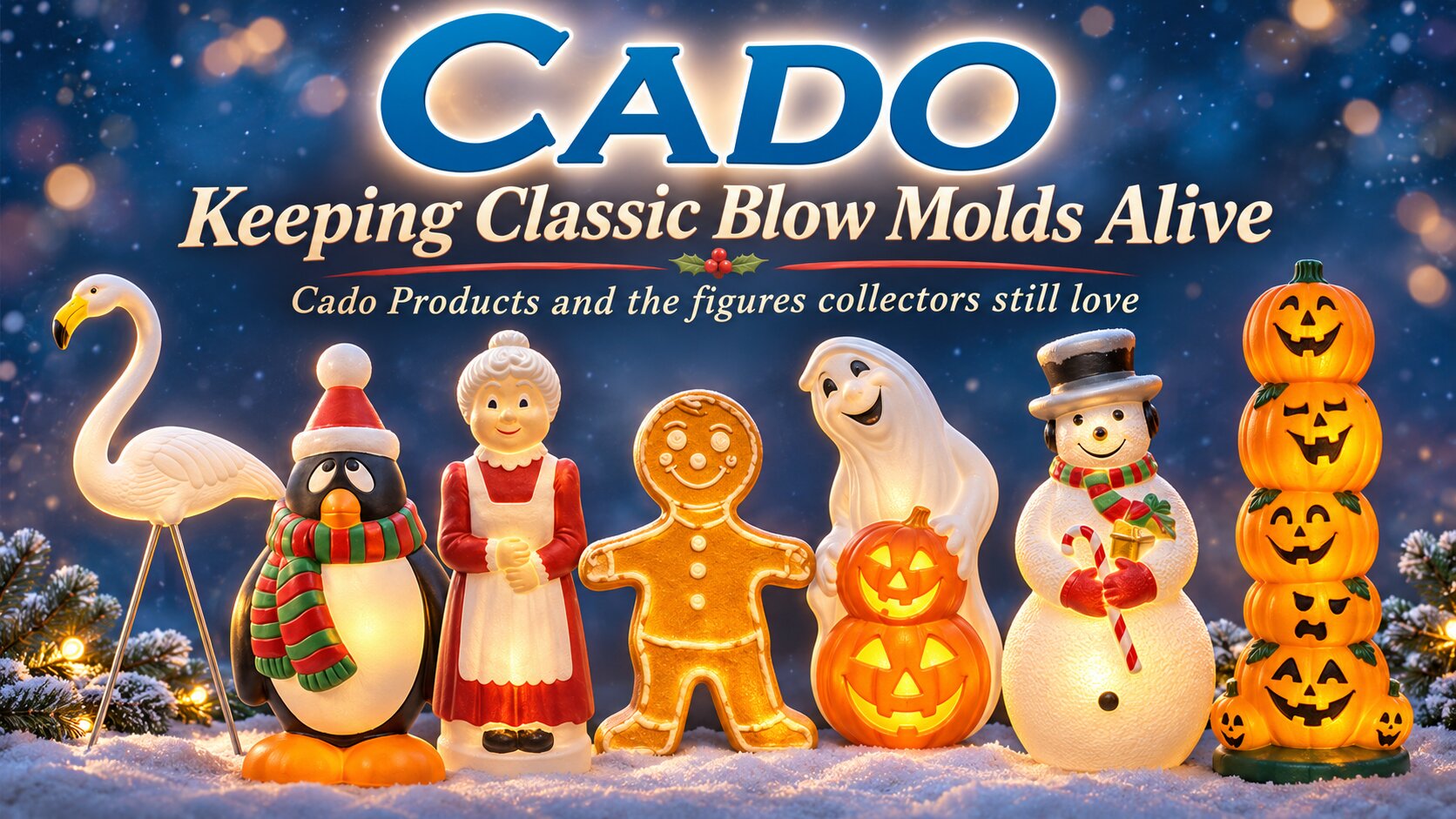
From Don Featherstone’s legendary pink flamingos to glowing Santas, snowmen, and nativity scenes, Cado Products has become an important link between America’s blow mold past and present.
By Curtiss Wayne Andrews
If you’ve been following my ongoing series about the companies behind America’s vintage holiday blow molds, you know that quite a few of these stories have unfortunate endings. Empire Plastics, Poloron, Union Products, and General Foam all helped make illuminated plastic lawn decorations a fixture of American Christmas celebrations. They produced countless Santas, snowmen, candles, and other holiday characters, many of which are now highly sought after by collectors. Unfortunately, none of those companies survived in their original form, and their disappearances left some pretty substantial holes in the holiday decorating business.
While researching these manufacturers for The Glow That Won’t Go Out, I’ve become particularly interested in what happened to their designs after the factories closed. Some molds were transferred to other manufacturers, others were eventually retired, and quite a few seem to have vanished altogether. That’s part of what makes the story of Cado Products so interesting. Unlike the companies I’ve previously covered, Cado is still in business, and its connection to the legendary Union Products has allowed some familiar holiday decorations to remain in production long after their original manufacturer closed its doors.
From Industrial Plastics to Christmas Decorations
Cado Products was founded in 1957 and operates in Fitchburg, Massachusetts, a city with a long manufacturing history located approximately an hour northwest of Boston. Unlike some of the better-known holiday decoration companies, Cado didn’t originally establish itself as a major producer of Christmas lawn ornaments. Its business was built around custom blow molding, manufacturing hollow plastic products for industrial, commercial, and consumer applications. Over the decades, the company developed the equipment and expertise necessary to produce a wide assortment of molded products, which would eventually put it in a favorable position to enter the seasonal decoration business.
For those unfamiliar with the process, blow molding involves heating plastic until it’s soft enough to expand inside a specially designed metal mold. Pressurized air forces the material against the interior surfaces, creating a hollow figure that can be removed once it cools. The finished decoration is then trimmed, painted, and fitted with lighting components when necessary. The process sounds straightforward, but anyone who has examined a collection of older blow molds knows that manufacturing quality can vary considerably. Some companies produced figures with beautifully defined details and carefully applied paint, while others were considerably less particular about the finished product.

Cado’s experience in plastics manufacturing was an asset when the company became involved with Union Products, a name that should be familiar to anyone who has spent much time collecting vintage lawn decorations. The connection also happens to bring us back to one of my favorite personalities in the history of this industry.
How Cado Became Connected to Union Products and Don Featherstone
In my previous article about Union Products, I explored the company’s history in Leominster, Massachusetts, and the remarkable career of Don Featherstone, the designer responsible for creating the original plastic pink lawn flamingo in 1957. Featherstone’s flamingo eventually became one of the most recognizable pieces of American lawn decoration ever manufactured, although I doubt anyone at Union could have predicted just how famous those birds would become. The flamingo went from being a relatively inexpensive garden ornament to a cultural icon, appearing everywhere from suburban lawns to movies, television shows, and countless humorous tributes to American kitsch.
Union’s contributions to the blow mold industry extended well beyond flamingos. The company manufactured Christmas decorations, Halloween figures, Easter ornaments, and an assortment of other seasonal products, with Featherstone eventually becoming its president. Many of these decorations were sold through hardware stores, garden centers, and major retailers, helping establish Union as one of the industry’s most recognizable manufacturers. I’ve always found it fascinating that a company primarily associated with inexpensive plastic lawn ornaments could leave such a lasting impression on American popular culture.
Unfortunately, Union Products ceased operations in 2006, ending a manufacturing history that stretched back to 1946. Its closure was part of a much larger contraction in the American blow mold industry, which had already seen several prominent manufacturers disappear or dramatically reduce their seasonal product offerings. The Union business and its product lines passed through an intervening ownership arrangement involving HMC International before Cado acquired the business around 2010.
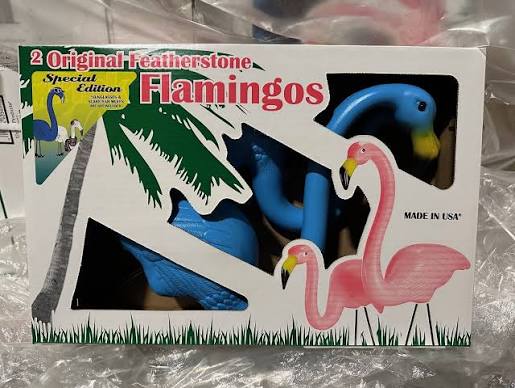
The acquisition gave Cado the opportunity to continue producing the famous Featherstone flamingos while reviving portions of Union’s seasonal decoration assortment. Instead of allowing the historic brand to become another name found exclusively in old catalogs and collector reference books, Cado brought it back into the marketplace. For those of us interested in the history of these decorations, the significance goes beyond simply being able to purchase another plastic Santa Claus. The continuation of the Union Products name preserves a connection to one of the companies that helped establish the American blow mold industry in the first place.
The Christmas Characters That Keep Cado in the Spotlight
Naturally, Christmas decorations are the main reason I wanted to cover Cado in this series, and the company’s seasonal assortment includes several familiar characters that would look perfectly comfortable in a display from the 1970s or 1980s.
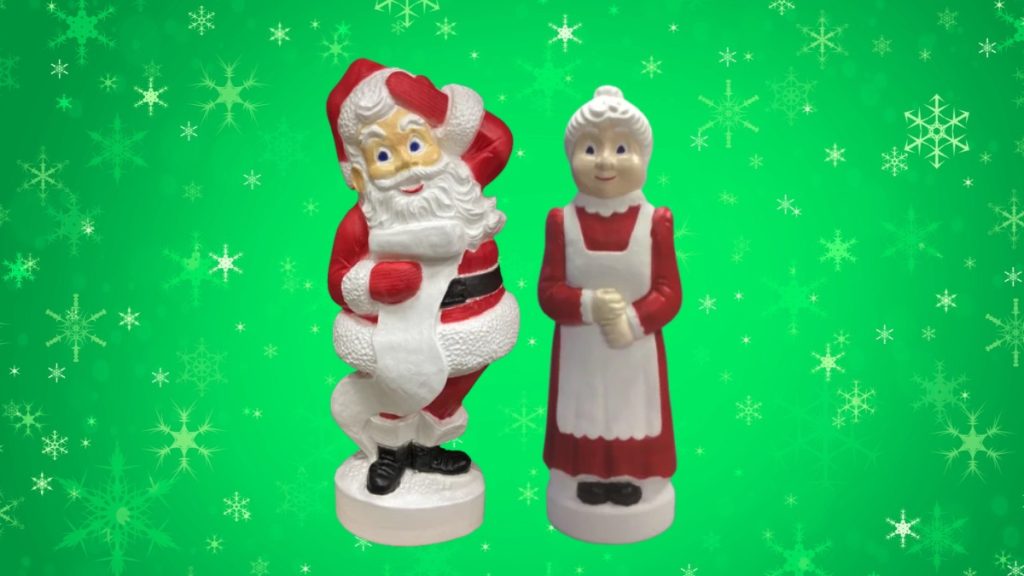
One of the most recognizable is its 43-inch illuminated Santa Claus, featuring the traditional red suit, white beard, black boots, and cheerful expression associated with classic blow mold Santas. Cado also offers a 40-inch Mrs. Claus, allowing homeowners to display the pair together. I’ve always appreciated the older manufacturers that created companion pieces like these because they made it easier to assemble a coordinated display without having to mix entirely unrelated styles. Of course, anyone who grew up seeing blow molds in neighborhood Christmas displays knows that mixing manufacturers was hardly unusual. A Union Santa standing beside an Empire snowman and a General Foam candle was simply part of the fun.
Speaking of snowmen, Cado produces a 40-inch illuminated snowman, another familiar addition to the traditional Christmas lineup. Snowmen are among the most common holiday blow molds, but they’re also a surprisingly interesting category for collectors. Empire, Union, General Foam, and other manufacturers all developed their own interpretations, and differences in hats, scarves, buttons, facial expressions, and body shapes can help distinguish one design from another. Sometimes the variations are obvious, while others require a closer look at the manufacturer markings or construction details.

Cado’s assortment also includes several penguins, including a 22-inch penguin with a red bow and a 28-inch penguin wearing a Santa hat and colorful scarf. The larger penguin is particularly interesting because its design has connections to the Empire and General Foam product lines, illustrating how familiar characters can survive through changes in manufacturers and ownership. I’ve covered this phenomenon in previous articles, and it remains one of the more complicated aspects of blow mold history. A particular design might appear in catalogs from different companies over several decades, making it important to distinguish the original manufacturer from businesses that produced later versions.

For collectors interested in less conventional Christmas characters, Cado also offers a 24-inch gingerbread figure and a 28-inch gingerbread Christmas tree. These fit nicely into candy-themed displays, particularly when paired with the company’s illuminated candy canes and other traditional accessories. Among the additional decorations are a 31-inch toy soldier, a North Pole sign, and a tall NOEL candle, all of which help recreate the larger, coordinated displays that were so popular before inflatables began dominating seasonal retail aisles.

What I appreciate about Cado’s assortment is that it hasn’t abandoned the traditional appearance of these decorations in an effort to make everything look contemporary. Many modern holiday products rely on movement, sound effects, electronic controllers, or elaborate lighting systems, and there’s certainly a market for those features. But a well-designed blow mold doesn’t need much technological assistance to accomplish its purpose. Give it an appropriate light source, place it where people can see it, and the familiar character does the rest.
Nativity Scenes Remain an Important Part of the Business
One category that deserves more attention in the collecting community is the illuminated nativity scene. Although Santas and snowmen tend to generate more discussion, nativity blow molds have played an important role in American Christmas decorating for generations. Companies such as Empire, Union, and General Foam produced numerous religious figures, allowing homeowners, churches, and community organizations to create displays ranging from modest arrangements to elaborate scenes featuring shepherds, wise men, angels, and animals.
Cado continues offering nativity decorations through its Union Products collection, including two-piece and three-piece sets, individual wise men, angels, and an illuminated North Star. These figures help maintain a product category that has become increasingly difficult to assemble entirely from vintage pieces, particularly when collectors want a complete group of coordinating characters. Older nativity sets often turn up with missing figures, damaged electrical components, or substantial paint wear, and finding replacements from the same manufacturer can be a lengthy and expensive process.

There’s also an important historical distinction between vintage nativity figures and their contemporary counterparts. Even when a modern decoration shares a design with an older piece, differences in paint applications, materials, dimensions, and lighting components can affect how collectors identify and value it. For someone building an outdoor Christmas display, those differences may not matter much. For a collector documenting manufacturer histories, however, they’re part of what makes the subject worth researching.
Halloween, Grand Venture, and Zombie Flamingos
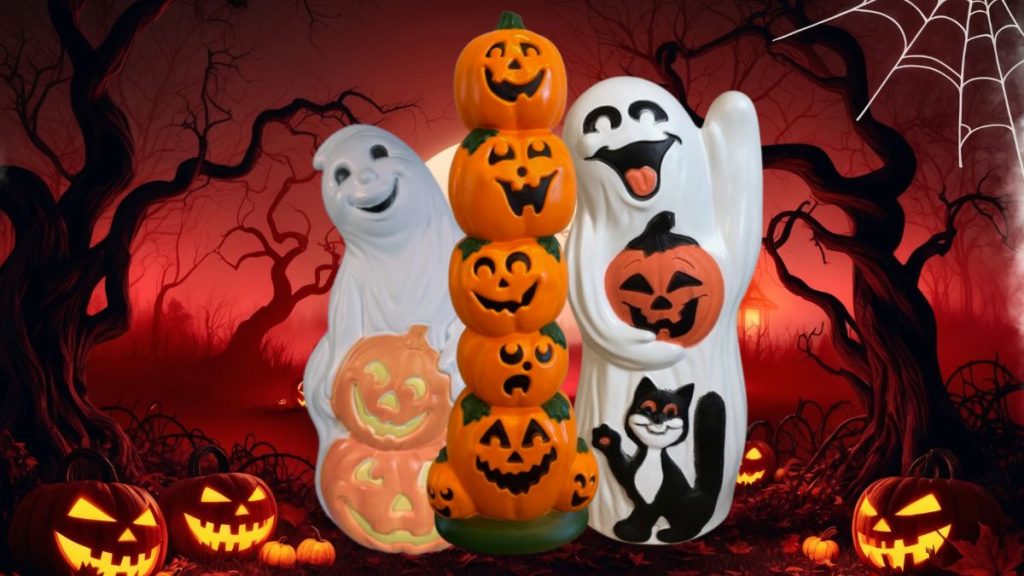
Although Christmas is the focus of this article, Cado also maintains an assortment of Halloween decorations, including illuminated ghosts, pumpkins, and other seasonal characters. Among its recognizable offerings are a 31-inch ghost with two pumpkins, a 34-inch smiling ghost, and a 38-inch stack of jack-o’-lanterns. The ghost with pumpkins is particularly interesting because its design originated with Grand Venture, another manufacturer whose products have become part of the larger history of collectible seasonal blow molds.
Cado’s Halloween lineup also includes plastic cauldrons, trick-or-treat accessories, and other decorative products. Some of the cauldrons are designed without drainage holes, allowing them to serve as containers for candy or party supplies rather than functioning exclusively as lawn decorations. It’s a practical extension of the company’s plastics manufacturing business, even if collectors are understandably more interested in the illuminated characters.
Then we have the zombie flamingos, which might be my favorite example of how far Don Featherstone’s original creation has traveled since 1957. The company that preserves the famous pink flamingo also offers spooky versions of the birds, turning a symbol of suburban lawn decoration into something better suited for Halloween. I have no idea what Featherstone would have thought about the undead interpretation of his creation, but considering the flamingo’s long association with humor and American pop culture, it seems like a fairly natural evolution.

The Complicated History of Surviving Blow Mold Designs
One of the more fascinating developments in the modern blow mold business is how certain designs have managed to survive the companies that originally manufactured them. Empire Plastics and General Foam are particularly relevant here because both were major producers of holiday decorations, and their products became familiar sights in stores across the country. Over time, manufacturing assets, tooling, and product rights changed hands, allowing some designs to continue appearing under different company names.
General Foam’s closure in 2017 was especially significant because it had remained an important producer of traditional holiday blow molds long after several competitors disappeared. For collectors, the closure raised questions about the future availability of numerous familiar figures, especially those that had already passed through earlier manufacturers. Cado’s assortment reflects portions of this complicated manufacturing history, with certain designs connected to products previously associated with Empire, General Foam, and Grand Venture.
It’s worth emphasizing that a modern decoration resembling an older blow mold isn’t automatically an exact reproduction made from original tooling. That distinction sometimes gets lost in online collector discussions, where people identify figures based on appearance alone. Paint applications, molded details, manufacturer markings, lighting hardware, and documented production history all help establish a decoration’s origins. If you’re purchasing a piece specifically because you believe it came from a particular manufacturer or production period, those details are worth examining before handing over your money.
This is also why contemporary manufacturers like Cado can appeal to two somewhat different audiences. Vintage collectors may appreciate the historical connections and familiar designs, while homeowners simply want attractive decorations that are readily available and suitable for outdoor use. Neither group necessarily approaches the products with the same expectations, which is perfectly reasonable. The trouble generally begins when someone tries to sell a modern figure as an original vintage example, or assumes that two similar-looking decorations must have identical manufacturing histories.
Is a Modern Cado Blow Mold as Desirable as a Vintage Original?
This is a question that comes up frequently whenever modern versions of classic decorations enter the market, and I don’t think there’s one answer that satisfies everyone.
For collectors focused on original production periods, manufacturer history, and scarcity, a vintage Union Products figure is going to carry a different significance from a contemporary Cado version. The older decoration represents a specific moment in the industry’s development, and its value may be influenced by factors such as condition, rarity, original paint, and surviving accessories. Some collectors enjoy that historical aspect as much as the decorations themselves, and I can certainly understand why.
On the other hand, not everyone wants to spend hundreds of dollars acquiring a vintage Santa Claus, particularly if the plan is to put him outside every December. Older figures can develop cracks, faded paint, missing accessories, and electrical problems, all of which require attention. A newly manufactured decoration offers a practical alternative, especially for people who are more interested in creating a display than building a historically accurate collection.
I’ve interviewed collectors whose enthusiasm began with a single inexpensive decoration and eventually developed into collections containing hundreds or even thousands of pieces. Others approach the hobby much more casually, adding characters whenever something catches their attention. Cado’s continued production makes traditional blow molds accessible to people who might otherwise never consider collecting them, and I think that’s a positive development for the hobby.
There’s also the possibility that today’s contemporary decorations will become collectibles themselves. Nobody purchasing a plastic Santa or snowman at a department store fifty years ago could have predicted the prices some of those figures would eventually command. I wouldn’t suggest buying modern Cado products as investments, but it’s interesting to consider how future collectors might view the different production periods of the company’s holiday assortment.
Why Cado Deserves a Place in Blow Mold History
After spending so much time researching the rise and fall of American blow mold manufacturers, I find Cado’s continued presence in the industry particularly noteworthy. The company wasn’t one of the dominant Christmas decoration manufacturers during the industry’s original boom, yet its acquisition of Union Products gave it a direct connection to that history. More importantly, it had the manufacturing experience to continue producing decorative plastic products rather than merely licensing a familiar name.
The relationship between Cado and Union also demonstrates how unpredictable the survival of a particular product can be. Don Featherstone’s pink flamingo was created in 1957 as an inexpensive lawn ornament, but its popularity helped keep the design relevant through decades of changing tastes and corporate ownership. Many of the company’s seasonal decorations followed a more complicated path, although the continued availability of familiar characters shows that there remains an audience for traditional blow molds.
Of course, Cado operates in a very different retail environment from the one Empire, Union, and General Foam once dominated. Today’s consumers can choose from enormous inflatable characters, programmable LED decorations, projection systems, and just about every conceivable variation of illuminated holiday merchandise. Traditional blow molds occupy a more specialized place in that marketplace, supported partly by nostalgia but also by people who genuinely prefer their appearance and simplicity.
I suspect that last point is sometimes overlooked. Not everyone buying a classic-looking Santa Claus is trying to relive childhood Christmases or recreate a scene from the 1970s. Some people simply like the way these decorations look, and manufacturers don’t need a more complicated reason than that to keep producing them.
The Glow That Won’t Go Out
When I began writing The Glow That Won’t Go Out: The Complete Collector’s Guide to Vintage Holiday Blow Molds, my intention was to document more than the decorations themselves. I wanted to explore the manufacturers, designers, collectors, and individual histories behind an industry that produced an extraordinary assortment of American holiday decorations.
Researching companies such as Empire Plastics, Poloron, Union Products, and General Foam revealed how frequently designs and manufacturing assets moved between businesses over the decades. It also demonstrated how much of the industry’s history has been preserved through old catalogs, product markings, advertisements, and the dedicated work of collectors who have spent years documenting individual figures.
Cado Products adds an interesting perspective because its story is still being written. Through its Union Products connection, the company continues manufacturing traditional seasonal decorations while maintaining a direct link to one of the most influential names in American decorative plastics. For a hobby in which so many manufacturers have disappeared, that’s a meaningful distinction.
My book covers the broader history of holiday blow molds, the manufacturers behind many of the most recognizable designs, and the collecting, identification, and preservation of these colorful pieces of Americana. If you’ve enjoyed this article, I encourage you to explore the book as well as my previous manufacturer histories here on Paper Sack Publishing.
The Glow That Won’t Go Out: The Complete Collector’s Guide to Vintage Holiday Blow Molds is available on Amazon in paperback, hardcover, and Kindle editions.
As for Cado, I hope the company continues producing its traditional holiday assortment for many years to come. We’ve already lost enough manufacturers from this industry, and it’s encouraging to see an established American plastics company recognize that there’s still a market for the kinds of decorations that helped make blow molds so popular in the first place.
After all, there’s only so much excitement I can muster for another twenty-foot inflatable Santa. Give me a good old-fashioned illuminated plastic one any day.