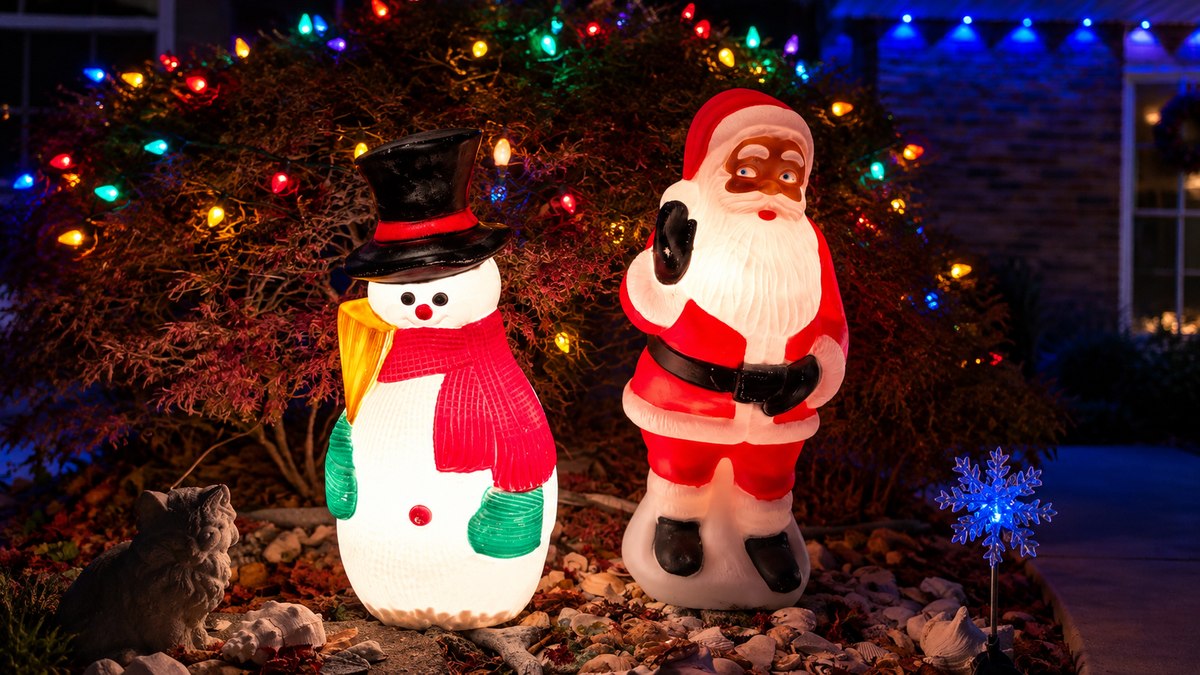
For longtime collector and Blow-Molded contributor Cole Walker, the appeal of vintage blow molds comes down to something collectors everywhere understand: the designs, the memories, and that unmistakable glow.
One of the unexpected joys of writing The Glow That Won’t Go Out: The Complete Collector’s Guide to Vintage Holiday Blow Molds was getting to know the people who have kept this hobby alive.
Collectors don’t simply accumulate plastic Christmas decorations. They preserve them, restore them, research their histories, hunt for elusive examples, and—most importantly—continue putting them out year after year.
Along the way, I’ve discovered an incredibly welcoming community of people eager to share their knowledge and enthusiasm for the hobby.
That’s how I met collector Cole Walker.
Our paths crossed through the online blow mold community while I was researching the book and trying to connect with the people behind Blow-Molded, one of the most extensive online resources devoted to documenting vintage blow molds and their manufacturers.
Cole has been collecting blow molds for approximately 25 years and has contributed to Blow-Molded since 2023. He also generously offered feedback during the development of The Glow That Won’t Go Out.
I asked Cole about his collection, the manufacturers that fascinate him, the differences between vintage and modern blow molds, and what advice he would give someone just entering the hobby.
How long have you been collecting blow molds, and what got you started?
Cole Walker: I’ve been collecting for around 25 years now. I’ve always enjoyed driving around town and seeing everyone’s displays for the holidays. Blow molds in particular have always fascinated me with their unique designs, nostalgic glow, and varieties.
How many blow molds are currently in your collection? Any favorites that stand out?
Cole: I have around 40 blow molds in my collection currently. My favorites are the TPI Nativity and the General Foam “Chilly Willy” Penguin.
You’re also a contributor to Blow-Molded. How did that come about?
Cole: I have been helping out with the Blow-Molded website since 2023. I had been helping the website’s current operator with various amounts of information and photographs for several years before he invited me on as an editor.
Since then, I’ve been helping keep the site updated and accurate with various edits on a weekly basis.
What fascinates you most about the history of blow molds and the factories that produced them?
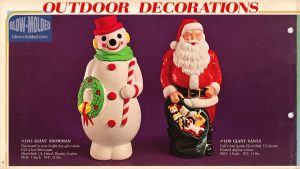
Cole: The most interesting thing to me is how innovative some of the manufacturers were. Many of them were introducing unique features to up their game, such as Day-Glo paint, animation, and even motion-activated music boxes.
Was there one manufacturer that particularly stood out?
Cole: One manufacturer that stood out the most would have to be Empire, who happened to try all three of those features.
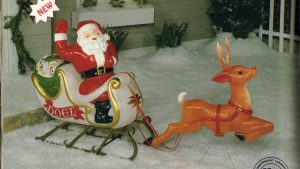
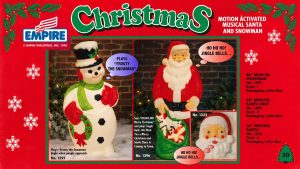
Starting in the 1970s, they introduced Day-Glo paint on many of their molds, followed by an animated sleigh with a waving Santa in the early 1990s, followed by a talking/musical motion-activated Santa a few years later.
What’s your take on today’s new blow molds compared with vintage blow molds from the 1960s and ’70s?
Cole: While many new designs are being made each year, the majority are coming from Chinese manufacturers with poor-quality paint that doesn’t last well outside.
I believe vintage collecting remains popular because they were made in the U.S. and Canada by many well-known companies, there are many desirable pieces, and the quality was made to last much longer on them.
Newer items are much easier to find, cheaper quality, and made in far greater quantities. Therefore, the demand isn’t always there compared to vintage pieces.
Why do you think vintage blow mold collecting continues to resonate with people?
There’s an interesting idea running through Cole’s answers: scarcity alone doesn’t explain the appeal.
Vintage blow molds came from an era when manufacturers such as Empire, General Foam and TPI were developing distinctive characters and experimenting with different manufacturing techniques, paints and features. Decades later, those differences give collectors something to discover.
One Santa isn’t necessarily the same as another Santa.
Manufacturer, mold variation, age, paint, condition and production history can transform an ordinary-looking holiday decoration into something much more interesting to a collector.
And then there is the emotional component.
For many people, seeing one illuminated on a lawn isn’t simply seeing a piece of molded plastic. It’s seeing Christmas at their grandparents’ house. It’s riding through the neighborhood looking at decorations as a kid. It’s pulling the same Santa out of storage that appeared every December when they were growing up.
The glow is part of the memory.
What advice would you give someone just getting started collecting vintage blow molds?
Cole: My advice for newbies would be to check thrift stores, yard sales, and antique stores for vintage pieces.
Certain pieces were made for much longer than others, thus affecting their availability, so it’s a good idea to keep that in mind when searching for what you want.
Prices fluctuate all the time, so ultimately the value of a blow mold boils down to three factors: condition, availability, and how much you’re willing to pay for an item.
The Hunt Is Part of the Fun
That last point may be some of the best advice a new collector can receive.
There isn’t a universal price guide capable of telling you exactly what every vintage blow mold is “worth.” Condition matters. Rarity matters. Regional availability matters. And ultimately, the value of a piece depends upon what another collector is willing to pay for it.
But there’s another lesson in Cole’s story.
You don’t need hundreds of blow molds to be a serious collector.
A collection of 40 carefully chosen pieces can carry decades of memories, research and stories. Whether you’re searching for a specific Empire Santa, an unusual General Foam piece, a TPI Nativity—or simply the same glowing decoration you remember from childhood—the hunt is part of what keeps the hobby interesting.
Collectors like Cole are also helping preserve something that could easily have disappeared. Every photograph documented, manufacturer identified, production variation recorded and old decoration saved from the landfill adds another small piece to the history of the hobby.
And that’s precisely the history I wanted to celebrate in The Glow That Won’t Go Out.
—Curtiss Wayne Andrews
Keep the Glow Going
The Glow That Won’t Go Out: The Complete Collector’s Guide to Vintage Holiday Blow Molds explores the manufacturers, history, collecting, identification, restoration and enduring appeal of the illuminated holiday decorations that refused to disappear.
Available October 1, 2026.