By Curtiss Wayne Andrews
In the summer of 2014, I walked into a hotel in Hebron, Kentucky, and found myself surrounded by hundreds of people talking to themselves.
Except, of course, they weren’t.
They were talking to wooden boys, old men, animals, monsters, children, wisecracking sidekicks and characters that existed somewhere in that strange territory between object and personality.
I’d gone to the Vent Haven International Ventriloquist ConVENTion with my wife & stepson, and I wasn’t prepared for how much I would love it.
I had always been fascinated by ventriloquism, especially after producing & starring in my own local children’s TV show in Iowa that featured a gaggle of safari-themed puppets. But seeing the art practiced by hundreds of people in one place was something entirely different.
There were professionals. Hobbyists. Collectors. Beginners. Kids carrying their first puppet. Performers who had spent decades perfecting movements most audience members would never consciously notice.
And everywhere you looked, there were cases.
Lots and lots of cases.
Then one would open.
And somebody would come out.
That was the moment I understood that ventriloquism is about much more than learning how to talk without moving your lips.
It’s about creating somebody who wasn’t there before.
And somehow convincing the rest of us that he was.
My Trip to Vent Haven
The 2014 Vent Haven ConVENTion took place July 16–19 in Hebron, Kentucky, continuing a gathering that had already become something of a pilgrimage for people who loved the art. Contemporary accounts described the event as part convention, part education and part annual family reunion.
That’s exactly how it felt to me.
I was blown away by the sheer depth of the hobby.
You might arrive thinking ventriloquism means a performer sitting on a stool with a dummy on his knee.
Spend a few hours at Vent Haven and that definition falls apart.
There is voice technique.
Character development.
Comedy writing.
Puppet manipulation.
Figure construction.
Timing.
Acting.
Audience interaction.
Collecting.
Restoration.
History.
And perhaps most importantly, there is an enormous community built around preserving and advancing an art form that popular culture periodically declares dead.
The current Vent Haven organization describes its annual gathering in similar terms: performances, lectures, workshops, open mics, dealer rooms and opportunities for everyone from beginners to established professionals. The museum says the annual gathering now attracts more than 400 ventriloquists and enthusiasts each July.
But statistics don’t quite explain it.
The thing I remember is the enthusiasm.
Nobody had to explain why they cared.
Everybody already understood.
If you’ve ever had a hobby that other people regard as a little unusual, you know how powerful that can be.
For a few days, you aren’t the person with the weird hobby.
You’ve found your people.
The Amazing Story Behind Vent Haven
The convention’s spiritual center is nearby Vent Haven Museum, which describes itself as the world’s only museum devoted exclusively to ventriloquism.
And its origin story sounds almost like something I would invent.
William Shakespeare Berger was a Cincinnati businessman and amateur ventriloquist. He began working for the Cambridge Tile Company as a teenager and eventually became its president.
But his other great passion was ventriloquism.
In 1910, Berger purchased his first figure, Tommy Baloney.
One figure became more.
Then considerably more.
By the 1930s and 1940s, his collection had grown so large that what began inside his home expanded into something extraordinary. Berger preserved not simply figures, but photographs, correspondence, memorabilia and the history surrounding the performers who had brought these characters to life.
Vent Haven eventually became a museum.
Walking through a collection like that changes the way you look at a ventriloquist figure.
Without the performer, it’s wood, paint, fabric and mechanical parts.
But then you learn who operated it.
You see photographs.
You hear stories.
You discover the routines it performed.
And suddenly you’re not looking at an old dummy anymore.
You’re looking at the remains of a partnership.
That’s strangely moving.
Ventriloquism Is Much Older Than Charlie McCarthy
The history of ventriloquism stretches back far beyond show business.
Its early forms were associated with supernatural or religious practices before the technique gradually migrated toward entertainment. By the 18th century, performers were appearing at fairs and public gatherings, often creating the illusion that voices were coming from somewhere else entirely.
The familiar ventriloquist-and-dummy partnership developed later.
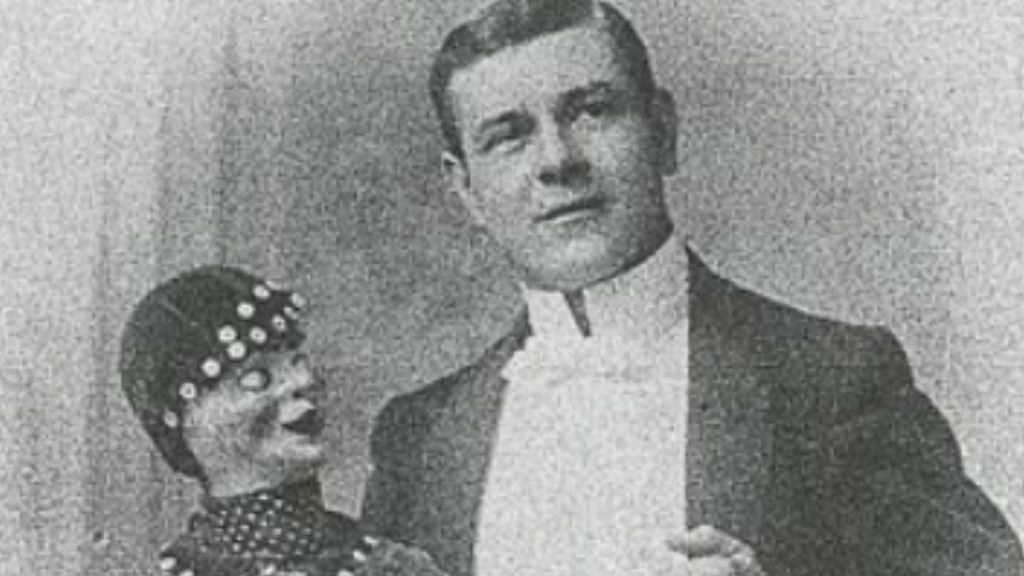
One of the pivotal figures was British performer Fred Russell, often called the father of modern ventriloquism.
Russell helped establish the format we immediately recognize today: instead of surrounding himself with numerous figures, he concentrated on one principal character, Coster Joe, and built the performance around the relationship between performer and figure.
That’s an incredibly important change.
Because ventriloquism stopped being merely:
“Look what I can do with my voice.”
And became:
“Meet this guy.”
That’s the magic.
Then Edgar Bergen Did Something Completely Ridiculous
He became a superstar ventriloquist…
on radio.
Think about that.
Ventriloquism is supposedly based on the illusion that the performer isn’t speaking.
Radio listeners couldn’t see Edgar Bergen’s mouth in the first place.
It shouldn’t have mattered.
Yet Bergen and Charlie McCarthy became enormously popular, demonstrating something important about the art: audiences weren’t merely fascinated by Bergen’s technique.
They loved Charlie.
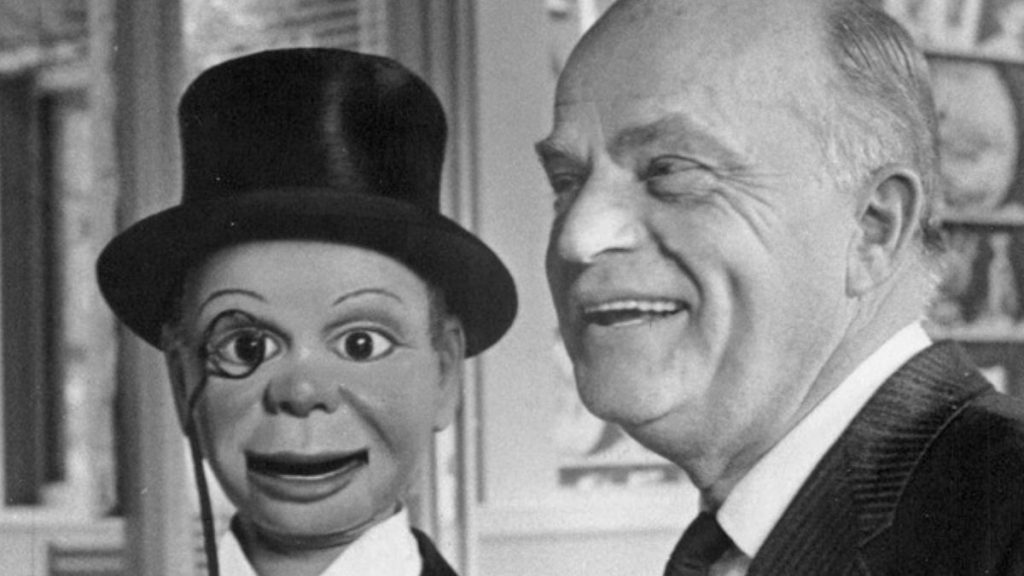
Bergen’s radio program became a major success beginning in 1937, and Charlie McCarthy developed into a celebrity in his own right.
That lineage continued through performers such as Paul Winchell, Jimmy Nelson and Shari Lewis and eventually into modern performers including Jeff Dunham, Terry Fator, Jay Johnson, Nina Conti, Paul Zerdin and Darci Lynne Farmer.
Different generations.
Different puppets.
Different comedy.
Same basic miracle:
One human being convinces you there are two people onstage.
The Part Beginners Don’t Expect
Learning ventriloquism involves technique, obviously.
You practice substitutions for difficult sounds.
You work on keeping your lips still.
You learn breathing and projection.
But eventually you discover that getting the voice right isn’t enough.
Your character needs a personality.
What does he like?
What irritates him?
How old is he?
Why does he tolerate you?
What does he think of the audience?
Is he smarter than you?
Does he think he’s smarter than you?
That’s where ventriloquism becomes writing.
And acting.
And improvisation.
And psychology.
A great character shouldn’t simply sound different from the ventriloquist.
He should think differently.
That’s one reason keeping a journal can be surprisingly valuable.
Why I Created a Ventriloquist Journal
That fascination ultimately inspired my Ventriloquist Journal.
The idea wasn’t to create something that magically teaches ventriloquism between breakfast and lunch.
There are wonderful teachers and resources for learning technique.
A journal serves another purpose.
It gives you somewhere to develop the act.
Use it to record character ideas.
Write possible names.
Experiment with personalities.
Keep jokes that unexpectedly occur to you at 11:47 at night.
Develop routines.
Record what worked during practice.
Write down what absolutely bombed.
Keep notes about voices.
Sketch costume ideas.
Develop character backstories.
Track performances.
Record advice you hear from other ventriloquists.
And most importantly, capture ideas before they disappear.
Because creative ideas are remarkably confident about announcing themselves while you’re driving and remarkably unwilling to return when you finally sit down at your desk.
A journal becomes the workshop behind the workshop.
It documents how an object slowly becomes a character.
There Is Something Wonderfully Analog About It
Maybe that’s another reason I still love this hobby.
Ventriloquism is stubbornly human.
Yes, figures have become more sophisticated. Materials change. Performers use social media. Videos travel around the world instantly.
But the central mechanism hasn’t really changed.
A person picks up a character.
The character looks at the audience.
The mouth opens.
And somebody laughs.
No algorithm can manufacture what happens next.
The audience understands intellectually that the figure isn’t alive.
They can see the performer’s hand operating it.
They know where the voice originates.
And within a few minutes…
they’re looking at the puppet when it talks.
Watch an audience sometime.
It’s remarkable.
We voluntarily believe.
What I Remember Most About 2014
More than a decade later, that’s what sticks with me about that trip to Hebron.
Not simply the technique.
Not simply the famous performers.
Not even the incredible figures.
It was seeing hundreds of people who had decided that this unusual old art form was worth keeping alive.
Some wanted careers.
Some wanted to improve their acts.
Some collected figures.
Some performed for churches, schools or community organizations.
Some were simply fascinated by ventriloquism.
It didn’t matter.
They all spoke the same strange language.
The Vent Haven ConVENTion has continued that tradition. In fact, 2026 marked its 50th annual gathering, with performers and educators including Darci Lynne Farmer, Jay Johnson, Willie Tyler and Jeff Dunham appearing on the anniversary schedule.
Fifty gatherings devoted to an art form people keep predicting will disappear.
That’s something worth celebrating.
Find Your Character
If you’ve ever been curious about ventriloquism, don’t worry about becoming the next Edgar Bergen or Jeff Dunham.
Start smaller.
Find a puppet.
Try a voice.
Invent a personality.
Write a conversation.
Keep notes.
Make mistakes.
Let the character change.
And if you become serious about the hobby, make the pilgrimage to Northern Kentucky someday.
Visit Vent Haven.
Attend the ConVENTion.
Walk into a room containing hundreds of people carrying cases and realize that practically every one of those cases contains someone they’d like you to meet.
I experienced it in Hebron in 2014.
I went there interested in ventriloquism.
I left understanding why people fall in love with it.
Because ventriloquism isn’t really about throwing your voice.
It’s about finding one.
— Curtiss Wayne Andrews
Get the Vent Journal here.