She grew up making annual Menards trips with her dad, built a collection of roughly 300 vintage blow molds, and eventually landed on Hoarding for the Holidays. But one legendary Marketplace haul required some creative family financing.
By Curtiss Wayne Andrews
There are emergencies.
Flat tires.
Broken water heaters.
Unexpected medical bills.
The transmission falls out of your car.
And then there are blow mold emergencies.
Hope Holubowicz once encountered the latter.
A Facebook Marketplace listing appeared containing approximately $1,000 worth of vintage blow molds.
There was only one problem.
Hope did not have $1,000.
What she did have were two parents.
So Hope independently contacted each of them and announced that she had a “$500 emergency.”
Mom sent $500.
Dad sent $500.
Problem solved.
At least until Mom and Dad eventually talked to each other.
Welcome to blow mold collecting.
Readers of The Glow That Won’t Go Out may already recognize Hope from my chapter featuring collector stories. Her story stood out to me because beneath all the collecting—and the comedy—is something that comes up again and again in this hobby.
Family.
Hope’s father helped introduce her to blow molds as a child. Years later, that relationship became part of her television appearance.
And somewhere in between came thrift stores, Beco Santas, a Don Featherstone jack-o’-lantern, approximately 300 pieces of glowing plastic…
…and one extremely questionable definition of the word “emergency.”
I had to know more.
Before There Was Marketplace, There Was Menards
When did you start collecting blow molds?
Hope: I would say I have been collecting blow molds for the last 10 years. It is hard to put an exact timeline on it because they had been a big part of my childhood during the early ’90s.
My personal collection started with thrifting.
Growing up, I spent a lot of time as a child going to rummage sales and thrift stores with both my mom and my aunt. Secondhand searching was a way of life for us.
I don’t have any early memories going into “real stores,” as my mom and aunt were always looking for a bargain.
That last sentence explains a lot.
Hope wasn’t introduced to collecting through an online collector group or price guide.
She was raised in the hunt.
Rummage sales.
Thrift stores.
Secondhand shops.
The possibility that something spectacular might be sitting on a shelf for five dollars because nobody else knew what it was.
But blow molds had another family connection.
Her dad.
Each year, Hope remembers going to Menards with him and choosing a new blow mold for the family’s Christmas display.
Those trips left an impression.
So did the glowing decorations themselves.
Years later, when Hope began spotting vintage blow molds while thrifting, something clicked.
She started bringing them home.
And then?
Well…
“It has been absolute, glorious havoc ever since.”
The $500 “Emergency”
Every collector has a story that probably sounds completely reasonable to other collectors and completely insane to everybody else.
This is Hope’s.
A Facebook Marketplace listing appeared in 2023.
The seller had accumulated a large collection.
The asking price was approximately $1,000.
Hope needed it.
Immediately.
There was just that minor funding problem.
So she texted Mom.
“I have a $500 emergency.”
Mom was visiting family in Pennsylvania and Venmoed the money.
Then Hope contacted Dad.
Same emergency.
Another $500.
A thousand dollars later, the blow molds were secured.
Hope repaid both parents within a week.
Then her parents happened to have a conversation.
Dad asked Mom whether she ever found out what Hope’s mysterious $500 emergency had been.
You can probably see where this is going.
The truth emerged.
The emergency was Christmas decorations.
Dad’s response?
“Hope, that is NOT an emergency.”
He then reportedly began explaining the types of situations that actually constitute emergencies.
Which was unnecessary.
Because every serious collector reading this already understands that a once-in-a-lifetime Marketplace blow mold haul clearly falls somewhere between house fire and medical evacuation on the emergency scale.
Sorry, Dad.
I’m siding with Hope.
The $25 Haunted House—and Her Holy Grail
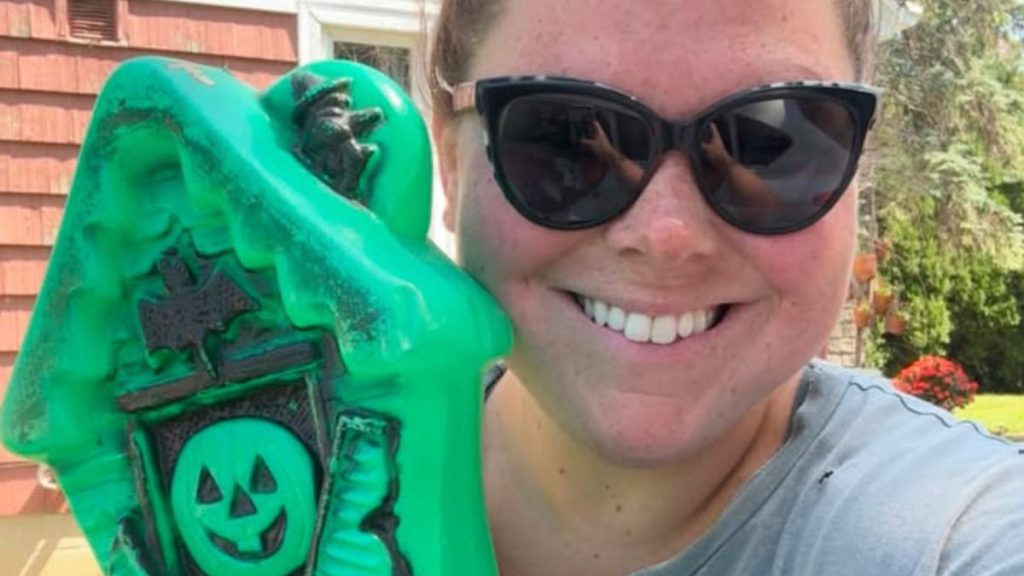
That legendary haul produced one of Hope’s favorite pieces:
a green Haunted House she got for $25.
But her collection contains other favorites.
Which blow molds stand out the most?
Hope: I think for me my love for my Beco Santas and my Don Featherstone JOL bunch is not so much due to their value but how kitschy they both look.
Like I said in a local news interview:
“I am a 1990s baby living in a 1950s Christmas!”
That’s a pretty fantastic description of the appeal.
Because Hope isn’t merely collecting old Christmas decorations.
She’s curating an aesthetic.
The Beco Santas.
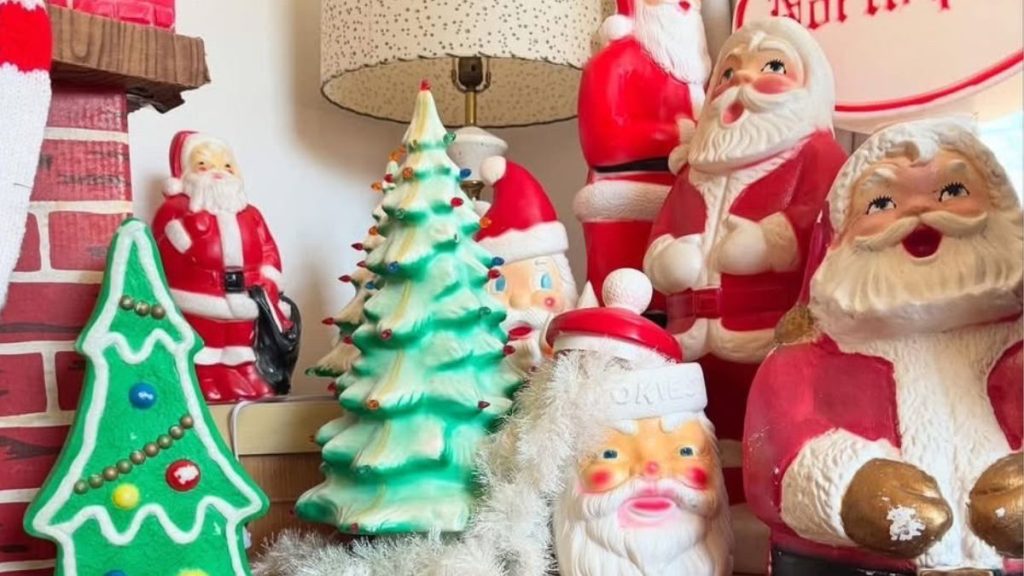
Vintage Halloween.
Mid-century colors.
Old appliances and fixtures.
Christmas decorations that look like they escaped from somebody’s living room decades ago.
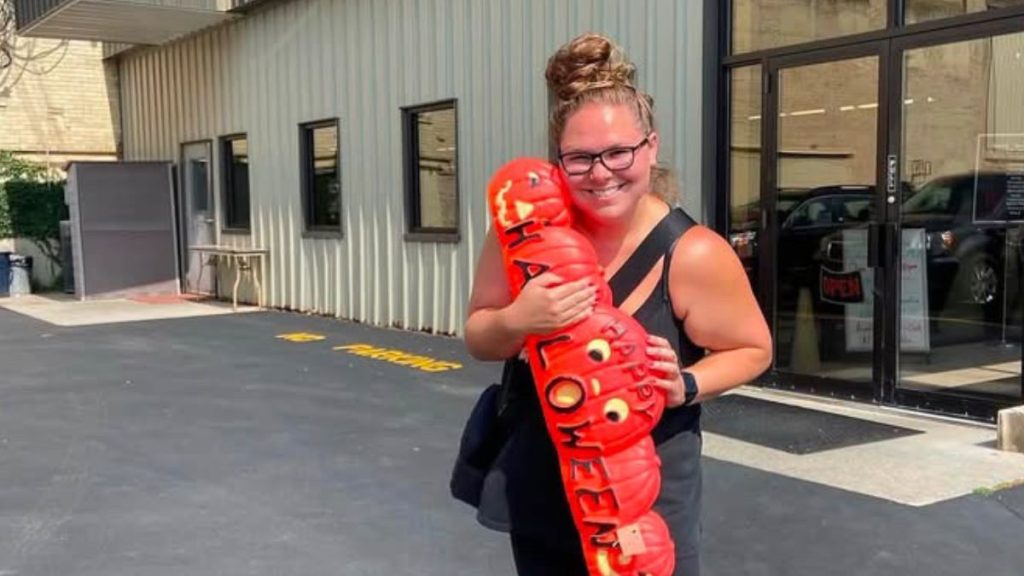
Her most expensive blow mold purchase to date was $175 for a Don Featherstone Happy Halloween jack-o’-lantern group.
It’s also what Hope calls her holy grail.
And that’s an important distinction.
Expensive doesn’t automatically mean beloved.
Rare doesn’t automatically mean desirable.
The best collection is ultimately a reflection of the person assembling it.
Hope knows exactly what hers is supposed to look like.
Kitschier the better.
Then Instagram Delivered a Very Suspicious Message
By the time Hope had built a substantial collection, she had begun sharing it online.
Then one day a message appeared on Instagram.
Someone claimed to be interested in putting her on television.
Hope’s immediate reaction was reasonable:
I’m being catfished.
How did Hoarding for the Holidays find you?
Hope: I received a message on Instagram from one of the producers or casting directors saying that they loved my collection and personality from watching my saved stories.
At first I thought I was being catfished.
One day after school I was checking my personal email and saw the message. I went into my co-teacher’s classroom and showed her.
We were both thinking, “Yeah right, next comes the question of sending my credit card information.”
But that moment never came.
Instead, Hope went through three rounds of interviews.
Then the network selected her.
And suddenly a woman who describes herself as a typical thirty-something working a typical job—and who admits she has an easier time spending money on old plastic yard ornaments than saving it—was preparing to have her collection filmed for television.
Three Days of Filming—and One Very Important Co-Star
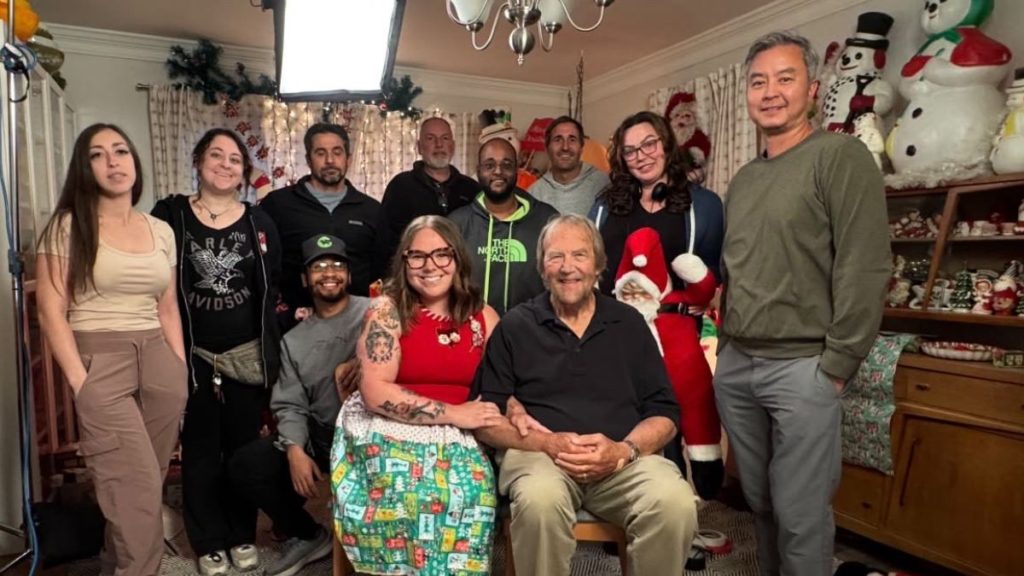
Production lasted three days. Hope said the production crew was the nicest group of people she’s ever met. “They made me feel so at home in my own home going through such a new and different experience of acting!”
But Hope’s collection wasn’t the only thing producers found interesting.
They noticed Hope and her father together.
How much of the father-daughter relationship was real?
According to Hope:
All of it.
Hope: Because of the dynamic between my dad and me—he is my best friend and nothing about our on-camera banter was acted—the casting directors wanted our father-daughter story to be a part of the show.
After all, my dad is the one who got me into blow molds back when I was a child.
That makes their scenes considerably better.
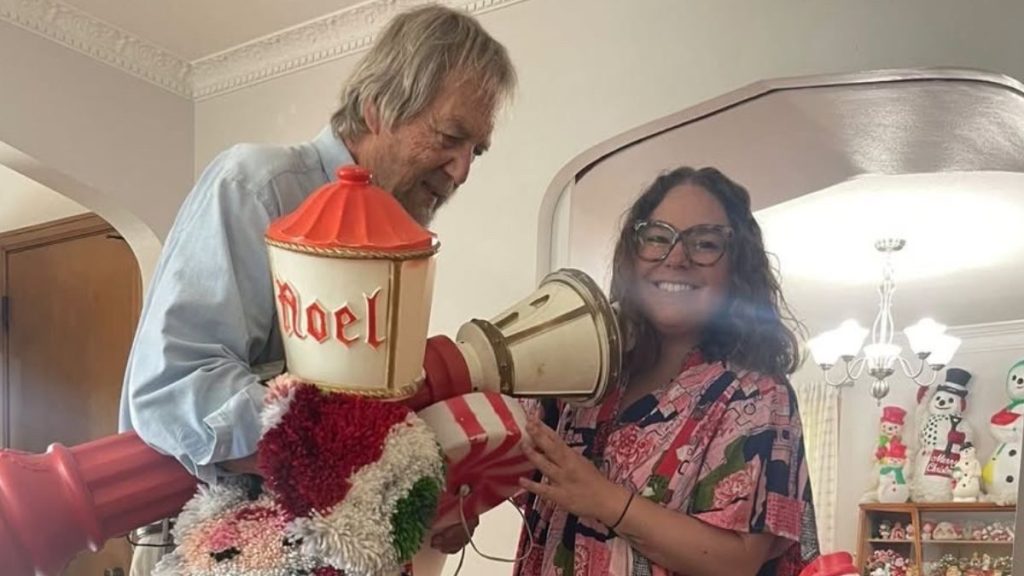
You’re not watching two people manufacture banter for television.
You’re watching a father who helped create a collector…
…now dealing with the consequences.
And apparently there have been consequences.
One involves a Tasmanian Devil.
The Taz Incident
During Hope’s childhood, her father owned a Tasmanian Devil blow mold. Yes, the same one I wrote about here. Small world.
Then, sometime in the early 2000s, somebody stole it from the family’s yard.
Hope says:
“He has never fully recovered from it.”
Having spent enough time talking to blow mold collectors, I believe her.
This is another strange characteristic of these decorations.
People remember them.
You can describe an old blow mold somebody hasn’t seen in thirty years and suddenly they remember exactly where it stood.
Beside the garage.
Under the front window.
Next to the mailbox.
And if somebody stole it?
Apparently the statute of limitations on emotional resentment does not apply.
Dad, if you’re reading this:
I hope Taz finds his way home someday. Or, if you’re longing for a replacement I think they’re going for around $900 these days.
“I Am Not a Hoarder”
There’s one part of the television experience Hope would particularly like to clarify.
The title.
Hoarding for the Holidays.
Hope has a response.
Hope would like the record corrected
Hope: I want to set the record straight—I am in fact not a hoarder but a collector.
And with roughly 300 blow molds, she has certainly committed to the distinction.
Her collection isn’t thrown indiscriminately into a pile.
Hope says her pieces live inside her home, rather than being subjected to outdoor weather.
They’re part collection, part decoration and part lifestyle.
Which leads to one of the strongest differences between Hope and some of the other collectors I’ve interviewed.
New Blow Molds? Hope Has Thoughts.
Some collectors happily mix vintage Empire with brand-new Gemmy.
Hope does not.
What’s your opinion of newer blow molds?
Hope: I don’t own any blow molds that are post-1990s.
Like much else in life—such as my Frigidaire turquoise stove, or my Kohler aqua matching sink and toilet—they don’t make it like they used to!
I find new blow molds cheap.
No offense to anyone who likes ’em!
I am not here to yuk your yum.
And this is why interviewing collectors is more interesting than declaring that there’s one correct way to collect.
Brandon Gress told me he happily mixes old and new and believes we’re living through a blow mold renaissance.
Richard Gierlich has gone so far as to make new blow molds.
Hope?
Give her the old stuff.
That’s collecting.
People develop preferences.
They debate.
They disagree.
And ultimately everybody goes home and plugs in whatever makes them happy.
Hope’s house just happens to stop somewhere around 1999.
How to Find Blow Molds in the Wild
Hope started as a thrifter.
So I wanted to know whether someone can still build a collection that way.
Her answer?
Yes.
But you’re going to have to work harder.
What’s your advice for someone starting today?
Hope: Now they are hard to come by in thrift stores, but every now and then I have some good luck.
The key to thrifting is going regularly, and to your least favorite stores.
That’s where the random unicorn sits waiting to be found—not at your favorite shop.
That might be my favorite collecting advice I’ve heard yet.
Everyone searches the obvious places.
The antique mall known for vintage Christmas?
Already picked.
The trendy thrift store with carefully curated displays?
Everybody checks it.
That slightly depressing thrift shop you don’t particularly enjoy visiting?
That’s where your $8 Beco Santa is hiding.
Go there.
Hope’s Four Rules of Blow Mold Collecting
Hope gave me four pieces of advice.
They’re worth preserving almost exactly as she gave them.
1. Spend decent money on decent-condition pieces. Hope isn’t interested in badly faded or heavily weathered examples, particularly because her approximately 300 blow molds are displayed indoors.
2. Once you buy one, expect to lose sleep over buying your next. There is currently no known cure.
3. Replace questionable old electrical components. Hope replaces aging cords and uses LED bulbs in her collection.
And finally:
4. Understand that blow mold collecting is not for the faint of heart.
Most people won’t understand why you care so much about old plastic Christmas decorations.
Hope thinks that’s part of what makes the community special.
I think she’s right.
A 1990s Kid Living in a 1950s Christmas
There’s something wonderfully circular about Hope’s story.
As a kid, Dad took her to Menards.
They picked out a blow mold.
They brought it home.
They plugged it in.
Years pass.
The kid grows up.
She starts thrifting.
One blow mold comes home.
Then another.
Then approximately 298 more.
Eventually a television producer discovers her collection online and puts Hope and her dad on a television show about people who are completely, hopelessly obsessed with Christmas.
And somewhere in the middle of it all, Hope needs an emergency $1,000.
When I was writing The Glow That Won’t Go Out, stories like Hope’s became as important to me as documenting manufacturers and identifying old molds.
Because objects don’t create traditions by themselves.
People do.
A Beco Santa isn’t nostalgic because it was manufactured decades ago.
It’s nostalgic because somebody remembers it.
A blow mold becomes special when Dad bought it.
Grandma displayed it.
The family drove past it.
Someone rescued it from a thrift store.
Someone else spent twenty years trying to replace the one that was stolen.
The plastic survives.
But people provide the glow.
Hope describes herself as:
“A 1990s baby living in a 1950s Christmas.”
I can’t think of a better way to explain why vintage blow molds are still here.
Every generation borrows a little Christmas from the one before it.
Then adds something of its own.
And passes the glow along.
Meet More of the Collectors in The Glow That Won’t Go Out
Hope Holubowicz and her wonderfully questionable $500 emergency are featured in The Glow That Won’t Go Out: The Complete Collector’s Guide to Vintage Holiday Blow Molds by Curtiss Wayne Andrews.
The book explores the history, manufacturers, identification, restoration and collecting culture behind vintage holiday blow molds—and the amazing people who refuse to let these pieces disappear.
If you grew up staring at a glowing Santa through the back seat window…
this book was written for you.