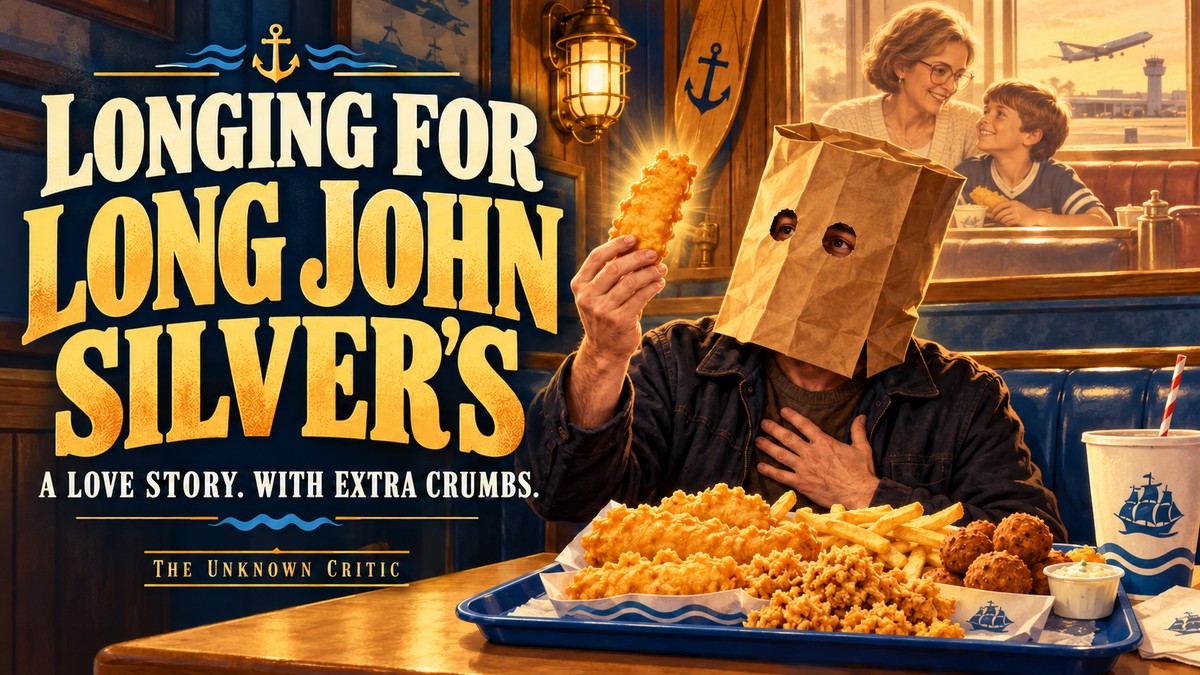
There are people who remember childhood through summer camps, family vacations and the smell of their grandmother’s kitchen.
I remember mine through a basket of fried fish and the little batter fragments that fell off it.
Some children collected baseball cards. I collected crumbs that technically belonged to a fish.
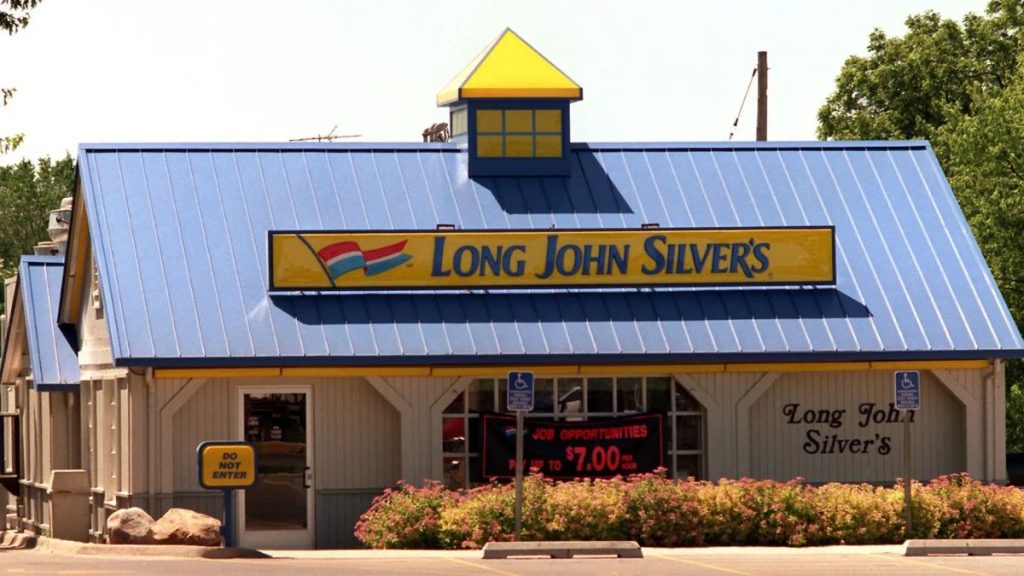
Growing up in Des Moines, my mom and I went religiously to the Long John Silver’s on Fleur Drive, not far from the airport. People nearby were boarding planes to exotic destinations. We were boarding a vessel powered by fryer oil.
We couldn’t get enough of it.
If someone had told us we could earn frequent-fryer miles, we would have qualified for complimentary hush puppies and priority boarding.
Today, finding a Long John Silver’s feels like locating an endangered species. When I do find one, it often seems to be attached to a KFC.
My childhood pirate has moved into the Colonel’s spare bedroom.
And I have questions.
Fleur Drive, the airport and the ocean Iowa didn’t have
Des Moines is not generally recognized as a maritime capital.
Nobody has ever leaned over the railing of a yacht and said, “Ah, yes. The salty breezes of Polk County.”
But Long John Silver’s made seafood feel like an event. You could live hundreds of miles from the ocean and still eat dinner in a place that suggested a fishing boat had somehow taken the wrong exit off Interstate 80.
My mom and I had our place.
That is the detail that matters: our place.
It wasn’t exclusive. Nobody checked our reservation. The chef did not emerge to explain where the hush puppy had been foraging.
But we loved going there together. The food was familiar. The anticipation was familiar. We knew we were going to enjoy ourselves.
And those crispy batter bits?
They were edible packing peanuts from heaven.
You finished the fish and then conducted a forensic examination of the basket. No crumb left behind. Somewhere, a nutritionist felt a disturbance in the Force.
A pirate restaurant conquered the suburbs
Long John Silver’s began in Lexington, Kentucky, in 1969. Its name came from the pirate in Robert Louis Stevenson’s Treasure Island, which is a remarkably sophisticated literary foundation for a place where I wanted extra fried debris.
By the end of 1971, it already had more than 200 restaurants. Early locations leaned into a wharfside atmosphere, with nautical decorations including lanterns, flags and oars.
It offered something distinctive in a fast-food landscape dominated by burgers: battered seafood, chicken, fries and hush puppies, served with the suggestion that you were participating in a voyage.
A very short voyage.
Mostly from the counter to a booth.
But children don’t require convincing special effects. Give a kid a themed building, a distinctive smell and something delicious, and you have created a destination.
Long John Silver’s understood that.
The restaurant wasn’t embarrassed to be a fish restaurant. It committed to the bit.
Modern businesses hold six meetings to determine whether blue conveys trust. Old Long John Silver’s effectively said, “Put an oar on the wall. We’re doing seafood.”
I respect that level of clarity.
Then somebody brought a spreadsheet aboard
The chain’s corporate history eventually became much less charming than its dining room.
Its parent, Jerrico, underwent a heavily leveraged buyout in 1989. Burdened by debt, the business struggled through the following years and filed for Chapter 11 bankruptcy protection in 1998.
It was acquired out of bankruptcy in 1999 by the owner of A&W, under Yorkshire Global Restaurants. In 2002, it entered the corporate family that became Yum! Brands.
If you’ve read my book, Crash of the Titans: Corporate America’s 100 Epic Flops that Burned Billions, you know this is the sort of plot that gets my attention.
A beloved business. Financial engineering. Ownership changes. A collection of strategic initiatives arriving with the confidence of people who have never personally mourned a hush puppy.
To be clear, debt was a documented problem. My theory about insufficient hush-puppy empathy is editorial analysis.
The chain’s own timeline records its move into combinations with A&W, then KFC and Taco Bell. Franchisees bought it from Yum! in 2011.
Which helps explain why, when I hunt for fried fish today, I sometimes find it living under the same roof as fried chicken.
The Colonel and the pirate: television’s worst roommate comedy
I understand the business logic of shared restaurants.
Shared space. Shared operating costs. More choices for families. A customer can order chicken while another orders fish.
Perfectly reasonable.
Emotionally, however, I have entered a custody arrangement between a pirate and a Southern gentleman.
The Colonel gets the prominent sign. Long John gets a corner of the menu and permission to use the fryer after dinner.
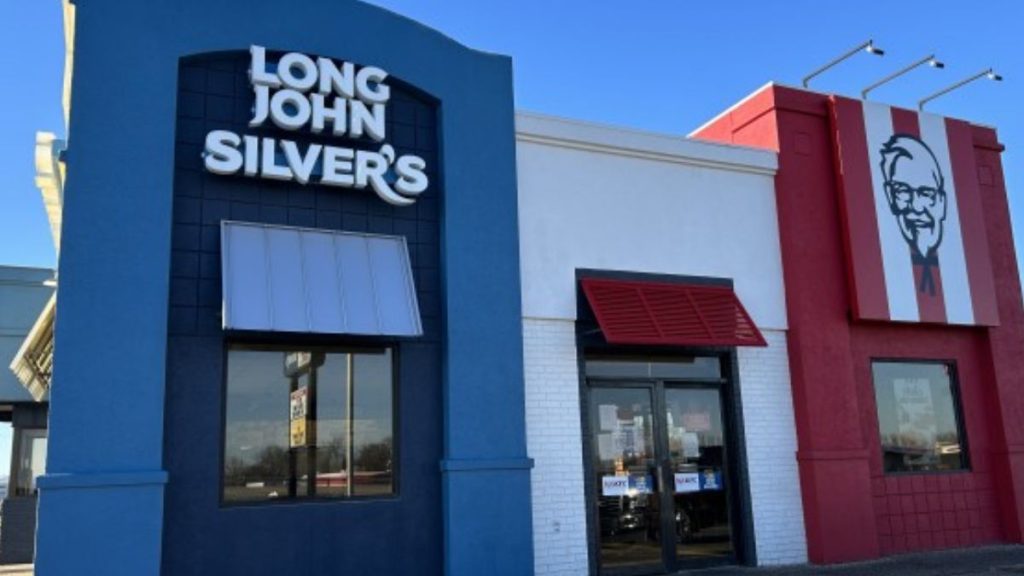
I stand at the counter trying to determine whether I have found an actual Long John Silver’s or merely a KFC that remembers a pirate from college.
These combinations may make financial sense. They just don’t deliver the same feeling as walking into a building that belongs entirely to one gloriously specific idea.
There is a difference between visiting a seafood restaurant and asking a chicken restaurant whether it still has some fish.
One is an outing.
The other is a negotiation.
The chain shrank. My appetite did not.
Long John Silver’s hasn’t vanished, but its footprint is far smaller than the expansive chain many of us remember. ScrapeHero counted 493 U.S. locations as of September 2, 2026—a dated third-party estimate, rather than a permanent head count.
Finding one now can require actual planning.
I used to ask, “What should we have for dinner?”
Now I ask, “How much fuel do we have, and is everyone comfortable crossing state lines?”
But this isn’t an obituary. The company is remodeling restaurants, and a new Plainview, Texas, location opened in August 2026, six years after its previous restaurant closed. Local reporting described customers arriving before opening and police helping manage the busy drive-through.
So there are still people willing to mobilize for fried fish.
Finally, a movement I understand.
Children weren’t just eating. They were going somewhere.
Adults tend to underestimate what a restaurant means to a child.
We remember the prices. The drive. Whether the booth needed wiping down.
Children remember the occasion.
Going somewhere with Mom. Knowing what you wanted. Having a favorite place that existed outside school and home.
For my mom and me, Long John Silver’s was a ritual we loved. We weren’t examining a brand’s market positioning. We were enjoying dinner together.
A kid doesn’t describe that as “customer retention.”
A kid says, “Can we go there again?”
And again.
And again, until the family car smells faintly like North Atlantic breaded cod.
The restaurant becomes part of your personal geography. There is school, there is home, and there is the place where you and your mother could reliably have a good time.
Later, when that place disappears—or becomes something unrecognizable (like a B-Bops!)—you discover that the attachment wasn’t entirely to the food.
Although, let’s not insult the batter. It did considerable work.
You miss who you were when you ate there.
You miss the person across the table.
You miss a small, repeatable happiness that didn’t need to announce itself as a core memory.
Pizza Hut remembered that it used to be a place
This is why the revival of selected old-school Pizza Hut dining rooms interests me.
Pizza Hut officially promotes its “Classic” locations as a return to the atmosphere of the 1980s and 1990s. The company’s listings highlight features such as familiar booths, nostalgic décor and restored dining experiences.
This is a revival at selected restaurants, rather than every Pizza Hut suddenly rebuilding your childhood.
But the idea is encouraging.
Somebody apparently remembered that Pizza Hut used to be somewhere you went.
A building. A table. A meal with other people.
Not merely an app that sends a lukewarm rectangle to your porch.
The old dine-in experience gave pizza a setting. You waited for it. You talked. You went to play Super Mario Brothers or the claw machine at the front of the store while your pizza was in the oven. You watched it arrive in a pan that looked capable of surviving reentry.
Now we call sitting together without staring at a phone an “experience.”
In my childhood, we called it dinner.
I don’t believe retro décor fixes every restaurant’s economics. You can install all the red cups you want; the rent still expects payment.
But restoring a recognizable place gives people something that a discount code cannot: a reason to care.
The mistake you can’t find in the quarterly report
Crash of the Titans is my tour through spectacular corporate failure. This restaurant story connects to one of the questions that fascinates me most: what happens when a business misunderstands why people loved it?
Customers can value convenience and still miss atmosphere.
They can want a reasonable price and still want a restaurant with personality.
They can understand shared operating costs and still feel mildly bereaved when their favorite pirate appears to be subletting from a chicken magnate.
I’m not arguing that every old building must remain untouched forever.
I’m arguing that familiarity, character and family ritual have value—even when they don’t fit neatly into a presentation labeled “Future-State Consumer Journey.”
My consumer journey was simple.
Mom. Fleur Drive. Fish.
Three slides. No consultant required.
Save me a basket
I will keep looking for Long John Silver’s.
I will keep ordering those familiar favorites when I find it.
And I will continue to regard the crispy batter bits as a perfectly respectable food group, pending the outcome of several strongly worded medical objections.
What I really want, though, is something nobody can put back on the menu.
One more ordinary trip with Mom to that restaurant on Fleur Drive.
No special occasion. No grand announcement.
Just the two of us going somewhere we couldn’t get enough of.
That is what these places held.
Sometimes childhood looks like a beach vacation.
Sometimes it looks like a basket of fish beside an airport in Iowa.
And sometimes the treasure was sitting across the table all along.
For more business disasters, questionable boardroom wisdom and expensive lessons in forgetting what customers love, explore The Unknown Critic Presents: Crash of the Titans—Corporate America’s 100 Epic Flops that Burned Billions.
Your turn: Which childhood restaurant would you bring back—and who would you want sitting across from you?