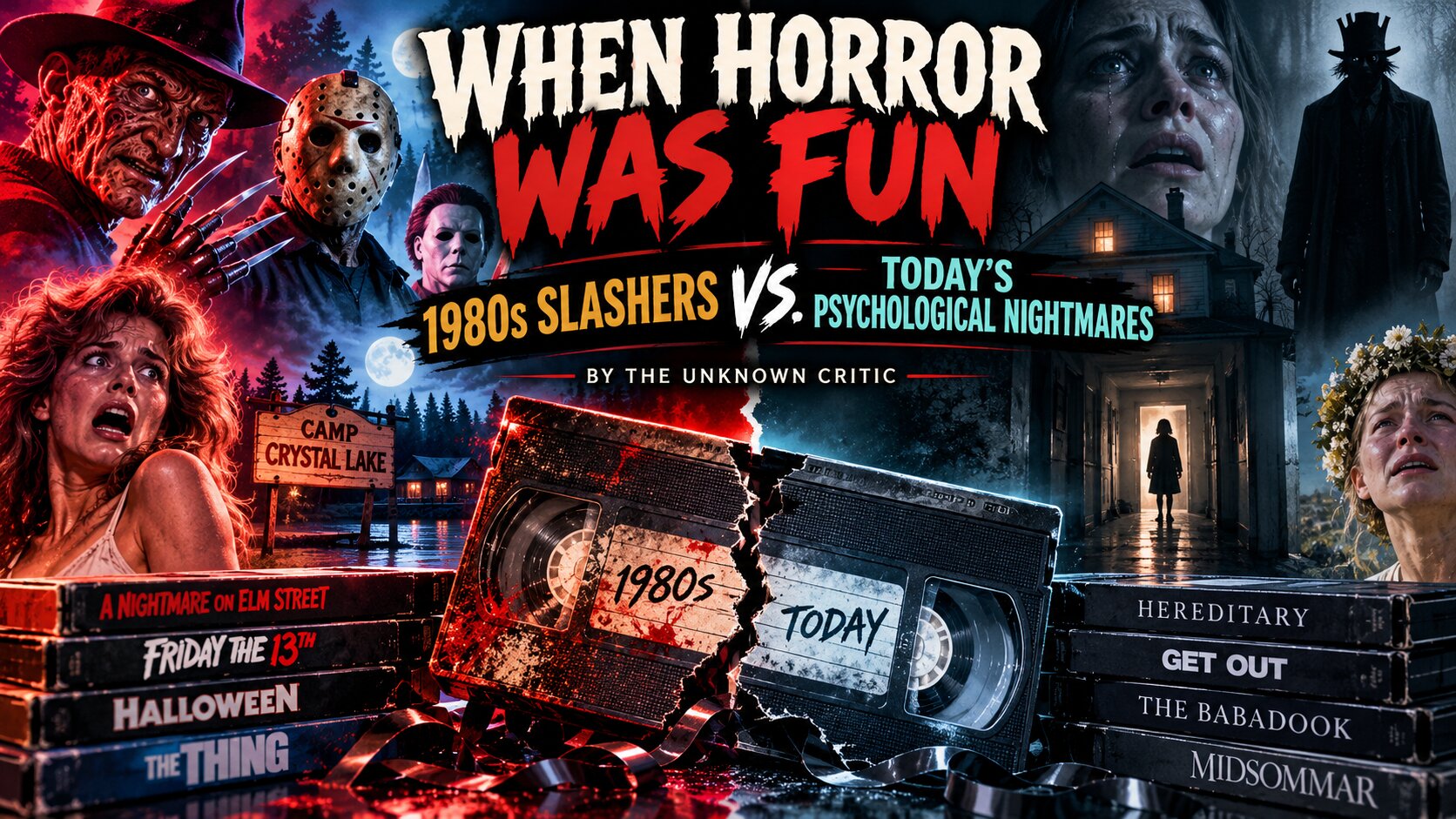
Freddy had a glove. Jason had a machete. Today’s monsters have generational trauma, unresolved grief, and an A24 distribution deal. Somewhere along the way, horror movies got smarter. But did they get better?
I miss the days when you could go to a horror movie and leave with a relatively straightforward concern.
Like being murdered.
That was the arrangement in the 1980s. You bought a ticket, purchased a bucket of popcorn containing enough artificial butter to qualify as a Superfund site, and spent the next 90 minutes watching a masked lunatic pursue teenagers who had made the fatal mistake of enjoying themselves.
Simple.
You knew the rules. Don’t have sex. Don’t drink. Don’t wander into the woods. Don’t investigate strange noises. And for God’s sake, if somebody tells you the abandoned summer camp is cursed, consider a nice weekend at the Holiday Inn instead.
Today?
You walk into a horror movie and discover the monster is actually a metaphor for inherited emotional trauma, the disintegration of the nuclear family, America’s collective guilt, and the psychological consequences of a strained mother-daughter relationship.
Two hours later, everybody’s dead, nobody has explained the ending, and you need a therapist to help you understand the symbolism of a goat.
Welcome to modern horror.
Now, before someone accuses me of being an elderly man screaming at a cloud shaped like Freddy Krueger, let me establish something.
I love horror movies.
Old ones. New ones. Good ones. Bad ones. The ones with genuinely frightening ideas and the ones where a rubber monster emerges from a toilet for reasons that probably made sense to somebody at the production company.
But I’ve been thinking about something lately.
Was horror actually better in the 1980s? Or was it simply more fun?
Because those are two very different questions.
And the answer says quite a bit about how movies—and audiences—have changed.
The 1980s: When Every Neighborhood Had a Serial Killer
Let’s begin with the obvious.
The 1980s produced some of the most recognizable horror villains in movie history.
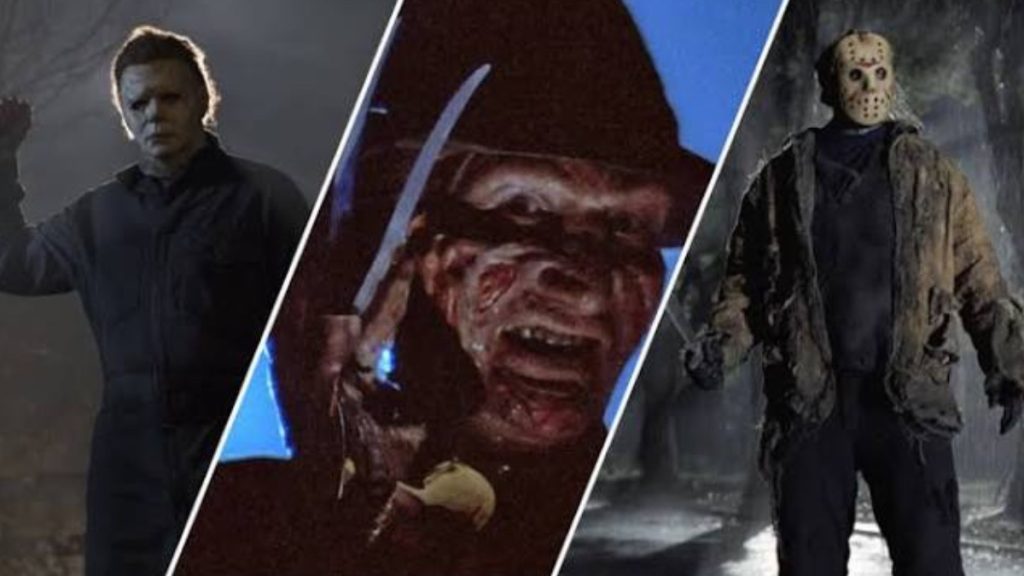
Freddy Krueger.
Jason Voorhees.
Michael Myers, whose cinematic killing spree began in 1978 but continued enthusiastically through the following decade.
Chucky.
Pinhead.
These weren’t merely movie villains.
They were brands.
Actual entertainment franchises built around the charming proposition that an unstoppable psychopath would murder a fresh collection of people every couple of years.
And audiences couldn’t get enough.
Consider Freddy Krueger.
Wes Craven’s A Nightmare on Elm Street arrived in 1984 with a genuinely terrifying concept: What if the one place you couldn’t escape was your own dreams?
Brilliant.
You could lock your doors. Close your windows. Hide under your blankets. None of it mattered.
Eventually, you had to fall asleep.
And when you did, a horribly burned man wearing a striped sweater and a glove full of knives would be waiting for you.
This was a nightmare with franchise potential.
Naturally, Hollywood responded by giving Freddy increasingly elaborate murders, one-liners, and the kind of celebrity status usually reserved for professional wrestlers.
By the end of the decade, Freddy was practically hosting his own entertainment empire.
He wasn’t simply killing teenagers.
He was working the room.
Jason, meanwhile, had a different management philosophy.
Show up.
Say nothing.
Murder everybody.
Return for the sequel.
If Freddy was the wisecracking executive who couldn’t stop talking during meetings, Jason was the employee who quietly got things done.
And then there was Michael Myers, a man whose entire personality consisted of standing in doorways and breathing.
Somehow, this was terrifying.
Try explaining that to somebody raised on TikTok.
“What’s his motivation?”
Nobody knows.
“What’s his backstory?”
Complicated.
“Does he have a podcast?”
Thankfully, no.
The point is that 1980s horror gave us monsters we recognized immediately.
One glimpse of the hockey mask, the striped sweater, or the blank white face, and you knew exactly what kind of evening you were about to have.
Today’s horror has memorable monsters, too.
But many of its greatest villains are considerably harder to put on a lunchbox.
When the Monster Was Made of Rubber, Latex, and Somebody’s Terrible Imagination
Here’s something I will defend until my dying breath.
Practical horror effects were glorious.
Not always convincing.
Not always realistic.
But glorious.
John Carpenter’s The Thing arrived in 1982 and demonstrated what happens when you give a group of exceptionally talented effects artists permission to violate every known law of human anatomy.
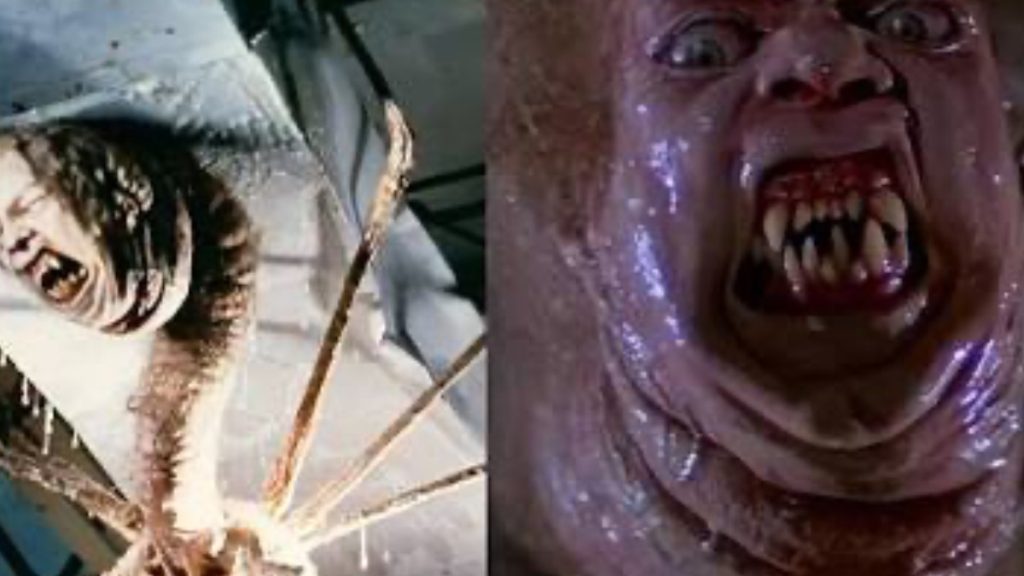
Heads detached.
Bodies transformed.
Creatures sprouted appendages that had absolutely no business existing.
And somewhere in the middle of it all, Kurt Russell stood around looking increasingly concerned about his career choices.
Rob Bottin’s effects work was grotesque, imaginative, and wonderfully physical.
You could practically smell the latex.
David Cronenberg’s The Fly in 1986 took body horror to another level, slowly transforming Jeff Goldblum into a creature that looked like the contents of a refrigerator abandoned during a power outage.
The effects were disgusting.
The story was tragic.
And the entire experience was unforgettable.
Then came The Blob in 1988, which suggested that the most terrifying substance in the universe might be a giant mound of raspberry gelatin with a serious attitude problem.
What made these movies special wasn’t simply the craftsmanship.
It was the sense that somebody had actually built the nightmare.
There was something tangible on the screen.
A creature.
A prosthetic.
A grotesque puppet.
An elaborate mechanical contraption designed to do something horrible to a human body.
Sometimes the illusion failed.
Sometimes you could see the seams.
Sometimes the monster looked suspiciously like an angry Halloween decoration purchased from a discount warehouse.
But the imagination was right there in front of you.
Modern CGI can create almost anything.
That’s both its greatest advantage and its occasional problem.
When filmmakers can show absolutely anything, they sometimes forget that audiences are more frightened by what they can’t quite see.
The best contemporary horror directors understand this. Practical effects never disappeared, and many modern productions combine physical makeup, puppetry, and digital work beautifully.
Still, there’s something wonderfully unsettling about watching a creature that appears to occupy the same physical space as the actors.
Especially when that creature looks like it was assembled from meat, plumbing supplies, and a lawsuit waiting to happen.
The Slasher Movie Was Basically a Very Violent After-School Special
People love to dismiss 1980s slasher movies as mindless entertainment.
And yes, some of them were.
A remarkable number, actually.
But beneath the machetes, kitchen knives, and deeply irresponsible summer-camp management practices, these movies operated according to a surprisingly consistent moral code.
Teenagers behaved badly.
Teenagers were punished.
One reasonably sensible person survived.
The end.
It was practically educational programming.
The Friday the 13th franchise taught us to avoid isolated campgrounds.
Halloween reminded us that babysitting could be considerably more dangerous than advertised.
Sleepaway Camp demonstrated that the American summer-camp industry had absolutely no meaningful background-check procedures.
And The Burning suggested that prank culture might occasionally produce consequences beyond a stern conversation with the school principal.
These films were frequently ridiculous.
They also understood their audience.
People weren’t buying tickets to explore the existential implications of suburban alienation.
They wanted suspense.
They wanted creative kills.
They wanted to yell at the screen when somebody decided to investigate a dark basement while wearing nothing but a towel.
And most importantly, they wanted to have fun being scared.
That’s the part I think modern horror occasionally forgets.
Being frightened can be entertaining. Being relentlessly miserable is a different experience.
There is room for both.
But sometimes I want a horror movie that leaves me grinning instead of questioning whether humanity deserves to continue.
Then Horror Got Self-Aware. And Started Making Fun of Itself.
Of course, the 1980s weren’t all masked killers and screaming teenagers.
The decade also understood that horror and comedy were natural companions.
The Evil Dead began in 1981 as a ferocious low-budget nightmare, then Evil Dead II arrived in 1987 and turned Bruce Campbell into a human punching bag with impeccable comic timing.
Re-Animator mixed mad science, gore, and the kind of outrageous black humor that probably made several audience members reconsider their college majors.
The Return of the Living Dead gave us punk-rock zombies, dark comedy, and a bleak ending that didn’t seem particularly concerned about whether viewers would leave the theater feeling emotionally supported.
And Fright Night managed to combine suburban vampire horror with a loving tribute to the genre itself.
These movies were weird.
Deliberately weird.
They weren’t afraid to be funny, grotesque, absurd, or unexpectedly touching.
They embraced their own ridiculousness.
Then, in 1996, Wes Craven’s Scream arrived and essentially handed horror movies a mirror.
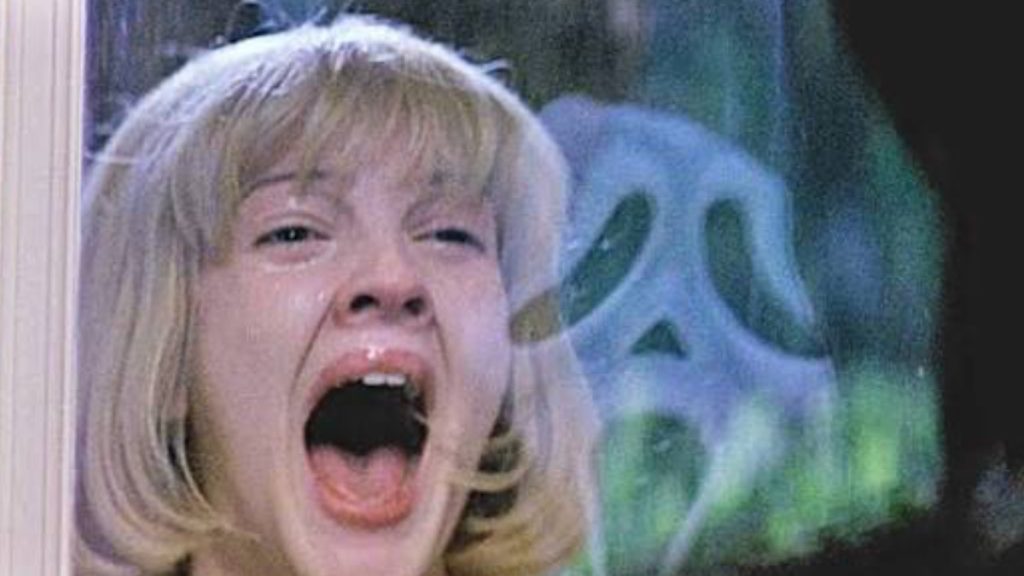
The characters knew the rules.
They’d seen the movies.
They understood the clichés.
And they still managed to make spectacularly poor decisions.
Scream didn’t invent self-aware horror, but it helped turn that sensibility into a mainstream phenomenon.
Suddenly, the genre was commenting on itself.
And the audience was in on the joke.
Which was refreshing.
Until Hollywood discovered that self-awareness could also become a cliché.
There’s only so many times a character can announce that they’re in a horror movie before you start wishing the killer would hurry up.
The 2000s: When Horror Decided We Weren’t Suffering Enough
The 1990s ended, the new millennium arrived, and horror took a decidedly unpleasant turn.
The Blair Witch Project had already demonstrated in 1999 that a tiny budget, shaky camera, and some very effective marketing could terrify audiences without showing much of anything.
Then came the 2000s.
Saw.
Hostel.
The remake of The Texas Chainsaw Massacre.
The remake of The Hills Have Eyes.
A wave of films increasingly interested in prolonged suffering, physical brutality, and making viewers wonder whether they’d accidentally purchased tickets to a medical malpractice seminar.
The term “torture porn” entered the cultural conversation.
And while it’s an imperfect label for a varied collection of movies, it captured something about the era’s appetite for extreme violence.
To be fair, Saw began with a clever premise.
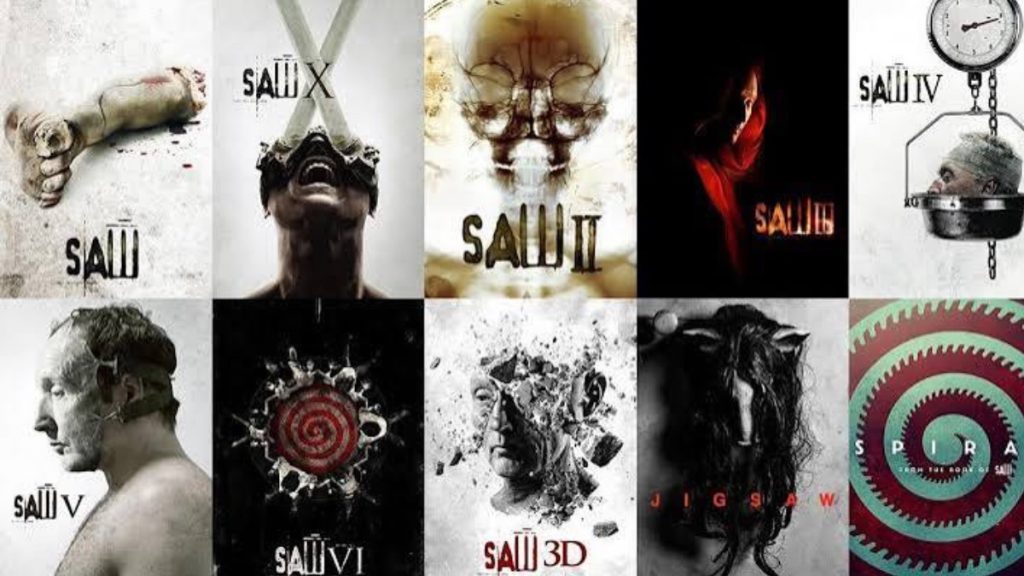
A moralistic serial killer creates elaborate traps that force people to confront their choices.
Interesting idea.
Then the sequels arrived, and Jigsaw apparently decided that every personal failing required an engineering project involving industrial machinery.
Didn’t appreciate your life?
Here’s a mechanical device that will remove your kneecaps.
Failed to return a library book?
Please insert your arm into the rotating blade assembly.
At a certain point, I began to wonder whether the man was a serial killer or an exceptionally aggressive life coach.
But the 2000s also produced outstanding horror.
28 Days Later helped revitalize infection-based horror with terrifying speed and urgency.
The Descent made cave exploration seem like the worst recreational activity ever invented.
And international films such as The Ring‘s Japanese predecessor Ringu, along with Ju-on: The Grudge, helped bring a different kind of supernatural dread to wider American audiences.
Horror was changing.
The monsters were changing.
And so were our fears.
Modern Horror: The Monster Is Your Childhood
Now we arrive at contemporary horror.
And I have to admit something that may cost me my official 1980s nostalgia membership card.
Some of today’s horror movies are phenomenal.
The Babadook turned grief and motherhood into a terrifying psychological nightmare.
It Follows created one of the simplest and most effective supernatural concepts in years: an entity that keeps walking toward you, slowly, relentlessly, no matter where you go.
The Witch made seventeenth-century rural life look even less appealing than the historical record already suggested.
Get Out used horror to examine race, exploitation, and the sinister possibilities lurking beneath supposedly polite social interactions.
Hereditary delivered a family nightmare so emotionally punishing that I considered sending the filmmakers an invoice for the psychological damage.
And The Substance brought grotesque body horror roaring back with a satirical examination of beauty, aging, and the entertainment industry’s relationship with women’s bodies.
These are ambitious movies.
Intelligent movies.
Sometimes genuinely brilliant movies.
They demonstrate how far horror can go beyond the traditional masked-killer formula.
But they also represent a major shift.
The 1980s often asked, “What if something terrible was hiding outside your bedroom window?”
Modern horror asks, “What if the terrible thing has been living inside your emotional development since childhood?”
Freddy Krueger attacked you in your dreams.
Today’s horror filmmakers would like to know why you’re having those dreams, what your mother did to contribute to them, and whether the entire experience reflects a larger breakdown in contemporary society.
And they would prefer to explain it through a disturbing image of a naked person standing in a hallway.
I exaggerate.
Slightly.
The modern wave sometimes called “elevated horror” has brought a welcome seriousness to the genre.
But I dislike the term.
It implies that horror needed to be elevated from something inherently inferior.
As if The Exorcist, Rosemary’s Baby, Don’t Look Now, The Shining, and The Thing were simply waiting around for someone from a prestigious independent studio to explain symbolism.
Horror has always been capable of artistic sophistication.
It didn’t suddenly discover metaphors in 2014.
What changed was the industry’s willingness to market certain horror films as respectable cultural events.
Apparently, if your monster represents grief, critics can discuss it at dinner parties.
If your monster carries a chainsaw, you’re expected to apologize.
Unless the chainsaw is also a metaphor for grief.
Then you’re back in business.
The Real Difference? The 1980s Gave Us Monsters. Today Gives Us Feelings.
Here’s where the comparison gets interesting.
The best 1980s horror films frequently built their stories around an unforgettable threat.
A dream killer.
An alien organism.
A possessed doll.
A demonic force.
A shape-shifting creature.
The monster was often the attraction.
Audiences wanted to see what it looked like, what it could do, and how anyone might survive it.
Modern horror frequently reverses the equation.
The emotional or psychological experience comes first.
The monster becomes a way of expressing it.
Sometimes the monster is barely visible.
Sometimes it may not even be real.
And sometimes the movie ends without explaining exactly what happened, which is a bold artistic choice and an excellent way to start an argument in the theater parking lot.
Neither approach is inherently superior.
A terrifying monster can reveal profound truths about human nature.
A psychologically sophisticated movie can also be unbearably dull.
I’ve watched horror films in which absolutely nothing happened for 90 minutes, followed by a disturbing final image that critics described as “devastating.”
Devastating?
I spent two hours waiting for somebody to turn on a light.
The distinction isn’t between smart horror and stupid horror.
It’s between filmmakers who understand how to create an experience and filmmakers who mistake ambiguity for depth.
A movie can be subtle without being boring.
It can be intelligent without being joyless.
And it can contain a rubber monster without surrendering its artistic credentials.
We Also Need to Talk About the Death of the Horror Movie Poster
Remember horror posters in the 1980s?
They were glorious.
A Nightmare on Elm Street promised a terrifying dreamscape.
The Thing featured that unforgettable human silhouette with light bursting from its face.
The Evil Dead gave us a woman being dragged beneath the earth.
The artwork practically dared you to buy a ticket.
And the VHS boxes?
Those were miniature works of psychological warfare.
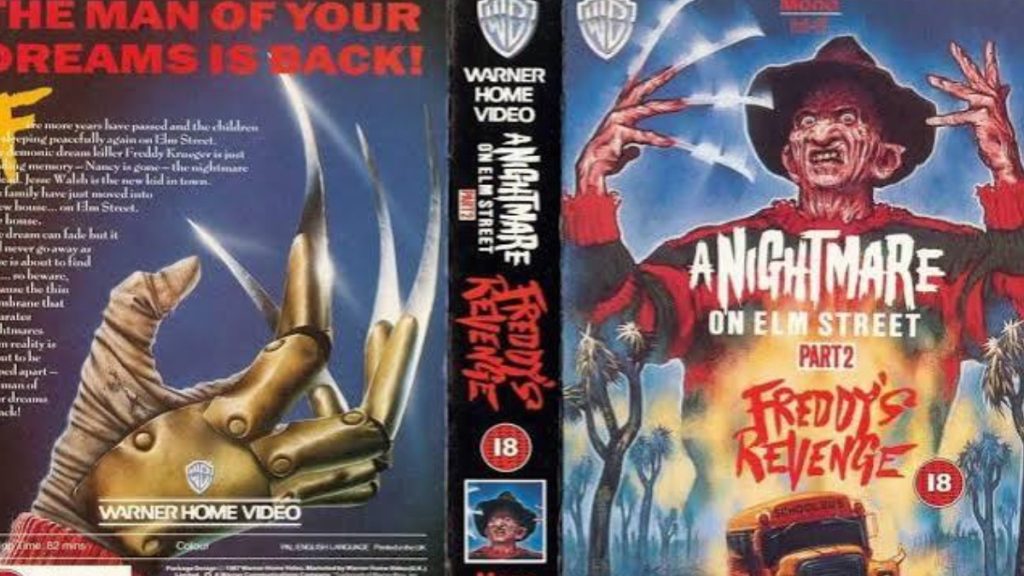
You’d walk into a video store, wander toward the horror section, and find yourself staring at covers that suggested the contents were too dangerous for civilized society.
Half the movies couldn’t possibly live up to their packaging.
Some barely qualified as movies.
But the covers made promises.
Big, outrageous, occasionally fraudulent promises.
Today’s horror marketing often takes a different approach.
A pale face.
A dark hallway.
A mysterious symbol.
An unsettling close-up.
A tasteful minimalist composition that suggests somebody’s marriage is about to experience supernatural difficulties.
Very sophisticated.
Very atmospheric.
Also occasionally indistinguishable from an advertisement for an experimental Scandinavian furniture company.
I miss the days when a horror poster showed you a monster and essentially screamed, “LOOK AT THIS HORRIBLE THING!”
Subtlety has its place.
But so does a severed head on a VHS box.
Streaming Has Made Horror Both Better and Worse
There’s another major difference between horror then and horror now.
How we watch it.
In the 1980s, horror was a communal experience.
You went to the theater with friends.
You rented a VHS tape.
You watched something you probably weren’t supposed to be watching at your age.
You dared somebody to sit through the scariest scene.
And afterward, you talked about it.
The experience extended beyond the movie itself.
Now horror is available everywhere.
Streaming services have enormous libraries of frightening films, forgotten franchises, international discoveries, and low-budget oddities.
That’s wonderful.
I can watch a Korean supernatural thriller, an Italian giallo, and a ridiculous American slasher sequel without leaving my couch.
Unfortunately, I can also spend 45 minutes scrolling through horror titles before deciding to watch Halloween again.
Convenience has a strange way of making abundance feel exhausting.
The video store offered fewer choices.
But each choice felt like an adventure.
You picked up a box.
Read the description.
Studied the artwork.
And made a decision based on the deeply unreliable testimony of a marketing department that clearly had no meaningful relationship with the truth.
Sometimes you discovered a masterpiece.
Sometimes you rented a film in which a rubber creature attacked people inside a shopping mall.
Either way, you had a story to tell.
Streaming has made horror more accessible than ever.
But it hasn’t necessarily made watching horror more memorable.
Did We Become Harder to Scare?
Maybe the movies aren’t the entire problem.
Maybe it’s us.
Think about the world in which 1980s horror thrived.
There was no internet in your pocket.
No endless stream of shocking footage.
No social media feed delivering a fresh existential crisis every eleven seconds.
A terrifying image in a movie could linger because you weren’t immediately exposed to 700 more terrifying images before bedtime.
Freddy Krueger had room to occupy your imagination.
Today, Freddy would have to compete with economic uncertainty, political dysfunction, artificial intelligence, climate anxiety, and whatever horrifying medical condition WebMD insists you have because your elbow hurts.
How do you frighten an audience that spends its waking hours marinating in dread?
One answer is to go deeper.
Make horror more psychological.
More disturbing.
More intimate.
Another is to go bigger.
More gore.
More spectacle.
More elaborate mythology.
More interconnected franchises.
And sometimes the answer is simply to remind audiences that fear can still be entertaining.
Which brings us to a modern horror success that feels suspiciously old-fashioned.
The Best Modern Horror Sometimes Remembers the 1980s
Consider Terrifier.
Art the Clown is grotesque, sadistic, and designed to provoke exactly the kind of horrified audience reaction that powered the slasher boom.
He’s also a recognizable horror icon.
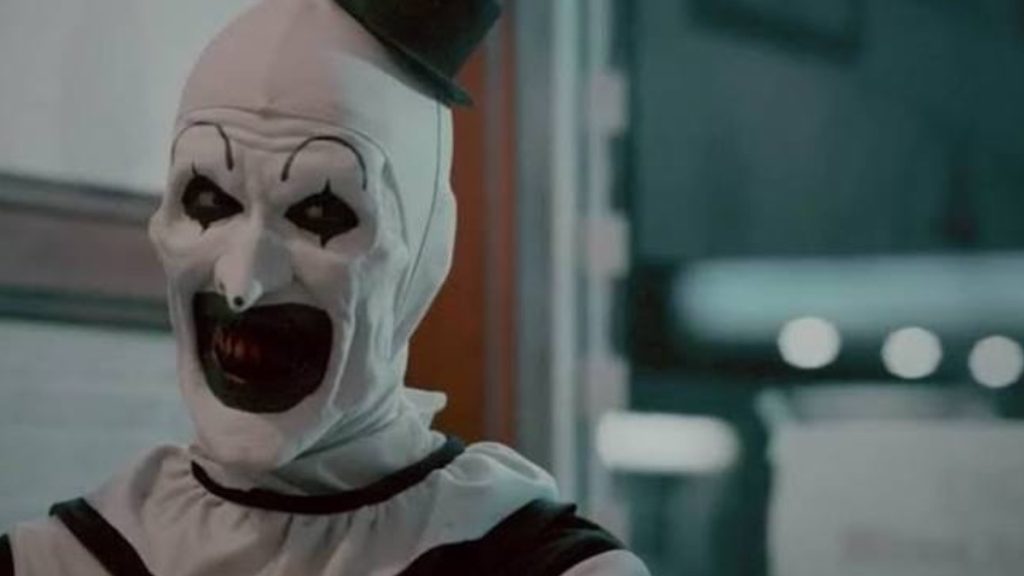
A character whose appearance alone tells you what kind of movie you’re watching.
Sound familiar?
Or take M3GAN, which understands that a creepy artificial companion can be frightening and absurdly entertaining at the same time.
Talk to Me combines contemporary teenage behavior with a supernatural concept that would have been perfectly at home in an earlier era.
Barbarian takes familiar horror expectations and gleefully dismantles them.
And Scream continues to demonstrate that audiences enjoy a killer with a recognizable look, a mystery to solve, and characters who occasionally acknowledge the absurdity of their situation.
These movies aren’t identical to 1980s horror.
Nor should they be.
But they understand something that made the earlier era successful.
A horror movie can be frightening, clever, surprising, and fun at the same time.
You don’t have to choose.
You can have thematic depth and a monster.
Social commentary and suspense.
Psychological terror and a memorable villain.
You can even have a sequel.
Although, based on Hollywood’s historical performance, I’d recommend exercising some restraint after the fourth installment.
So Was Horror Actually Better in the 1980s?
Here’s my verdict.
The 1980s were probably better at creating horror icons.
Better at outrageous practical effects.
Better at making the genre feel like a dangerous carnival attraction.
And certainly better at producing VHS covers that could traumatize a child from across the video store.
The decade gave us a remarkable collection of movies that remain entertaining, influential, and frightening forty years later.
But let’s not pretend everything was a masterpiece.
For every The Thing, there were numerous low-budget disasters involving unconvincing monsters, incoherent plots, and actors who appeared to have been recruited from a nearby bowling alley.
For every A Nightmare on Elm Street, there were slasher sequels so creatively exhausted that even the killer seemed embarrassed to participate.
Nostalgia has a wonderful ability to erase the garbage.
We remember the classics.
We forget the movie about a murderous household appliance that we rented because the box looked amazing.
Modern horror, meanwhile, is arguably more varied and internationally accessible.
It explores subjects that mainstream American horror once approached less frequently.
It has produced extraordinary filmmakers and genuinely innovative stories.
It can be more emotionally complex.
More formally adventurous.
More willing to leave audiences uncomfortable.
And sometimes more frightening.
But I think the 1980s understood one thing better.
Horror is supposed to be an experience.
You should feel something.
Fear.
Suspense.
Disgust.
Excitement.
Maybe even laughter.
You should leave the movie with a scene you can’t forget, a monster you can’t stop thinking about, or a story you’re desperate to tell somebody else.
What you shouldn’t leave with is the feeling that you’ve just attended a mandatory seminar on unresolved family trauma.
Unless, of course, the seminar includes a chainsaw.
Then I’m interested.
The Final Verdict: Give Me Freddy. But Save a Seat for Hereditary.
I don’t want horror to return exclusively to the 1980s.
That would be ridiculous.
And frankly, I’ve seen enough people attempt to recreate the decade to know that nostalgia is not a substitute for a screenplay.
What I want is the best of both worlds.
Give me the imagination of John Carpenter.
The practical-effects insanity of David Cronenberg.
The nightmare logic of Wes Craven.
The emotional ambition of Ari Aster.
The social intelligence of Jordan Peele.
The relentless suspense of a great modern supernatural thriller.
And every once in a while, give me a masked maniac who has absolutely no interest in discussing his childhood.
Is that too much to ask?
Horror has survived for generations because it keeps changing.
The monsters evolve.
The fears evolve.
The filmmaking evolves.
And the audience evolves right along with them.
The 1980s gave us unforgettable villains.
Modern horror has given us new ways to understand what frightens us.
Both have value.
But if you’re asking which era I’d rather spend Halloween night watching with a group of friends, a giant bowl of popcorn, and absolutely no intention of contemplating the meaning of existence?
Give me 1984.
Give me Freddy.
Give me practical effects.
Give me a movie poster that looks like it should be confiscated by the authorities.
And give me an ending that doesn’t require a 45-minute YouTube video titled “HEREDITARY EXPLAINED: THE SECRET SYMBOLISM YOU MISSED.”
Sometimes a nightmare should just be a nightmare.
Preferably one wearing a striped sweater.
More Thrills, Chills, and Questionable Hollywood Decisions
Horror movies have always fascinated me. The great ones, the terrible ones, the forgotten oddities, and the gloriously excessive productions that somehow convinced a studio executive to sign a check.
That’s part of the fun of revisiting the genre.
And it’s the spirit behind my book, The Unknown Critic Presents: Thrills, Chills and Kills: The 100 Most Iconic Horror Movies of All Time! which gives horror and entertainment fans another reason to revisit the movies and pop-culture obsessions that keep us watching.
If you love the history of horror, its unforgettable characters, and the strange creative decisions that make the genre endlessly entertaining, take a look.
The Unknown Critic Presents: Thrills, Chills and Kills: The 100 Most Iconic Horror Movies of All Time! is available on Amazon.
Because the only thing scarier than a bad horror movie is realizing Hollywood has already greenlit three sequels.